Key takeaways
- Runtime at real brightness: Manufacturers quote hours at the dimmest setting. Look at battery capacity in amp-hours or milliamp-hours instead, then assume you will run the light at 50 to 70 percent for finish work. An 8AH pack gives you a full afternoon; a 5200mAh tube light is closer to a long evening.
- Color temperature you can change: A 5000K to 6500K daylight setting reveals scratches and sanding swirls. A 4000K warm setting shows you how stain and topcoat will actually read in a living room. If you finish furniture, dual or triple color temps are worth paying for.
- Mounting versatility: Magnets grip a table saw fence or a metal shelf bracket. A tripod puts light above your workpiece instead of raking across it. Hooks handle joists. The best lights offer at least two of the three so you are not improvising with clamps.
- Dimming steps, not just on and off: Full blast in a small basement bounces glare off every glossy surface and makes finish defects harder to spot. Multi-level dimming lets you dial in the exact level for the task, and it stretches runtime considerably.
- Ingress protection and honest durability: IP66 means dust and water spray will not kill it, which matters more for sawdust than rain. Check whether the housing is aluminum or plastic, and whether the tripod legs feel like they will survive being knocked over on concrete.
What's inside
Anyone who has tried to sand a tabletop by the glow of a phone flashlight knows the problem: shadows hide the flaws you are trying to fix. Furniture work happens in garages, basements, and half-finished rooms where the ceiling fixture is either missing or aimed at the wrong wall. Corded halogen lamps solved the brightness issue decades ago, but they run hot, tether you to an outlet, and manage to fall over exactly when your hands are full of clamps and glue.
Battery powered work lights have gotten genuinely good, and 2026 models push output past what most shop ceilings deliver. This guide covers what actually matters when you are staining a dresser or crawling under a bed frame to chase a loose bolt: usable runtime at the brightness you will really use, color temperature that lets you judge wood tone honestly, mounting options that survive a shop, and build quality that tolerates sawdust. Below are the models worth your money, followed by the buying criteria I use myself.
As an Amazon Associate we earn from qualifying purchases.



🛒 Best Price Today on Amazon
Prime members get fast, free shipping on everything above, plus member-only deals. New members get a 30-day free trial — cancel anytime.
How to Choose a Battery Powered Work Light (2026)
- Runtime at real brightness: Manufacturers quote hours at the dimmest setting. Look at battery capacity in amp-hours or milliamp-hours instead, then assume you will run the light at 50 to 70 percent for finish work. An 8AH pack gives you a full afternoon; a 5200mAh tube light is closer to a long evening.
- Color temperature you can change: A 5000K to 6500K daylight setting reveals scratches and sanding swirls. A 4000K warm setting shows you how stain and topcoat will actually read in a living room. If you finish furniture, dual or triple color temps are worth paying for.
- Mounting versatility: Magnets grip a table saw fence or a metal shelf bracket. A tripod puts light above your workpiece instead of raking across it. Hooks handle joists. The best lights offer at least two of the three so you are not improvising with clamps.
- Dimming steps, not just on and off: Full blast in a small basement bounces glare off every glossy surface and makes finish defects harder to spot. Multi-level dimming lets you dial in the exact level for the task, and it stretches runtime considerably.
- Ingress protection and honest durability: IP66 means dust and water spray will not kill it, which matters more for sawdust than rain. Check whether the housing is aluminum or plastic, and whether the tripod legs feel like they will survive being knocked over on concrete.
The Best Battery Powered Work Lights (2026) Reviewed
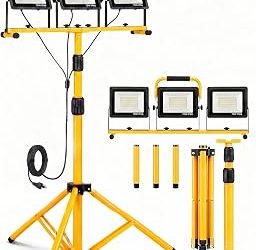
GoGonova Cordless Work Light with Triple LED Lamps
Three independently aimable heads on a detachable tripod, an 8AH battery, and switchable 4000K/6500K output make this the most complete package here for furniture work. You can flood a whole dresser at 2200 lumens or drop to 700 for detail sanding, and the tripod comes off when you need it on a bench.
LUTEC 3500LM Rechargeable Magnetic Work Light
The combination of a strong magnetic base and an included stand covers most shop scenarios, and 3500 lumens at 5000K is a genuinely useful daylight flood for assembly and inspection work. The single color temperature is the tradeoff, so it is better for building than for evaluating stain.
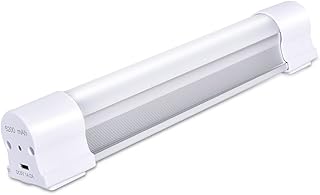
LETOUR Rechargeable Magnetic LED Tube Light
A tube form factor spreads light evenly instead of punching a hot spot, which is exactly what you want when checking a long tabletop for high spots. Two magnets, five dimming levels, and up to 60 hours of low-output runtime make it the most practical grab-and-go light on this list.
21000 Lumen LED Work Light with Tripod
This is the light you buy when you are refinishing a whole room’s worth of furniture and want daylight conditions after dark. Three heads with individual switches and an IP66 rating mean you can run one panel for close work or all three when the garage door is open and the project is big.
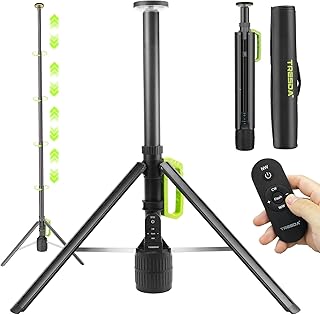
Tresda Rechargeable Telescopic Camping Light
The 8.4-foot telescoping tripod gets 3000 lumens up over your head, so the light falls down onto a workpiece rather than sideways into your eyes. Remote control and three color temperatures make adjustments easy when you are mid-glue-up and cannot walk away.
Frequently Asked Questions
How many lumens do I need for furniture work?
For bench-level assembly, 1000 to 2000 lumens placed close is plenty. For finish inspection or whole-garage work, aim for 3000 or more with the light positioned high and slightly to the side so it rakes across the surface and reveals defects.
Are AA-battery lights worth considering?
They are, as backups. Something like the Sunzone AA-powered flood lights will not match a rechargeable pack for output, but they work during a power outage, store indefinitely without degrading, and cost little enough to keep a pair in a toolbox and another in the car.
Does color temperature really affect staining?
Yes, significantly. A cool 6500K light makes warm stains look washed out and can lead you to over-apply. Check your final coat under something near 4000K, and ideally under daylight, before deciding the color is right.
Can I leave these charging all the time?
Most modern lithium packs have protection circuits, but leaving one at 100 percent on a charger for months shortens its life. Store it around half charge and top it off before a project for the best long-term battery health.
Final Thoughts
For most furniture makers, the GoGonova triple-head is the smartest single buy thanks to its dual color temps and detachable tripod. Pair it with the LETOUR magnetic tube for close-in bench work, and if you regularly tackle large refinishing jobs, the 21000-lumen tripod light turns a dim garage into something you can actually see in.