Key takeaways
- Wall width: measure the available wall and subtract about 2 inches each side for breathing room unless the dresser sits in a nook.
- Drawer clearance: a drawer needs its full depth in front of the dresser to open. If the dresser is 18 inches deep, the drawers may need 16 to 18 inches of clear space.
- Doors and radiators: keep the dresser clear of door swings, vents, radiators and baseboard heaters. Follow the heater maker’s guidance on clearance.
- Delivery path: check stairwells and doorways, since large pieces may need drawer removal to fit.
- Ceiling height and slope: in attic rooms, tall units may not fit under sloped ceilings.
The best dresser for a small bedroom is usually a tall, narrow chest of drawers about 28 to 32 inches wide, because it adds storage by using wall height instead of floor space; a low, wide dresser suits rooms where the wall above can carry a mirror or art, and a lingerie chest or slim six-drawer unit fits very tight corners. Choose by measuring the wall, the door and drawer clearance first, and make sure the piece can be anchored to the wall. This guide compares the main dresser shapes, materials and safety points without naming unconfirmed models.
Our top picks
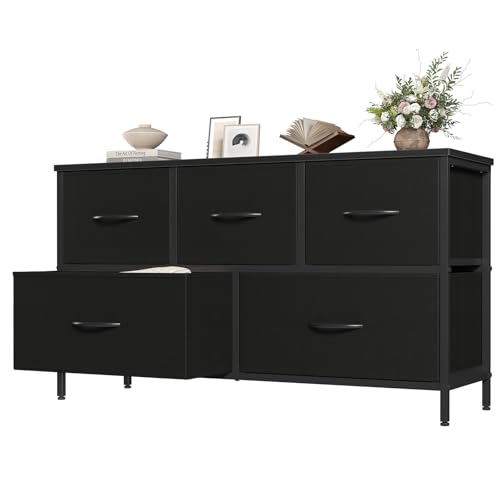

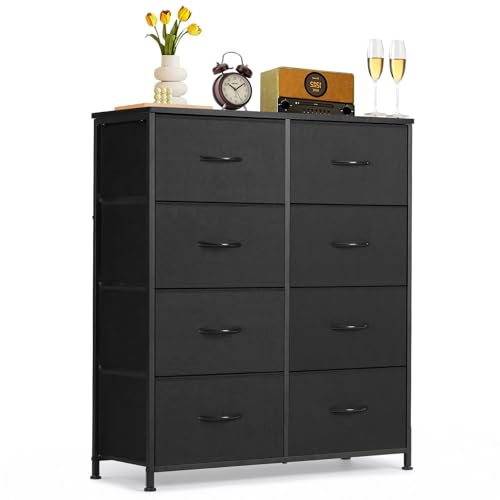

As an Amazon Associate we earn from qualifying purchases at no extra cost to you.
At a Glance: Dresser Types for Small Rooms
| Type | Best for | Typical stated features | Limits |
|---|---|---|---|
| Tall narrow chest (5 to 6 drawers) | Tight rooms with limited floor space | Width around 24 to 32 inches, height about 45 to 55 inches | Top is high to reach, tipping risk needs anchoring |
| Lingerie or tall slim chest | Narrow corners, closets | Narrow width, six or seven small drawers | Small drawers, limited for bulky items |
| Standard 3-4 drawer dresser | Average small bedroom | Width about 30 to 40 inches, moderate height | Takes more floor than a narrow chest |
| Low double dresser | Rooms with a TV or mirror above | Wide top surface, 6 drawers | Needs wall width of 55 inches or more |
| Dresser-and-nightstand combo | Rooms with no space for a separate nightstand | Dresser top doubles as a bedside surface | Top may be too high for lamp or beds |
| Open-shelf or cube storage with bins | Kids rooms, rentals | Lightweight, flexible | Less concealed storage |
Start With Measurements
- Wall width: measure the available wall and subtract about 2 inches each side for breathing room unless the dresser sits in a nook.
- Drawer clearance: a drawer needs its full depth in front of the dresser to open. If the dresser is 18 inches deep, the drawers may need 16 to 18 inches of clear space.
- Doors and radiators: keep the dresser clear of door swings, vents, radiators and baseboard heaters. Follow the heater maker’s guidance on clearance.
- Delivery path: check stairwells and doorways, since large pieces may need drawer removal to fit.
- Ceiling height and slope: in attic rooms, tall units may not fit under sloped ceilings.
Narrow vs Wide: Which Saves More Space
A dresser that is 30 inches wide and 50 inches tall can hold as much as a wide three-drawer unit while using about half the floor width. The trade-off is reach and weight distribution, because a tall chest is more likely to tip if a child pulls open several drawers at once. A wide low dresser is more stable and offers a surface for a mirror or lamp, but needs more wall length. In rooms with only one clear wall, a tall narrow chest generally leaves room for a bed and a walkway.
Materials and Construction
- Solid wood: durable, repairable, and heavy. Expect higher costs.
- Plywood and veneer: stable and lighter; often found in mid-range furniture.
- Engineered wood (MDF or particleboard): budget-friendly, fine for light loads, but may sag or chip over time.
- Metal frames or fabric bins: lightweight and good for temporary or rental setups.
Look at the drawer construction. Dovetail or doweled joints and metal glides generally hold up better than stapled drawers with plastic runners. Soft-close slides are a nice extra in shared homes. Pay attention to the back panel, because thin hardboard backs can bow, and many makers recommend a flat wall and an anchoring kit to keep the frame square.
Safety: Tip-Over Prevention
Tip-over incidents involving dressers are a recognised child-safety concern, and regulators in several countries publish guidance. Anchor the dresser to a wall stud with the kit the maker supplies, and use only the hardware designed for your wall type. Do not place a TV on a dresser that is not designed for it, and avoid putting tempting items on top that encourage climbing. Many modern dressers include interlocking drawers that limit opening more than one at a time; check whether the maker lists this feature. If you are unsure about the wall, ask a qualified handyperson.
Decision Table: Pick X If …
| Pick this | If you | Skip if |
|---|---|---|
| Tall narrow chest | Have little floor space but some wall height | You cannot anchor it to the wall |
| Lingerie chest | Need storage for small items in a corner | You store bulky sweaters |
| Standard 3-4 drawer dresser | Want balanced storage and a usable top | Your wall is under about 36 inches |
| Low wide dresser | Want a mirror or TV surface above | Your room is narrow |
| Dresser-nightstand combo | Want to skip a bedside table | Your bed is much lower than the dresser top |
| Cube storage with bins | Rent, move often or furnish a child’s room | You want fully closed storage |
Budget Tiers
Budget: engineered wood with simple glides. They suit guest rooms and short-term setups, but handle moving poorly.
Mid-range: veneer or plywood with better drawers, anti-tip features and more finishes. This is the sensible range for a primary bedroom.
Premium: solid hardwood, dovetail drawers and fine finishes. They last for decades but are heavy and need a suitable floor and delivery plan.
Space-Saving Tips
- Use the wall above the dresser for a mirror or shelves to extend storage upward.
- Place a dresser inside a closet if the closet is deep enough, and keep the door able to close.
- Use drawer dividers and vertical folding to double capacity.
- Choose light colors and legs that show the floor beneath, which makes a room look more open.
- Under-bed storage boxes can handle off-season items so the dresser holds daily clothes.
Alternatives
- Wardrobe or closet organisers: internal drawers that avoid adding furniture.
- Bed frames with drawers: storage beneath the mattress.
- Wall-mounted shelves with baskets: light storage that frees the floor.
Common Mistakes to Avoid
- Forgetting drawer clearance. A dresser that fits the wall can still block the bed or door when drawers are open.
- Buying a tall unit without anchoring it. This is the most important safety step with any tall chest.
- Choosing too many small drawers. They look tidy but may not hold bulky items.
- Ignoring floor type. Heavy furniture on thick carpet can tilt slightly, so confirm stability after placement.
- Blocking vents or radiators. Follow heater and vent guidance for safe clearance.
Quick Buying Checklist
- Measure wall width, ceiling height and the delivery route.
- Decide whether you need a narrow tall unit or a wide low one.
- Read the maker’s notes on anti-tip hardware, drawer stops and weight capacity.
- Choose drawer glides that suit your usage, with soft-close if you share walls.
- Plan how the top surface will be used so it does not become cluttered.
Frequently Asked Questions
What size dresser fits a small bedroom?
A width of 24 to 32 inches suits many small rooms, and a depth of 16 to 18 inches saves floor space. Measure the full clearance needed for drawers to open before buying.
Is a tall dresser or a wide dresser better for a small room?
A tall narrow chest uses less floor area, while a wide low dresser offers a useful top surface. Pick by whether you have more wall height or wall width available.
Do I need to anchor a dresser to the wall?
Yes, anchoring is strongly advised, especially for tall units and in homes with children. Use the maker’s anti-tip kit and fix it to a stud or suitable anchor.
Can I put a TV on a dresser?
Only if the dresser maker says the piece is designed to support a TV and the weight is within the stated limit. Otherwise use a purpose-built stand or wall mount.
How do I make drawers last longer?
Avoid overloading them, keep the glides clean, and do not pull a drawer past its stop. If a drawer sticks, check for items stuck behind it and wipe the glides.
What if my bedroom has no wall space for a dresser?
Consider storage under the bed, over-door organisers or built-in closet drawers. A slim lingerie chest or wall-mounted shelving with baskets can also fit tight spots.
More from Amazon
Programs that pair well with the guide above. Offers and eligibility are set by Amazon and may change.
A free business account with business pricing and bulk-buying tools for work, shop or home office.
Create a business accountFree shipping on eligible items, Prime Video and more. Eligible new members can start with a free trial.
Start a Prime free trialAudiobooks and podcasts to listen to on the go. Eligible new members can start with a free trial.
Try Audible freeAd-free music streaming. Eligible new subscribers can start with a free trial.
Try Music Unlimited freeAs an Amazon Associate we earn from qualifying purchases.