Anyone who has tried to bore a clean mortise or a row of shelf-pin holes with a handheld drill knows the frustration: the bit wanders, the hole drifts a few degrees off vertical, and by the time you assemble the piece nothing sits square. Drill presses solve that geometry problem permanently, but the buying decision is muddier than it looks. Spec sheets throw around amp ratings, swing measurements, and spindle travel numbers without explaining which ones actually matter when you are drilling hardwood end grain or cutting 2-inch Forstner holes in a workbench top.
This guide cuts through that. I have spent years running benchtop presses in a cramped garage shop, and the differences that matter most are rarely the ones printed on the box. Below you will find the machines worth putting on your bench in 2026, plus a portable guide for the times the work is too big to bring to the tool. I cover what to look for, honest notes on each model’s strengths and compromises, and answers to the questions that come up after the machine is unboxed.
Our top picks


As an Amazon Associate we earn from qualifying purchases at no extra cost to you.
🛒 Best Price Today on Amazon
Prime members get fast, free shipping on everything above, plus member-only deals. New members get a 30-day free trial — cancel anytime.
How to Choose a/an Drill Press Woodworking (2026)
- Swing and throat depth: A “12-inch” press means 12 inches from column to bit centerline doubled, so you can reach 6 inches into a panel. If you build cabinet doors or wide tabletops, that extra reach over an 8-inch model saves you from awkward workarounds.
- Variable speed versus stepped pulleys: Stepped-pulley machines require opening the head and repositioning the belt for every speed change, which discourages you from using the correct RPM. A variable-speed dial means you actually slow down for that 2-inch Forstner bit instead of scorching the wood.
- Spindle travel: Two inches of quill stroke handles most furniture joinery, but 3-plus inches lets you drill deeper dowel holes without repositioning the workpiece and losing your alignment.
- Table quality and bevel: A cast iron table that tilts 45 degrees in both directions opens up angled leg mortises and compound joinery. Check for T-slots or a pattern of holes you can bolt a fence to, because the stock tables are almost always too small.
- Runout and chuck quality: Cheap keyless chucks let the bit wobble, which shows up as oversized, ragged holes. A keyed 1/2-inch chuck on a properly machined spindle is the single biggest predictor of clean results.
The Best Drill Press Woodworking (2026)s Reviewed
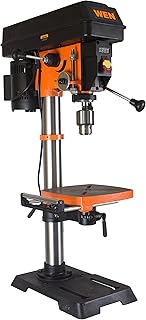
WEN 12-Inch Benchtop Drill Press (DP1263V)
The 6.2-amp variable-speed motor is the headline here, letting you dial RPM without touching a belt, and the 12-inch swing handles panel work that smaller presses cannot reach. The laser and LED combination is genuinely useful for repetitive layout work, though I still verify with a center punch on critical holes.
WOODSKIL 8-Inch Benchtop Drill Press
For a compact bench, this 1/3 HP induction motor runs noticeably quieter than brushed alternatives, and the 45-degree beveling cast iron table punches above its price class for angled joinery. The 2-inch spindle stroke is the main limitation, so plan on flipping deep stock.
SKIL 10 In. 5-Speed Benchtop Drill Press (DP9505-00)
SKIL’s 10-inch platform sits in a sensible middle ground: enough swing for most furniture components without the footprint of a 12-inch machine. The laser alignment and integrated work light are well executed, and the 6.2-amp motor holds speed through hardwood better than the amperage suggests.
JET Benchtop Drill Press (JWDP-12)
This is the machine to buy if you plan to keep it for twenty years. The 1/2 HP motor, digital variable speed readout, and JET’s machining tolerances produce measurably less runout than budget presses, which shows up immediately in hole quality on figured hardwoods.
WEN 8-Inch 5-Speed Benchtop Drill Press (4206T)
The most sensible entry point into drill presses, with a cast iron table and honest 2.3-amp performance for pilot holes, dowels, and shelf pins. Belt changes are a minor chore, but at this size and price the value is hard to argue with.
Frequently Asked Questions
What speed should I use for woodworking?
Larger bits need slower speeds. Run twist bits under 1/2 inch at 1,800 to 3,000 RPM, drop to roughly 1,000 RPM for Forstner bits around an inch, and go as low as 250 to 500 RPM for 2-inch bits and hole saws. Too fast burns the wood and dulls the cutting edges.
Do I need a drill press table upgrade?
Most stock tables are small and lack a fence. Building or buying an auxiliary table with a replaceable sacrificial insert and adjustable fence is the highest-value upgrade you can make, and it costs almost nothing in shop-made plywood.
Is a benchtop press enough for furniture work?
For the vast majority of furniture joinery, yes. Floor-standing models mainly buy you greater spindle-to-table distance for tall work and more mass to dampen vibration, neither of which is essential for typical chairs, tables, and casework.
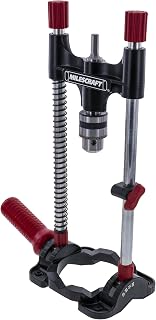
What does the Milescraft DrillMate do that a press cannot?
It travels to the work. The DrillMate 1318 clamps your handheld drill into a guide that maintains straight or angled alignment, which is the answer for drilling into an assembled cabinet, a door in place, or timber too large to lift onto a bench.
Final Thoughts
If your budget allows one machine that will not need replacing, the JET JWDP-12 delivers the tightest tolerances and the smoothest variable-speed control of the group. For most home shops, the WEN DP1263V hits the better value target with a full 12-inch swing and true variable speed, while the WEN 4206T remains the honest choice for smaller benches and lighter joinery. Pair whichever you choose with the Milescraft DrillMate for the jobs that refuse to come to you.