Key takeaways
- Seat depth versus your thigh length: Sit back fully and check that two to three fingers fit between the seat edge and the back of your knee. A seat that runs long presses into your calves and cuts circulation, and no amount of lumbar padding fixes that. IKEA’s larger frames like JÄRVFJÄLLET suit taller sitters; shorter torsos often do better on a chair with adjustable depth.
- Backrest height and where the lumbar curve lands: The support bump should meet the inward curve of your lower back, roughly at belt level. High-back designs with headrests only help if you actually recline; if you work upright most of the day, a mid-back like the MARKUS puts support where you need it without pushing your head forward.
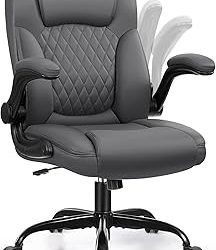
- Armrest clearance under your desk: Measure from floor to the underside of your desktop, then check the chair’s minimum armrest height. Flip-up arms solve this elegantly and let you pull in close for detail work, which is why several picks here include them.
- Tilt lock and recline range: A chair that locks only upright forces static posture, and static posture is what makes your back ache. Look for a tilt range around 90 to 125 degrees with a lock you can set at intermediate points, not just fully open or fully shut.
- Weight rating and base material: Nylon bases flex under load; steel or aluminum ones do not. If you are over 220 pounds or plan to keep the chair a decade, treat the stated capacity as your minimum and check whether the gas lift is a rated Class 3 or 4 cylinder.
What's inside
Anyone who has spent a weekend assembling flat-pack furniture knows the frustration of a chair that looked right in the showroom and feels wrong by Tuesday afternoon. The problem is that most desk chair shopping happens without the one test that matters: sitting in it for six hours while you actually work. Showroom sitting tells you almost nothing about lumbar contact at hour four, whether the armrests clear your desk apron, or how the mesh behaves once your back warms up. And IKEA’s own catalog rotates enough that the model your neighbor recommended two years ago may not be on the floor anymore.
This guide takes a workshop approach: what to measure before you buy, which adjustments genuinely change how a chair feels versus which are marketing filler, and how a handful of well-reviewed alternatives stack up against IKEA’s mainstays. I have included both IKEA classics like the MARKUS and JÄRVFJÄLLET alongside mesh and leather options that compete on the same shelf, since plenty of people searching for an IKEA chair are really searching for that price-to-comfort sweet spot rather than a specific brand. Measure your desk height, note your torso length, and read on.
As an Amazon Associate we earn from qualifying purchases.
![IKEA MARKUS Office chair, Adjust the height and angle of this chair so your workday feels comfortable [Vissle dark grey]](https://m.media-amazon.com/images/I/51kHkJFe2pL._AC_UL320_.jpg)


How to Choose a/an Ikea Office Chair (2026)
- Seat depth versus your thigh length: Sit back fully and check that two to three fingers fit between the seat edge and the back of your knee. A seat that runs long presses into your calves and cuts circulation, and no amount of lumbar padding fixes that. IKEA’s larger frames like JÄRVFJÄLLET suit taller sitters; shorter torsos often do better on a chair with adjustable depth.
- Backrest height and where the lumbar curve lands: The support bump should meet the inward curve of your lower back, roughly at belt level. High-back designs with headrests only help if you actually recline; if you work upright most of the day, a mid-back like the MARKUS puts support where you need it without pushing your head forward.
- Armrest clearance under your desk: Measure from floor to the underside of your desktop, then check the chair’s minimum armrest height. Flip-up arms solve this elegantly and let you pull in close for detail work, which is why several picks here include them.
- Tilt lock and recline range: A chair that locks only upright forces static posture, and static posture is what makes your back ache. Look for a tilt range around 90 to 125 degrees with a lock you can set at intermediate points, not just fully open or fully shut.
- Weight rating and base material: Nylon bases flex under load; steel or aluminum ones do not. If you are over 220 pounds or plan to keep the chair a decade, treat the stated capacity as your minimum and check whether the gas lift is a rated Class 3 or 4 cylinder.
The Best Ikea Office Chair (2026)s Reviewed
IKEA MARKUS Office Chair
The MARKUS earns its long-running reputation on build quality rather than features: a tall mesh back, a genuinely firm seat, and a steel frame that does not creak after a few thousand sit-downs. Its limitation is fixed armrests, so measure your desk clearance first, and the seat depth suits average-to-tall sitters better than compact frames.
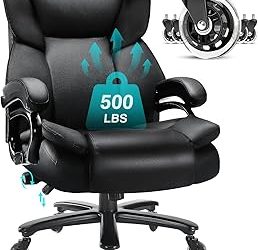
GTPLAYER Big and Tall Mesh Office Chair
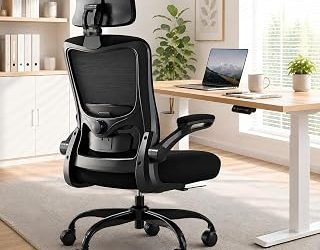
Built for larger bodies with a wide cushion, high back, and a headrest that actually reaches the base of the skull rather than the shoulder blades. The 90 to 125 degree tilt lock and flip-up arms make it the most adjustable pick here, though the gaming-adjacent styling will not suit every room.
Ergonomic Mesh Desk Chair with Lumbar Support (Khaki)
A sensible mid-priced mesh option where the lumbar block adjusts independently, which matters more than total feature count. The khaki finish reads warmer than standard office black, and the flip-up arms tuck it neatly under lower desktops.
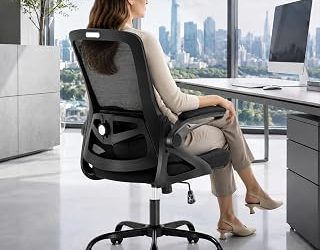
Chreenoask Ergonomic Mesh Desk Chair
Breathable mesh with flip-up armrests at a price point where most chairs skip both, making it a solid pick for a spare-room setup or a second workstation. Assembly is straightforward, though the caster quality is where the cost savings show on hard floors.
IKEA JÄRVFJÄLLET Office Chair with Armrests
The step up from MARKUS, with adjustable armrests, seat depth, and a headrest option that makes it viable for long recline-heavy sessions. The larger footprint and higher price are real considerations, but the adjustment range justifies both if you sit all day.
Frequently Asked Questions
How long does IKEA office chair assembly actually take?
Plan on 25 to 40 minutes for the MARKUS or JÄRVFJÄLLET with the included hex key, though swapping in your own driver with a hex bit cuts that roughly in half. Snug the base and cylinder fully before tightening the backrest bolts, or the frame can sit slightly racked.
Is mesh or padded upholstery better for long workdays?
Mesh wins on airflow and holds shape over years, while foam feels plusher initially but compresses unevenly at the pressure points. If your workspace runs warm or you sit more than five hours daily, mesh is the more durable choice.
Can I replace worn casters or a sagging gas cylinder myself?
Yes, and it is one of the easiest furniture repairs there is. Casters pull out with a firm tug and standard 11mm stems are near-universal; gas cylinders come free with a rubber mallet and a pipe wrench once the chair is inverted.
Do IKEA chairs come with a warranty?
IKEA typically offers a ten-year warranty on its office chair line, which is generous for the price bracket, though it covers manufacturing defects rather than normal wear on upholstery or casters. Keep your receipt and note that third-party alternatives usually run one to three years.
Final Thoughts
For most home offices, the MARKUS remains the value benchmark: solid steel construction, breathable mesh, and a warranty that outlasts most competitors, provided its fixed armrests clear your desk. Step up to the JÄRVFJÄLLET if you need adjustable arms and seat depth for full-day sitting, and consider the GTPLAYER Big and Tall if you want maximum adjustability and a wider seat than either IKEA model offers.