Key takeaways
- Seat foam depth and density: Look for at least 3 inches of high-density molded foam rather than cut sponge. Press your thumb into the seat edge — if it bottoms out instantly, it will collapse within a season. Molded foam holds its shape; sliced foam doesn’t.
- Base and caster hardware: A five-star steel or aluminum base rated near 300 lbs is the single best predictor of longevity. Nylon bases crack at the caster sockets under side load. Swap in 3-inch polyurethane casters if the stock wheels chatter on hardwood — it’s a five-minute upgrade and costs less than lunch.
- Lumbar support that actually adjusts: A sewn-in bulge is fixed geometry and only fits one spine. Prioritize height-adjustable, inflatable, or detachable pillow lumbar so you can position the apex at your natural curve, roughly at belt level.
- Upholstery type, stated plainly: PU and bonded leather are coatings over a fabric backing — fine for the money, but keep them away from direct sun and clean with a damp cloth, never solvent. Top-grain leather costs more and rewards you with a decade of patina instead of peeling.
- Recline range and tilt lock: For long stretches, a 120°–155° recline with a positive lock lets you shift load off your lumbar discs periodically. A chair frozen upright forces one posture, and one posture is what causes the ache.
What's inside
If you’ve ever spent a Saturday afternoon flat on your back under a desk chair with a hex key in one hand and a flashlight in the other, you already know the truth: most leather office chairs are built to look good in a product photo, not to survive eight-hour workdays. The foam packs down into a pancake by month four, the gas cylinder starts creeping toward the floor mid-morning, and the “leather” turns out to be a bonded coating that flakes off in the exact spot your forearms rest. The frustration isn’t the price — it’s realizing the chair was never designed to be sat in, only to be sold.
This guide comes from a different angle. I’ve torn down enough chairs to know what matters once the box is empty: how thick the seat foam actually is, whether the base is stamped steel or nylon pretending to be metal, whether the lumbar curve lands on your spine or somewhere near your shoulder blades. Below you’ll find six leather office chairs worth considering for genuinely long sitting sessions, plus a buying framework you can apply to any chair you’re eyeing — and a few honest notes on where each one cuts corners.
As an Amazon Associate we earn from qualifying purchases.


🛒 Best Price Today on Amazon
Prime members get fast, free shipping on everything above, plus member-only deals. New members get a 30-day free trial — cancel anytime.
How to Choose a Leather Office Chair For Long Hours (2026)
- Seat foam depth and density: Look for at least 3 inches of high-density molded foam rather than cut sponge. Press your thumb into the seat edge — if it bottoms out instantly, it will collapse within a season. Molded foam holds its shape; sliced foam doesn’t.
- Base and caster hardware: A five-star steel or aluminum base rated near 300 lbs is the single best predictor of longevity. Nylon bases crack at the caster sockets under side load. Swap in 3-inch polyurethane casters if the stock wheels chatter on hardwood — it’s a five-minute upgrade and costs less than lunch.
- Lumbar support that actually adjusts: A sewn-in bulge is fixed geometry and only fits one spine. Prioritize height-adjustable, inflatable, or detachable pillow lumbar so you can position the apex at your natural curve, roughly at belt level.
- Upholstery type, stated plainly: PU and bonded leather are coatings over a fabric backing — fine for the money, but keep them away from direct sun and clean with a damp cloth, never solvent. Top-grain leather costs more and rewards you with a decade of patina instead of peeling.
- Recline range and tilt lock: For long stretches, a 120°–155° recline with a positive lock lets you shift load off your lumbar discs periodically. A chair frozen upright forces one posture, and one posture is what causes the ache.
The Best Leather Office Chair For Long Hours (2026)s Reviewed
Furmax High Back Executive Chair
The Furmax is the honest entry-level pick — a straightforward high-back PU chair with a padded seat, integrated lumbar curve, and smooth 360° swivel that assembles in about twenty minutes with the included tools. Don’t expect independent armrest adjustment or premium hide, but for a secondary desk, a guest workstation, or a first real chair upgrade, the value-per-dollar is hard to argue with.
Ergonomic Leather Office Chair (Brown)
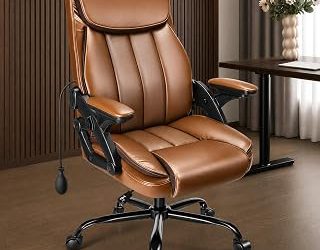
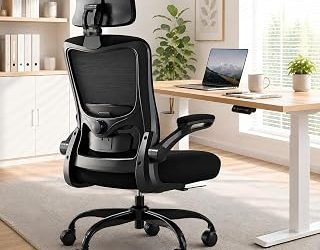
This one earns its keep through the adjustable headrest, which is the feature most budget chairs skip and the one that matters most after hour five. The brown PU reads warmer than the usual black-plastic office look, the padded arms take pressure off your shoulders, and the lumbar shaping is well-placed for average-height users.
High Back Ergonomic Executive Chair with Flip Arms
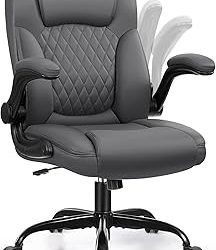
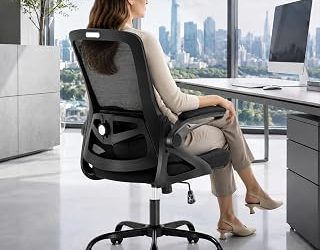
The flip-up arms make this a genuinely practical choice for small home offices — fold them and the chair tucks fully under a desk or dining table, which matters when floor space is tight. A strong metal base and quiet casters put it a tier above the usual nylon-and-hard-plastic construction, and the built-in adjustable lumbar means you’re not stuck with someone else’s idea of your spine.
Heavy Duty 400 lb Capacity Big and Tall Chair
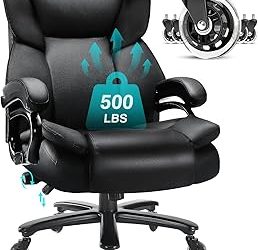
If you’re a larger user or you simply want hardware that isn’t operating at the edge of its rating, this is the structural pick: a 400 lb capacity frame, 155° locking recline, 3-inch adjustable armrests, and a detachable lumbar pillow. The wide seat pan and reinforced base make it the most confidence-inspiring chair here to sit down in hard.
COLAMY High Back Executive Chair
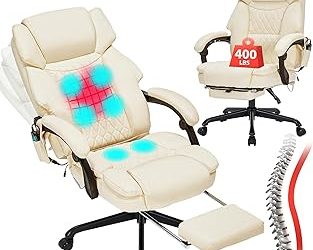
COLAMY’s inflatable lumbar bladder is the standout — a hand pump lets you dial in support pressure precisely rather than accepting fixed foam, which is a meaningful advantage for anyone with a specific lower-back problem. Add flip-up arms, tilt lock, and generous padding, and it’s the most tunable chair on this list.
Frequently Asked Questions
Is PU leather durable enough for daily eight-hour use?
Good PU will hold up two to four years of daily use if you keep it out of direct sunlight and wipe it with a damp microfiber cloth rather than any solvent or alcohol-based cleaner. Wear shows first at the front seat edge and the armrest tops — a leather conditioner made for synthetics slows that down considerably.
How do I stop my chair from slowly sinking?
Sinking means the gas lift cylinder has lost its seal, and it’s a replaceable part, not a dead chair. Universal cylinders run under $30, and swapping one takes a rubber mallet, a pipe wrench, and about fifteen minutes — far cheaper than replacing the whole chair.
Do I really need an adjustable headrest?
For sessions under three hours, no. Beyond that, a headrest positioned at the base of your skull lets your neck muscles genuinely release during reclined phases, which is why it consistently separates comfortable long-haul chairs from merely adequate ones.
What’s the right way to set up a new chair?
Set seat height so your feet are flat and your knees sit level with or slightly below your hips, then position the lumbar apex at your beltline. Leave roughly two fingers of clearance between the seat edge and the back of your knees, and set armrests so your shoulders stay relaxed rather than shrugged.
Final Thoughts
If you want the most adjustable chair for the money, the COLAMY High Back with its inflatable lumbar system gives you the finest control over the one variable that decides whether hour seven hurts. Larger users or anyone tired of chairs flexing under load should go straight to the Heavy Duty 400 lb Big and Tall model for its reinforced base and locking 155° recline. And on a tighter budget, the Furmax High Back Executive remains the sensible starting point — pair it with better casters and you’ve got a chair that punches well above its price.