Key takeaways
- Identify the base before you buy: Unscrew the old bulb and measure the threaded metal collar. Roughly 1/2″ across is E12 candelabra, 11/16″ is E17 intermediate, and 1″ is E26 medium. Guessing costs you a return trip.
- Choose A15 or G14, not A19: An A15 envelope runs about 3.4″ tall versus 4.3″ for a standard A19. In a shallow fan shade that difference decides whether the glass seats properly or sits crooked.
- Match dimmable to your actual switch: Non-dimmable bulbs are cheaper and more reliable, but they’ll flicker or hum on a dimmer circuit. If your fan light runs off a wall dimmer or a pull-chain with multiple brightness taps, buy dimmable or replace the switch.
- Pick color temp by room, not habit: 5000K daylight is crisp for kitchens, garages, and laundry. Bedrooms and living rooms feel harsh at that number — 4000K or lower reads warmer and more livable overhead.
- Look for CRI 85 or better: Color rendering index under 80 makes wood tones muddy and skin look gray. CRI 85+ keeps furniture and paint looking like they did in the store, which matters when the fan is your main light source.
What's inside
Swap out a burned-out ceiling fan bulb and you’ll discover the strange truth of fan lighting: the socket is rarely a standard one, the housing is rarely deep enough, and the bulb you already have in the junk drawer rarely fits. Fan light kits use compact sockets — candelabra E12, intermediate E17, or a medium E26 that still needs a stubby A15 envelope — and glass shades that leave maybe an inch of clearance. Grab a normal A19 and you either can’t thread it in or you end up with the tip pressing against the shade.
Then there’s the flicker problem. Fan light kits are wired downstream of the fan’s own switch or a wall dimmer that was never meant for LEDs, and a mismatched bulb will strobe, buzz, or die in six months from vibration. This guide walks through the base types, envelope sizes, and specs that actually matter, then breaks down six six-packs worth installing — including which color temperature to run so your ceiling doesn’t glow like a walk-in cooler.
As an Amazon Associate we earn from qualifying purchases.


🛒 Best Price Today on Amazon
Prime members get fast, free shipping on everything above, plus member-only deals. New members get a 30-day free trial — cancel anytime.
How to Choose a Light Bulbs For Ceiling Fan (2026)
- Identify the base before you buy: Unscrew the old bulb and measure the threaded metal collar. Roughly 1/2″ across is E12 candelabra, 11/16″ is E17 intermediate, and 1″ is E26 medium. Guessing costs you a return trip.
- Choose A15 or G14, not A19: An A15 envelope runs about 3.4″ tall versus 4.3″ for a standard A19. In a shallow fan shade that difference decides whether the glass seats properly or sits crooked.
- Match dimmable to your actual switch: Non-dimmable bulbs are cheaper and more reliable, but they’ll flicker or hum on a dimmer circuit. If your fan light runs off a wall dimmer or a pull-chain with multiple brightness taps, buy dimmable or replace the switch.
- Pick color temp by room, not habit: 5000K daylight is crisp for kitchens, garages, and laundry. Bedrooms and living rooms feel harsh at that number — 4000K or lower reads warmer and more livable overhead.
- Look for CRI 85 or better: Color rendering index under 80 makes wood tones muddy and skin look gray. CRI 85+ keeps furniture and paint looking like they did in the store, which matters when the fan is your main light source.
The Best Light Bulbs For Ceiling Fan (2026)s Reviewed
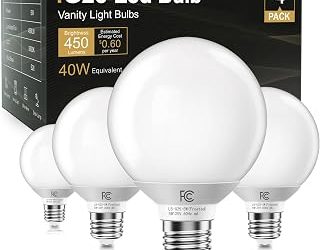
A15 LED E26 Ceiling Fan Bulbs, 5000K Daylight (6-Pack)
This is the fix for medium-base fan kits where a full-size A19 bottoms out against the shade — same E26 threads, smaller A15 body, 600 lumens at 6W. The 5000K output is genuinely bright and neutral, which makes it a strong pick for kitchen and utility-room fans, and the appliance-rated build means leftovers can go straight into a fridge or range hood.
Cotanic E26 LED Ceiling Fan Bulbs, 4000K Natural (6-Pack)
Same compact A15 shape and E26 base as above, but at 4000K it lands in the sweet spot for bedrooms, dens, and dining rooms where daylight white feels clinical. CRI 85+ keeps wood furniture and upholstery reading true, and the non-dimmable design holds steady on plain toggle switches.
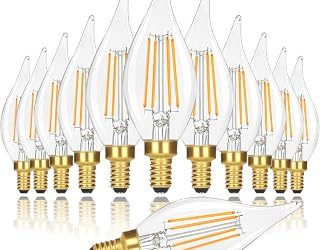
E12 LED Ceiling Fan Bulbs, 6W 5000K Daylight (6-Pack)
Most modern fan light kits use candelabra sockets, and this is the straightforward drop-in: E12 base, A15 envelope, 600 lumens each. Four of these in a four-socket kit gives you 2,400 lumens on 24 watts total, which is a noticeable brightness jump over the 40W incandescents most kits shipped with.
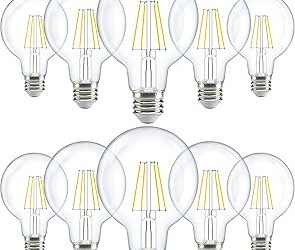
E17 Intermediate Base G14 Globe LED, 5000K (6-Pack)
E17 intermediate is the base that catches people off guard — too big for candelabra, too small for medium — and it’s common on older Hunter and Harbor Breeze kits. The G14 globe shape looks intentional in exposed-bulb fixtures, and at 6W it runs cool enough to sit inside a tight glass shade without cooking the diffuser.
MAXvolador E12 LED Candelabra Fan Bulbs, 5000K (6-Pack)
A well-built candelabra option with a slightly heavier heat sink than budget equivalents, which helps in enclosed shades where trapped heat shortens LED life. Consistent color across the pack is the real selling point here — mixed-batch bulbs in a four-socket fan look obviously off.
Frequently Asked Questions
Why do my ceiling fan LED bulbs flicker?
Nearly always a dimmer mismatch. Non-dimmable LEDs on a dimmer circuit will strobe or buzz even at full brightness. Loose sockets from fan vibration are the second culprit — cut power and hand-tighten each bulb a quarter turn.
Can I use regular A19 bulbs in a ceiling fan?
Sometimes, if the base is E26 and the shade is deep. But A19 bulbs are nearly an inch taller than A15, so in most fan kits the glass won’t seat or the bulb tip touches the diffuser and overheats.
What wattage should I use in a ceiling fan light kit?
Check the label inside the fixture for the maximum wattage rating. That limit is about heat, so a 6W LED producing 60W-equivalent light is well within spec on virtually any kit.
How many lumens do I need for a fan light?
Aim for 1,600 to 2,400 total lumens in an average bedroom or living room. Four 600-lumen bulbs hit 2,400, which is plenty; drop to three if the room feels overlit.
Final Thoughts
For candelabra kits, the E12 LED Ceiling Fan Bulbs 6-pack is the easy default, with the MAXvolador E12 set worth the small premium if your shades are fully enclosed. Medium-base owners should grab the A15 E26 5000K pack for kitchens and work areas, or the Cotanic E26 4000K version anywhere the light needs to feel warmer overhead.