Key takeaways
- Recline range and lock type: A 90°–135° infinite lock beats a three-notch ratchet every time — notched mechanisms drop you into whichever angle they were built for, not the one your spine wants. Check that the paddle holds under load, not just when the seat is empty.
- Gas cylinder class: Look for Class 3 or Class 4 SGS-certified lift on anything rated above 250 lbs. It’s a $15 part that determines whether your chair still holds height in month eighteen, and it’s the easiest component to replace yourself later.
- Frame and base material: Nylon bases crack at the spokes under repeated recline loading. Steel or aluminum costs more and weighs more, but it’s the difference between a three-year chair and a ten-year one. Flip it over before assembly and look.
- Footrest engineering: Retractable footrests hinge under a cantilever load, so the pivot pin does all the work. Telescoping designs with a metal sleeve outlast folding plastic arms considerably. If the footrest wobbles at full extension out of the box, it will only get worse.
- Seat width and armrest travel: Measure your hip width at the widest point and add three inches. Flip-up or lay-flat armrests matter more than most buyers expect — they let you sit cross-legged and let the chair slide under a desk lip.
What's inside
Reclining office chairs live in a strange gap between furniture categories. A proper recliner is built for lounging and nothing else, while most task chairs barely tip back five degrees before the tilt lock stops you cold. What you actually want sits in the middle: a chair you can work upright in for six hours, then drop back to 135 degrees for a twenty-minute reset without moving to another room. That combination is harder to buy than it should be, because the recline mechanism, the seat depth, and the gas lift all have to cooperate — and cheap chairs cut corners on exactly those parts.
I’ve spent enough weekends taking these apart, swapping casters, and re-torquing loose seat plates to know where the failure points hide. This guide covers what to inspect before you commit: how infinite-lock tilts differ from three-position ratchets, why footrest hinges are the first thing to sag, what class of gas cylinder you want under a 300-pound load, and which of these six chairs actually earn their recline range. Assembly notes included, because a chair that ships with stripped threads is not a bargain.
As an Amazon Associate we earn from qualifying purchases.


How to Choose an Office Chair That Reclines (2026)
- Recline range and lock type: A 90°–135° infinite lock beats a three-notch ratchet every time — notched mechanisms drop you into whichever angle they were built for, not the one your spine wants. Check that the paddle holds under load, not just when the seat is empty.
- Gas cylinder class: Look for Class 3 or Class 4 SGS-certified lift on anything rated above 250 lbs. It’s a $15 part that determines whether your chair still holds height in month eighteen, and it’s the easiest component to replace yourself later.
- Frame and base material: Nylon bases crack at the spokes under repeated recline loading. Steel or aluminum costs more and weighs more, but it’s the difference between a three-year chair and a ten-year one. Flip it over before assembly and look.
- Footrest engineering: Retractable footrests hinge under a cantilever load, so the pivot pin does all the work. Telescoping designs with a metal sleeve outlast folding plastic arms considerably. If the footrest wobbles at full extension out of the box, it will only get worse.
- Seat width and armrest travel: Measure your hip width at the widest point and add three inches. Flip-up or lay-flat armrests matter more than most buyers expect — they let you sit cross-legged and let the chair slide under a desk lip.
The Best Office Chairs That Recline (2026) Reviewed
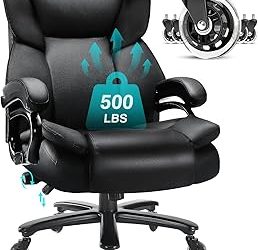
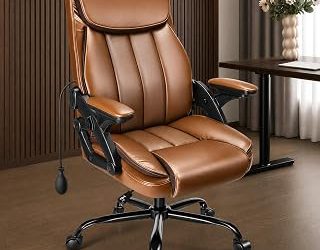
Big and Tall Chair with Flip Armrests and Crystal Velvet Seat
The wide velvet seat is genuinely accommodating and the flip armrests solve the cross-legged problem without any modification, which is rare at this price. Padding is generous rather than dense, so expect some compression over the first few months — a habit of rotating your sitting position helps considerably.
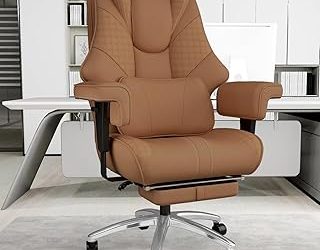
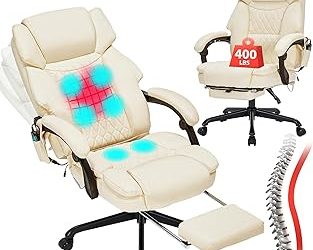
amseatec Big and Tall with Footrest and 20 Spring Packs
The 20 spring packs in the seat base are the standout here: they distribute load far more evenly than a single slab of foam, and the infinite 90°–135° lock lets you stop wherever feels right instead of at a preset notch. The 300 lb rating is honest, and the leather takes a conditioner well if you want it to last.
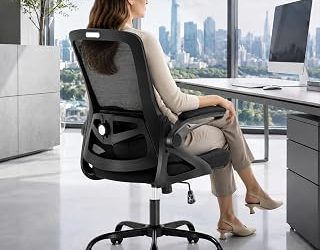
CYKOV Ergonomic Mesh Chair with 4-Way Headrest
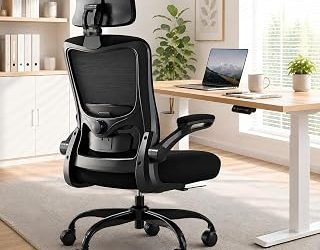
This is the most adjustable chair in the group — the headrest moves nearly five inches vertically and pivots 60 degrees, and the two-way lumbar adjusts in both height and depth. Breathable mesh plus a 350 lb rating and a five-year warranty makes it the pick for anyone who runs hot or sits long shifts.
LukkDys Executive Chair with 5-Gear Lay-Flat Armrests
The 400 lb capacity and 90°–180° lay-flat armrests make this the heavy-duty option, and the armrest travel genuinely opens up cross-legged sitting in a way flip-up designs don’t quite manage. The recline tops out at 115 degrees, so treat it as a serious work chair with a lean rather than a nap chair.
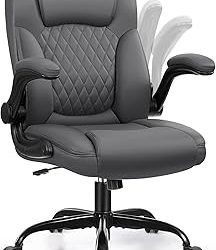
Ylzyxal Desk Chair with Padded Flip-Up Arms
A straightforward, well-executed executive chair — tilt lock, 360° swivel, adjustable lumbar, and padded flip-up arms without any features you’ll never touch. Assembly is quick and the hardware is decent, making it a solid choice for a secondary desk or a first proper chair.
Frequently Asked Questions
Is a 135-degree recline actually useful, or is it a spec sheet number?
It’s useful, but only with a footrest or a headrest to support the position. Reclining past about 120 degrees shifts load off your lumbar spine onto the backrest, which is genuinely restorative — without leg support, though, your hamstrings end up doing the work and the benefit disappears.
Can I replace the gas cylinder myself if it fails?
Yes, and it’s one of the easier repairs. The cylinder is held by friction in a tapered socket: tap it out with a rubber mallet and a pipe wrench for grip, then press the new one in. Standard cylinders are largely interchangeable, so measure the stroke length and buy a Class 4.
Mesh or padded leather for a reclining chair?
Mesh wins on temperature and stays consistent for years; padded leather feels better in the first month and conforms to you over time. If you recline frequently, mesh has an edge because the tension distributes across your back rather than compressing into a permanent dent.
What should I check right after assembly?
Re-torque every bolt after a week of use — seat plate bolts in particular back out as the frame settles. Test the recline lock under your full weight, not empty, and confirm the footrest holds at full extension. Catching a loose mechanism early prevents the pivot wear that kills these chairs.
Final Thoughts
If you want maximum adjustability and a chair that stays cool through long sessions, the CYKOV mesh chair with its four-way headrest and five-year warranty is the strongest all-around buy. For heavier builds, the LukkDys at 400 lbs with lay-flat armrests is the most structurally serious option here, while the amseatec earns its place on the strength of its spring-pack seat and true infinite-lock recline.