Anyone who has dragged a pressure washer out of the garage on a Saturday morning knows the machine is only half the equation. Blast plain water at a chalky vinyl fence or a truck coated in road film and you’ll spend forty minutes chasing streaks, gouging cedar, or driving grime deeper into porous concrete. The soap is what breaks the bond between dirt and surface so the water can do its job at a lower, safer pressure — and that’s exactly where most buyers guess wrong, grabbing whatever jug is stacked nearest the checkout.
This guide sorts through the detergents and foam attachments actually worth your money in 2026, from touchless vehicle concentrates to heavy-duty degreasers built for oil-stained driveways. I’ve also included two foam cannons, because a good soap starved of dwell time is wasted soap. Below you’ll find selection criteria, honest notes on each pick, and answers to the questions that come up most often once the trigger gun is in hand.
Our top picks




As an Amazon Associate we earn from qualifying purchases at no extra cost to you.
🛒 Best Price Today on Amazon
Prime members get fast, free shipping on everything above, plus member-only deals. New members get a 30-day free trial — cancel anytime.
How to Choose a/an Pressure Washer Soaps (2026)
- Dilution ratio: A gallon that stretches to 40 gallons of working solution costs far less per wash than a ready-to-use bottle. Check the yield printed on the label, not the container size, before comparing prices.
- Surface compatibility: Alkaline degreasers cut oil and engine grease but can etch clear coat and dull anodized trim. Keep a dedicated vehicle soap and a separate all-purpose cleaner rather than forcing one product to do both jobs.
- Foam behavior: Thick, clinging suds buy you dwell time on vertical panels. Thin soaps sheet off in seconds and never get a chance to lift anything, no matter how strong the formula reads on paper.
- Pump safety: Confirm the detergent is pressure-washer rated. Dish soap and household degreasers can swell seals and strip pump lubrication over a season of use, turning a cheap shortcut into a repair bill.
- Runoff and plants: If you’re washing near beds, lawn, or a storm drain, look for biodegradable formulas and pre-wet surrounding vegetation. Rinse the area afterward regardless of what the bottle claims.
The Best Pressure Washer Soaps (2026)s Reviewed
Wash Chems Pro50 Foam Cannon Soap
A commercial-grade touchless concentrate that produces the dense, shaving-cream lather you normally only see at professional wash bays, and the 1.06-gallon jug lasts through a long stretch of weekends. It’s my pick for trucks, tractors, and anything carrying baked-on agricultural dust where you genuinely want to avoid touching the paint.
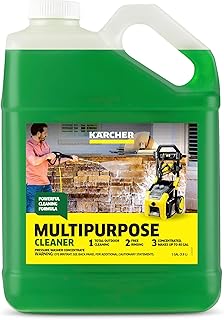
Kärcher Multi Purpose Detergent
Highly concentrated and rated to make up to 40 gallons of working solution, this is the jug I reach for on fences, siding, patios, and sidewalks. It loosens weathered grime and mildew shadows well enough that you can drop to a 25-degree tip and stop worrying about lap marks on painted wood.
Sun Joe SPX-APC1G Cleaner + Degreaser
The heavy hitter here — a one-gallon all-purpose cleaner and degreaser that handles oil drips, mower decks, and grill carts without a second application. Keep it off automotive clear coat and cured wax, and use it where the grease is genuinely stubborn rather than as an everyday driveway soap.
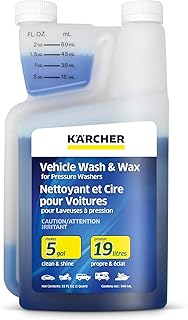
Kärcher Vehicle Wash and Wax
This concentrate leaves a light hydrophobic film that helps water bead and sheet on the next rain, which is a real convenience on daily drivers. Yield is modest at up to 5 gallons of solution, so treat it as a finishing soap for cars, bikes, and boats rather than your bulk workhorse.
Tool Daily Foam Cannon
A one-liter cannon with a 1/4-inch quick connector and five nozzle tips, which makes it the most versatile way to convert a decent soap into thick, clinging foam. The brass adjustment knob lets you dial suds density by hand, and the included tip set covers everything from wide rinsing to focused stripping.
Frequently Asked Questions
Can I run detergent through any pressure washer?
Only if the unit has a soap injector or you’re using a downstream foam cannon. Most electric washers pull detergent through a low-pressure siphon that only engages with a black soap tip installed — check your manual, because forcing soap through a high-pressure nozzle simply won’t draw.
How long should soap sit before rinsing?
Three to five minutes on most surfaces, and never long enough to dry. On a hot day in direct sun, work in small sections and mist the area to keep the film active, or you’ll be scrubbing dried residue by hand.
Is a foam cannon actually necessary?
For vehicles, yes — the extra dwell time is what makes touchless washing possible. For flat concrete or siding, a standard soap tip and a pump sprayer will get you most of the way there for less money.
Why does my soap leave streaks on siding?
Almost always insufficient rinsing or working bottom-to-top on the wash and top-to-bottom on the rinse in the wrong order. Apply soap from the bottom up so runoff doesn’t pre-streak dry panels, then rinse from the top down with overlapping passes.
Final Thoughts
For most homeowners, the Kärcher Multi Purpose Detergent is the smartest single buy — the dilution yield makes it economical and it’s gentle enough for siding, decks, and driveways alike. Add the Wash Chems Pro50 if you wash vehicles regularly and want genuine touchless performance, and pair either with the Tool Daily Foam Cannon to get the dwell time that makes good chemistry actually work.