Our Short List of 3

- Motor: 13.5-amp corded electric
- Tilling width: 16 inches
- Tilling depth: up to 8 inches
- Tines: 6 steel tines, up to 370 RPM
- Motor: 13.5-amp corded electric
- Tilling width: adjustable, 11 to 16 inches
- Tilling depth: up to 8 inches
- Tines: 6 adjustable steel tines
- Engine: 21.2cc 2-cycle, fuel and oil mix
- Tilling width: 9 inches
- Tilling depth: up to 10 inches
- Tines: serpentine, reversible for shallow cultivating
All 4 Picks at a Glance
| Product | Specs | Action |
|---|---|---|
| 1. Sun Joe TJ604E 16-Inch 13.5-Amp Electric Tiller/Cultivator |
| Check price on Amazon |
| 2. Earthwise TC70016 16-Inch 13.5-Amp Corded Electric Tiller/Cultivator |
| Check price on Amazon |
| 3. Mantis 7920 2-Cycle Plus Tiller/Cultivator |
| Check price on Amazon |
 5. Greenworks 27072 8-Amp 10-Inch Corded Tiller |
| Check price on Amazon |
Key takeaways
- Compare five garden tillers for home beds and plots, with corded electric and gas picks, tilling widths, depths, tine counts and weights side by side.
Turning a bed by hand with a spade and fork works for one small square of soil, but it gets old fast when a whole vegetable plot needs opening up in spring or a weedy patch needs working back into use. A garden tiller does that digging for you, breaking compacted ground, mixing in compost and cutting weeds into the soil in a fraction of the time. The five machines below cover the sizes most home gardens actually need, from wide corded electric models that chew through a full allotment bed to compact gas cultivators built for weeding between rows.
This guide sticks to walk-behind garden tillers and tiller-cultivators for home plots, raised beds and borders. It leaves out rear-tine farm machines, tractor attachments and hand tools, so every pick here is something one person can lift out of a shed, wheel to the bed and put to work alone.
Disclosure: As an Amazon Associate, we earn from qualifying purchases made through links on this page, at no extra cost to you.
How to Choose a Garden Tiller
Power source. Corded electric tillers are light, quiet and need almost no upkeep beyond cleaning the tines, but the cable sets your range and you need an outdoor socket within reach. Gas models run anywhere and punch harder for their size, yet they ask for fuel mixing on two-cycle engines, pull cords and more storage care. For a typical suburban plot with power nearby, corded electric is the simpler life. For a large or remote plot, gas earns its keep.
Tilling width. Width decides how many passes a bed takes. A 16-inch machine covers open ground quickly but cannot squeeze between planted rows. A 9 or 10-inch cultivator slips between rows of beans or potatoes for mid-season weeding, and adjustable-width models that shed their outer tines give you both in one machine.
Tilling depth. Most home tillers work 5 to 10 inches down. Shallow work suits weeding and stirring in compost or feed. Deeper work matters when you are opening new ground or burying green manure. Check whether depth is set by a drag bar, wheel position or simply by how you hold the handles, because that changes how steady the depth stays across a bed.
Tines. More tines and a wider head move soil faster, while tine speed does the cutting. Front-tine designs, where the tines sit ahead of the wheels and pull the machine along, suit most home beds. Curved or serpentine tines on mini cultivators are shaped to dig without snagging on roots and stones as much as straight blades do.
Weight and handling. A tiller you cannot lift over a raised-bed edge will not get used. Electric models here run from the mid-20s in pounds up to about 30, and the gas minis are lighter still, which helps when carrying the machine between beds. Folding handles and transport wheels matter if shed space is tight.
The 5 Best Tillers for Home Gardens
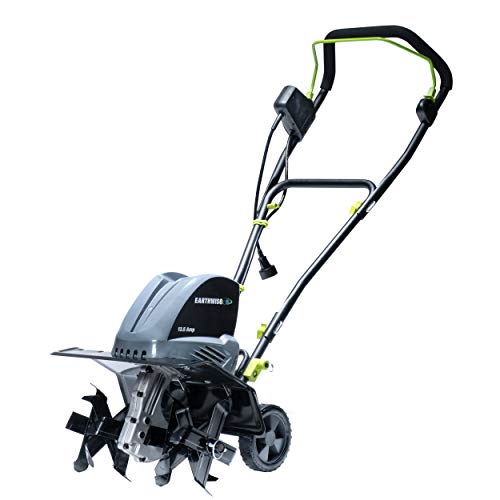
1. Sun Joe TJ604E 16-Inch 13.5-Amp Electric Tiller/Cultivator
- Motor: 13.5-amp corded electric
- Tilling width: 16 inches
- Tilling depth: up to 8 inches
- Tines: 6 steel tines, up to 370 RPM
The TJ604E is the widest and strongest corded machine in this roundup, built for gardeners who want to open up a full bed in a handful of passes. Its 13.5-amp motor spins six steel tines at up to 370 RPM, cutting a 16-inch path up to 8 inches deep, so a standard allotment bed takes three or four passes rather than a dozen. Three-position wheels let you set how deep the machine works and then roll it back to the shed when the job is done.
Because the tines are steel and the motor is at the top of the corded class, the TJ604E copes with ground that has already grown a season of weeds, though truly untouched turf still deserves a first pass with a spade or a skim with a mower. The handles fold down for storage, and at just over 27 pounds it is manageable to carry short distances. If your beds are big, your soil is firm and you have an outdoor socket, this is the default pick.
2. Earthwise TC70016 16-Inch 13.5-Amp Corded Electric Tiller/Cultivator
- Motor: 13.5-amp corded electric
- Tilling width: adjustable, 11 to 16 inches
- Tilling depth: up to 8 inches
- Tines: 6 adjustable steel tines
The TC70016 matches the Sun Joe on headline numbers, a 13.5-amp motor and a 16-inch cut, but adds a trick the TJ604E cannot copy: the outer tines come off, narrowing the working width from 16 inches down to 11 inches. That turns one machine into both a bed-opener and a row weeder, which suits mixed gardens where wide spring work gives way to careful summer cultivating between crops.
Six adjustable tines work down to 8 inches deep, and the cushioned grip handles keep vibration through the hands lower on longer sessions. It is a touch heavier than the Sun Joe at 29 pounds, which you notice when lifting it onto a raised bed but not while it is working, since the tines pull it forward. Gardeners who want one corded machine to cover both spring digging and summer weeding should look here first.
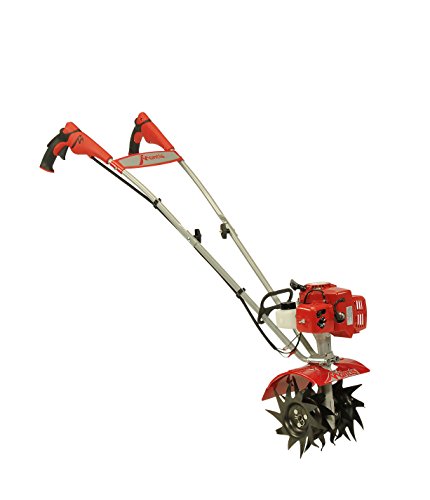
3. Mantis 7920 2-Cycle Plus Tiller/Cultivator
- Engine: 21.2cc 2-cycle, fuel and oil mix
- Tilling width: 9 inches
- Tilling depth: up to 10 inches
- Tines: serpentine, reversible for shallow cultivating
The Mantis 7920 is the classic mini cultivator, and at 20 pounds it is the lightest machine in this guide by a wide margin. A 21.2cc two-cycle engine drives curved serpentine tines fast enough to dig down 10 inches, deeper than any other pick here, in a 9-inch path that fits between rows and inside raised beds where a wide machine simply cannot go.
That narrow head and low weight make the 7920 the weeding and bed-refreshing tool of the group rather than a ground-breaker for huge plots, although owners have used Mantis machines to open new beds for decades by working in shallow passes. The tines reverse for shallow cultivating, which is the setting you want for stirring compost into the top few inches without bringing weed seeds up from below. It needs a fuel and oil mix, like most two-cycle tools, and the engine is small enough that keeping the mix fresh matters.
4. Earthquake MC43 Cultivator with 43cc Viper Engine
Where the Mantis is the light touch, the Earthquake MC43 brings the biggest engine in this roundup. Its 43cc Viper two-cycle motor is among the strongest fitted to a mini cultivator, and it shows in compacted or clay-heavy soil where smaller engines bog down. The tine set adjusts from 10 inches down to 6 inches wide, so you can open a small bed at full width and then slim the machine down to weed between rows.
Overhand handlebars are the detail owners mention most: holding the machine from above the tines cuts the bouncing and bucking that make some mini tillers tiring, and the onboard wheels adjust to help set working depth up to 8 inches. It runs on a 50:1 fuel and oil mix, uses a gear-drive transmission, and the tiller and engine are backed by a five-year warranty, which is generous for this class of tool. Published weight figures vary between sources, so that line is marked not published below.
Specs
- Engine: 43cc Viper 2-cycle, 50:1 fuel and oil mix
- Tilling width: adjustable, 6 to 10 inches
- Tilling depth: up to 8 inches
- Transmission: gear drive
- Warranty: 5 years
- Weight: not published
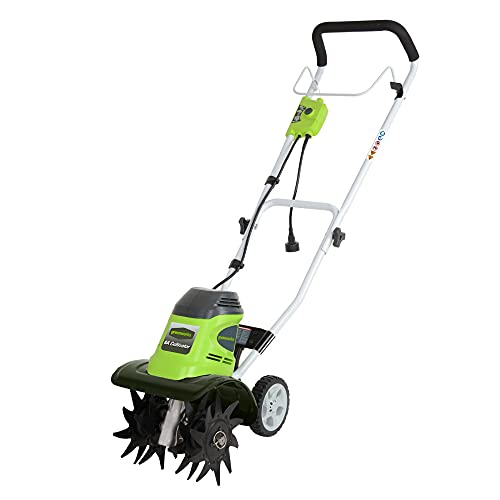
5. Greenworks 27072 8-Amp 10-Inch Corded Tiller
- Motor: 8-amp corded electric, 120V
- Tilling width: 10 inches
- Tilling depth: up to 5 inches
- Tines: 4 tines, 8.5-inch tine diameter
The Greenworks 27072 is the small-bed specialist of the group. An 8-amp motor turns four tines across a 10-inch width, working down to about 5 inches, which is exactly the depth most raised-bed and flower-border work needs. It will not thank you for handing it a field of untouched sod, but for soil that gets dug every year it is quick, light to move and easy to live with.
A cord lock holds the extension lead in place so the plug stays put while you work, and the folding handles keep the machine compact in the shed. Because it is narrower and shallower than the two 16-inch models, it is also the easiest here to control in tight corners and around established shrubs. Gardeners with a couple of raised beds and borders, rather than a full vegetable plot, will find this is all the tiller they need.
Comparison Table
| Model | Power | Width | Depth | Tines | Weight |
|---|---|---|---|---|---|
| Sun Joe TJ604E | 13.5-amp corded | 16 in | 8 in | 6 | 27.1 lb |
| Earthwise TC70016 | 13.5-amp corded | 11–16 in | 8 in | 6 | 29 lb |
| Mantis 7920 | 21.2cc 2-cycle gas | 9 in | 10 in | Serpentine | 20 lb |
| Earthquake MC43 | 43cc 2-cycle gas | 6–10 in | 8 in | Adjustable set | Not published |
| Greenworks 27072 | 8-amp corded | 10 in | 5 in | 4 | Not published |
Frequently Asked Questions
What size tiller do I need for a home vegetable garden?
For most home plots, a tilling width between 10 and 16 inches is the sweet spot. Wide 16-inch corded models clear a bed quickly in spring, while a 9 or 10-inch machine is better for weeding between rows once crops are in. If you only buy one, an adjustable-width model covers both jobs.
Can an electric tiller handle hard or clay soil?
A strong corded model such as the 13.5-amp picks here can work firm and moderately clay-heavy soil, especially after rain has softened it. Very hard, dry ground defeats any small tiller, gas or electric, so water the bed a day ahead or make several shallow passes, lowering the depth a little each time.
How deep should a garden tiller dig?
Most vegetables are happy in soil worked 6 to 8 inches deep, which every pick here except the smallest can reach. Deep digging to 10 inches, as the Mantis manages, helps when opening a new bed. For routine weeding and feeding, the top 2 to 3 inches are all you need to disturb.
Do gas mini tillers need mixed fuel?
Yes, both gas models in this guide use two-cycle engines, which run on petrol mixed with two-cycle oil. The Earthquake MC43 uses a 50:1 mix. Always mix in a separate can, use fresh fuel, and run the carburettor dry before long storage to keep the engine easy to bring back in spring.
How do I look after a tiller between seasons?
Clean soil and wrapped weeds off the tines after each use, check the tines for bends or cracks, and store the machine dry and under cover. Electric models need little else. Gas models also want fresh fuel or a drained tank over winter, plus a clean air filter before the new season.
Conclusion
For most home gardens with power nearby, the Sun Joe TJ604E is the simplest route to a dug bed: wide, strong and light enough to carry. The Earthwise TC70016 is the smarter buy if you also weed between rows, thanks to its narrowing tine set. Gardeners without a socket in reach should look at the gas pair, the featherweight Mantis 7920 for raised beds and row work, or the harder-hitting Earthquake MC43 for stubborn soil. And if your patch is just a few raised beds and borders, the compact Greenworks 27072 does that job without the bulk of the bigger machines.
More from Amazon
Programs that pair well with the guide above. Offers and eligibility are set by Amazon and may change.
A free business account with business pricing and bulk-buying tools for work, shop or home office.
Create a business accountFree shipping on eligible items, Prime Video and more. Eligible new members can start with a free trial.
Start a Prime free trialAudiobooks and podcasts to listen to on the go. Eligible new members can start with a free trial.
Try Audible freeAd-free music streaming. Eligible new subscribers can start with a free trial.
Try Music Unlimited freeAs an Amazon Associate we earn from qualifying purchases.