Key takeaways
- Measure to the trim, not the drywall: Hold your tape at the front face of your baseboard and mark the floor with painter’s tape at 3, 6, and 9 inches. Most wall huggers want 3 to 6 inches; anything claiming zero clearance still needs room for the power cord’s strain relief.
- Inspect the frame and mechanism spec: Look for kiln-dried hardwood or engineered plywood rails over particleboard, and a steel scissor mechanism with a stated weight capacity of 300 pounds or more per seat. The mechanism is the part that fails first, so it deserves the scrutiny.
- Plan your power path: Power units run off a low-voltage transformer with a two-prong plug, typically on a 6-foot lead. Confirm which side it exits before you commit to a wall, and add a battery backup pack if your outlet placement is awkward.
- Match upholstery to your household: Faux leather wipes clean and suits snack-and-movie use. Velvet feels warmer but shows pet hair and traffic patterns. Genuine leather costs more and rewards you with a decade of service if you condition it twice a year.
- Check the console hardware: USB-A ports often deliver only 5W, while Type-C ports on better units handle 18W or more. Flip-back and storage consoles use hinges and drawer glides, so pop them open and feel for slop before assembly is final.
What's inside
Here’s the trap most people fall into: you measure your wall, subtract the loveseat’s listed depth, and figure you’re fine. Then the footrest comes up and the whole frame slides backward into your baseboard, your outlet cover, or the trim you spent a weekend caulking. Standard recliners need eight to fourteen inches of runway behind them. A true wall hugger flips that geometry, pivoting the seat forward on a scissor mechanism so the back stays put. The catch is that “wall hugger” gets stamped on listings loosely, and the clearance numbers manufacturers publish are measured from the frame, not from your trim.
I went at this the way I’d approach any build: tape measure out, checking mechanism hardware, tracing where power cords actually exit the base, and looking at how consoles are joined rather than just how they photograph. Below are six power reclining loveseats worth your money in 2026, plus the measuring and prep work that keeps installation day from turning into a return label.
As an Amazon Associate we earn from qualifying purchases.



🛒 Best Price Today on Amazon
Prime members get fast, free shipping on everything above, plus member-only deals. New members get a 30-day free trial — cancel anytime.
How to Choose a Wall Hugger Reclining Loveseat (2026)
- Measure to the trim, not the drywall: Hold your tape at the front face of your baseboard and mark the floor with painter’s tape at 3, 6, and 9 inches. Most wall huggers want 3 to 6 inches; anything claiming zero clearance still needs room for the power cord’s strain relief.
- Inspect the frame and mechanism spec: Look for kiln-dried hardwood or engineered plywood rails over particleboard, and a steel scissor mechanism with a stated weight capacity of 300 pounds or more per seat. The mechanism is the part that fails first, so it deserves the scrutiny.
- Plan your power path: Power units run off a low-voltage transformer with a two-prong plug, typically on a 6-foot lead. Confirm which side it exits before you commit to a wall, and add a battery backup pack if your outlet placement is awkward.
- Match upholstery to your household: Faux leather wipes clean and suits snack-and-movie use. Velvet feels warmer but shows pet hair and traffic patterns. Genuine leather costs more and rewards you with a decade of service if you condition it twice a year.
- Check the console hardware: USB-A ports often deliver only 5W, while Type-C ports on better units handle 18W or more. Flip-back and storage consoles use hinges and drawer glides, so pop them open and feel for slop before assembly is final.
The Best Wall Hugger Reclining Loveseats (2026) Reviewed
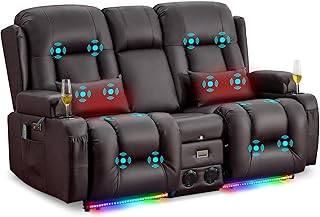
URRED Power Loveseat with Massage and Heat
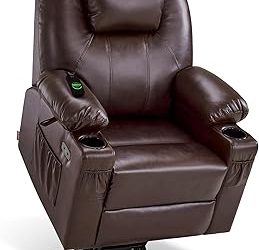
This one packs the most features per dollar: lumbar heat, multi-zone massage, LED accent lighting, and a center console, all in wipe-clean dark brown faux leather. The modular boxes make it a manageable two-person carry, and the massage motors are quiet enough that you won’t hear them over dialogue.
RV Loveseat Recliner in Velvet with USB and Cup Holders
Built for tight footprints, this velvet model recovers 150 degrees of recline while staying close to the wall, and the side pockets and dual cup holders earn their keep in a coach or bonus room. Velvet needs a fabric brush in the maintenance kit, but it reads far less utilitarian than vinyl.
RV Reclining Loveseat with Massage and 150° Recline
Essentially the same clever footprint with massage motors added and a slightly firmer seat foam, which helps if you’re taller and tend to sink. USB charging, a storage pocket, and cup holders cover the practical bases without adding bulk to the arms.
Watson & Whitely Power Reclining Loveseat
The build-quality pick. Genuine leather on all seating surfaces, independently adjustable power headrests, and both USB and Type-C charging make this the one I’d choose to live with for ten years. Assembly is genuinely tool-free, though budget a helper for the 90-pound seat sections.
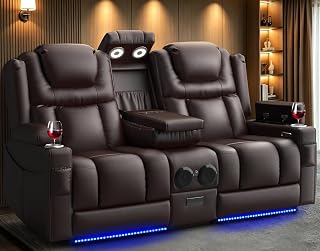
Power Loveseat with Flip-Back Console
The flip-back console is the sleeper feature here: drop it for drinks and controllers, flip it up and you’ve got a continuous bench for stretching out. LED lighting and USB ports round out a solid home theater setup at a mid-tier price.
Frequently Asked Questions
How much space do I really need behind a wall hugger?
Plan on 3 to 6 inches from the face of your baseboard. Tape that distance on the floor before you buy and check that a fully reclined footrest still clears your coffee table by at least 14 inches.
Can I assemble one of these by myself?
Mostly yes. Backs snap onto steel brackets and consoles bolt between the seats, but the seat boxes run 70 to 100 pounds each. Get a second set of hands for the lift, then handle the connections solo.
Will it fit through a 30-inch doorway?
Shipped in pieces, almost always. The widest single component is usually a seat box around 32 to 36 inches deep, so carry it through on its side and measure your tightest stairwell turn first.
Can I plug it into a power strip?
Yes. These transformers draw very little current, so a surge-protected strip is fine and often preferable, since it gives you one switch to kill standby draw.
Final Thoughts
If you want furniture that outlasts the room around it, the Watson & Whitely genuine leather loveseat is the one to buy and maintain. For a feature-loaded media setup at a friendlier price, the URRED with massage and heat delivers the most for your money, and the flip-back console model is the smart choice when you need the seating to switch between lounging and hosting.