Key takeaways
- Actual clearance, not the label: Find the listed wall clearance spec and add an inch for baseboard and trim. If a listing only says “wall hugger” without a number, assume five inches and measure your space accordingly before committing.
- Manual versus power: Manual levers have fewer failure points and no power draw, which matters in an RV running off batteries. Power units add adjustable headrests and easier operation for anyone with shoulder or grip limitations, but need a nearby outlet or hardwired 12V feed.
- Frame construction: Kiln-dried hardwood with corner blocking outlasts stapled particleboard by years. Tip the unit and look at the underside photos in the listing; visible plywood layers and metal reinforcement plates are good signs.
- Charging port quality: USB-A alone is dated in 2026. Look for a USB-C port rated at least 18W, and check whether the console module is replaceable, since a soldered-in board means the whole console is scrap when it fails.
- Assembly and doorway logistics: Most of these ship in two or three boxes with backs that clip onto the seat base. Measure your narrowest doorway and stairwell turn against the seat-base depth, not the assembled dimensions.
What's inside
Wall hugger recliners solve a problem anyone who has measured a room twice already understands: standard recliners need eight to twelve inches of rear clearance, and most living rooms, RV slide-outs, and finished basements simply don’t have it. A wall hugger uses a compressed mechanism that slides the seat forward as the back tilts, so you can park it three or four inches off the drywall and still get a full recline. The catch is that “wall hugger” gets used loosely in listings, and actual clearance requirements range from two inches to nearly seven depending on the frame.
I’ve spent a fair amount of time crawling behind furniture with a tape measure and a flashlight, checking how these mechanisms are built, where the fasteners land, and whether the USB boards are wired to survive a few years of road vibration. This guide covers the loveseat-width models worth considering in 2026, what to verify before you order, and how to spot the shortcuts manufacturers take on frames, foam, and electronics.
As an Amazon Associate we earn from qualifying purchases.


🛒 Best Price Today on Amazon
Prime members get fast, free shipping on everything above, plus member-only deals. New members get a 30-day free trial — cancel anytime.
How to Choose a Wall Hugger Recliner Loveseat (2026)
- Actual clearance, not the label: Find the listed wall clearance spec and add an inch for baseboard and trim. If a listing only says “wall hugger” without a number, assume five inches and measure your space accordingly before committing.
- Manual versus power: Manual levers have fewer failure points and no power draw, which matters in an RV running off batteries. Power units add adjustable headrests and easier operation for anyone with shoulder or grip limitations, but need a nearby outlet or hardwired 12V feed.
- Frame construction: Kiln-dried hardwood with corner blocking outlasts stapled particleboard by years. Tip the unit and look at the underside photos in the listing; visible plywood layers and metal reinforcement plates are good signs.
- Charging port quality: USB-A alone is dated in 2026. Look for a USB-C port rated at least 18W, and check whether the console module is replaceable, since a soldered-in board means the whole console is scrap when it fails.
- Assembly and doorway logistics: Most of these ship in two or three boxes with backs that clip onto the seat base. Measure your narrowest doorway and stairwell turn against the seat-base depth, not the assembled dimensions.
The Best Wall Hugger Recliner Loveseat (2026)s Reviewed
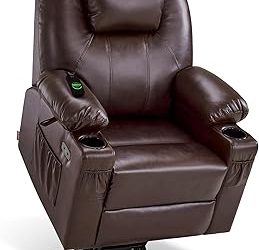
Watson & Whitely Genuine Leather Power Recliner Loveseat
This is the build-quality pick of the group, with real top-grain leather on contact surfaces and a power mechanism that includes independently adjustable headrests, which makes a genuine difference if you and a partner are different heights. The USB and Type-C ports are integrated cleanly rather than bolted into a plastic cup console, and the frame feels substantially more rigid than the budget options.
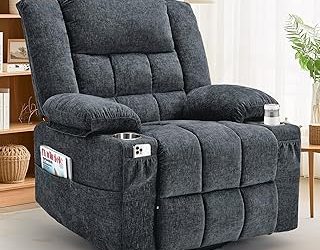
TUNYI Wall Hugger Power Loveseat Recliner
The center console with LED lighting and a standard AC outlet makes this the most practical choice for home theater use, since you can charge a laptop rather than just a phone. Power operation is smooth and quiet, and the beige upholstery hides the seams better than darker fabrics do on this style of frame.
55.1″ RV PU Leather Wall Hugger Recliner
At 55.1 inches wide, this is the narrowest option here and the one most likely to clear a tight RV slide-out or a bonus room with an awkward window wall. Manual levers keep the failure points low and the price down, though the PU leather will want conditioning if it lives anywhere with strong sun exposure.
RV Loveseat Recliner with 150° Adjustable Recline
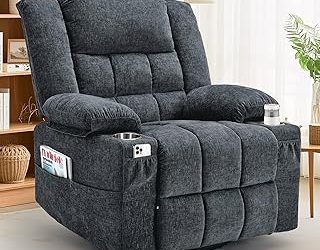
The 150-degree recline range is more generous than most wall huggers manage, and the velvet fabric wears well against the abrasion that RV interiors generate. Storage pockets and dual cup holders are thoughtfully placed rather than tacked on, which tells you someone actually sat in a prototype.
Oversized Massage Reclining Loveseat
The massage function is a vibration motor rather than true percussion, so calibrate expectations, but the oversized seat dimensions and deeper cushioning make this the most comfortable of the group for extended sitting. Storage compartments under the arms are genuinely useful for remotes and cables.
Frequently Asked Questions
How much space does a wall hugger recliner actually need?
Most quality wall huggers need three to five inches of rear clearance, compared to eight to twelve for conventional recliners. Always verify the manufacturer’s spec and add an inch for baseboard thickness, since the mechanism housing sits lower than the upholstery.
Can I run a power recliner in an RV without shore power?
Yes, if you wire it through an inverter sized for the motor draw, typically 150 to 300 watts per seat. Check the transformer label on your specific unit and confirm your battery bank and inverter can handle the peak load before you cut into any wiring.
Are these hard to assemble?
Not particularly. Most arrive with the backs separate from the seat base and connect via steel brackets that slide down and lock. Budget 30 to 45 minutes with a second person to help lift, and keep a rubber mallet handy for seating the brackets fully.
Do the USB ports work without the recliner being plugged in?
On manual models, the charging console usually has its own short power cord that must be plugged in independently. On power models, the ports share the main transformer feed, so no outlet means no charging.
Final Thoughts
If longevity is the priority, the Watson & Whitely genuine leather power loveseat is the one I would buy and expect to keep, thanks to its hardwood frame and dual power headrests. For dedicated media rooms, the TUNYI console model earns its spot with the AC outlet and ambient lighting, while the 55.1″ PU leather manual recliner remains the smartest pick for tight RV footprints where every inch of clearance counts.