Key takeaways
- Compare adhesive data sheets with a matrix for exact surfaces, timing conditions, exposure limits and unresolved manufacturer questions.
What's inside
Compare project adhesives by matching each manufacturer’s data sheet to the same materials, environment and assembly sequence. Record the conditions beside every number. A longer time, higher test strength or waterproof label is not a complete answer unless it applies to the job you are planning.
For a small, nonstructural craft project, the useful result is a shortlist with resolved requirements, not a league table of the strongest glue. Structural, load-bearing and other specially regulated applications need the specified system and appropriate advice. Do not use this worksheet to approve an adhesive for work outside its stated scope.
Write the project requirements before comparing bottles
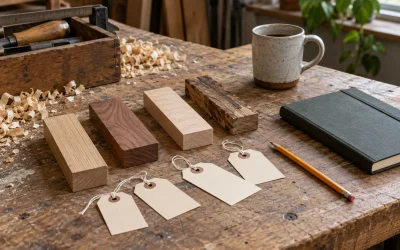
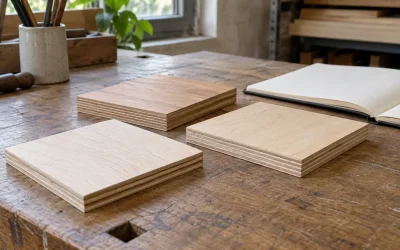
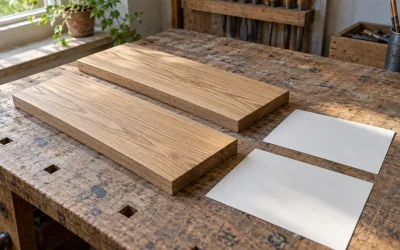
Describe both bonding surfaces. “Wood project” is too broad if one surface is unfinished solid wood and the other is a coated panel. Record the known material, existing finish, intended exposure and whether the manufacturer has addressed that combination. If a surface is unknown, make identification an open task rather than filling the cell with a guess.
Next, describe the practical sequence: which parts must be positioned, how the joint will be held, when the next operation is planned and whether the available instructions cover those steps. Keep the project description unchanged while evaluating candidates. Otherwise, one product may appear better simply because you silently gave it an easier job.
Collect the exact product documents
Save the official technical information and safety document for the exact product, including its name and any version or revision information shown. A retailer summary can help you find a product, but it should not replace the manufacturer’s limitations and application instructions. Similar package colors and related product names do not establish identical use conditions.
Keep the technical and safety documents together. Performance guidance does not replace the handling precautions, and a safety document does not by itself confirm that a joint design is suitable. If two official documents appear inconsistent, keep the conflicting statements and ask the manufacturer which applies to your product before proceeding.
| Comparison row | Candidate A | Candidate B | Question to resolve |
|---|---|---|---|
| Exact product and document | Name, version, link | Name, version, link | Are these the products actually available? |
| Surfaces and preparation | Stated materials and conditions | Stated materials and conditions | Is the actual surface combination covered? |
| Assembly timing | Each named time and its conditions | Each named time and its conditions | Are the time definitions comparable? |
| Holding and later work | Relevant manufacturer instructions | Relevant manufacturer instructions | What remains unknown before the next operation? |
| Exposure limits | Permitted and excluded uses | Permitted and excluded uses | Does the project include an excluded exposure? |
| Reported test strength | Method, substrate and conditions | Method, substrate and conditions | Are the tests comparable at all? |
| Decision | Suitable to investigate, excluded or unresolved | Same status choices | Which evidence supports the status? |
Do not combine different clocks
The official Titebond III product sheet, for example, lists open assembly time of 8–10 minutes and total assembly time of 20–25 minutes at 70°F and 50% relative humidity. Those are two separately named entries, not interchangeable numbers and not a stated full-cure schedule. Keep their labels and conditions intact when transferring them to your worksheet.
Ask for a definition if a document uses an unfamiliar timing term. Do not add different intervals together or assume the larger number is extra time after the smaller one. Record your intended sequence separately from the manufacturer’s timing information. A comparison that hides uncertainty behind one “working time” column can be less useful than the original pages.
Worked example: the larger number does not settle the choice
Imagine a decorative wood assembly for which two products are being considered. Candidate A has an explicitly stated open-assembly entry; Candidate B’s retailer listing gives only a “sets in” number. It is not yet possible to compare those values. The correct next step is to find B’s official instructions or ask its maker what the term means, not declare either product faster or better.
In a second check, the project description includes continuous water exposure. Titebond III’s sheet expressly excludes continuous submersion and structural or load-bearing applications despite its water-resistance claims. That limit belongs in the decision row. A favorable headline cannot cancel a stated exclusion. This example illustrates document reading; it does not recommend a substitute for underwater work.
Resolve missing evidence before starting the project
Reduce the open questions to short, answerable requests. Include the exact surfaces, exposure, product and planned sequence when contacting technical support. Save its response with the same project revision so later changes do not accidentally inherit approval for a different material or use.
For nonstructural craft work, any manufacturer-recommended trial on representative offcuts can help check a particular surface or appearance question. It does not establish structural capacity or override instructions. Keep the trial’s purpose explicit rather than treating a joint that feels firm as proof of every claimed property.
Close the comparison with a brief reason for the selected candidate and a list of instructions still to follow. Preserve the rejected alternatives and why they were rejected. The valuable outcome is a decision someone can revisit when the material, finish or project changes, without starting again from bottle slogans.