Key takeaways
- Track workshop consumables with separate manufacture, purchase, opening and manufacturer shelf-life fields, including storage uncertainties.
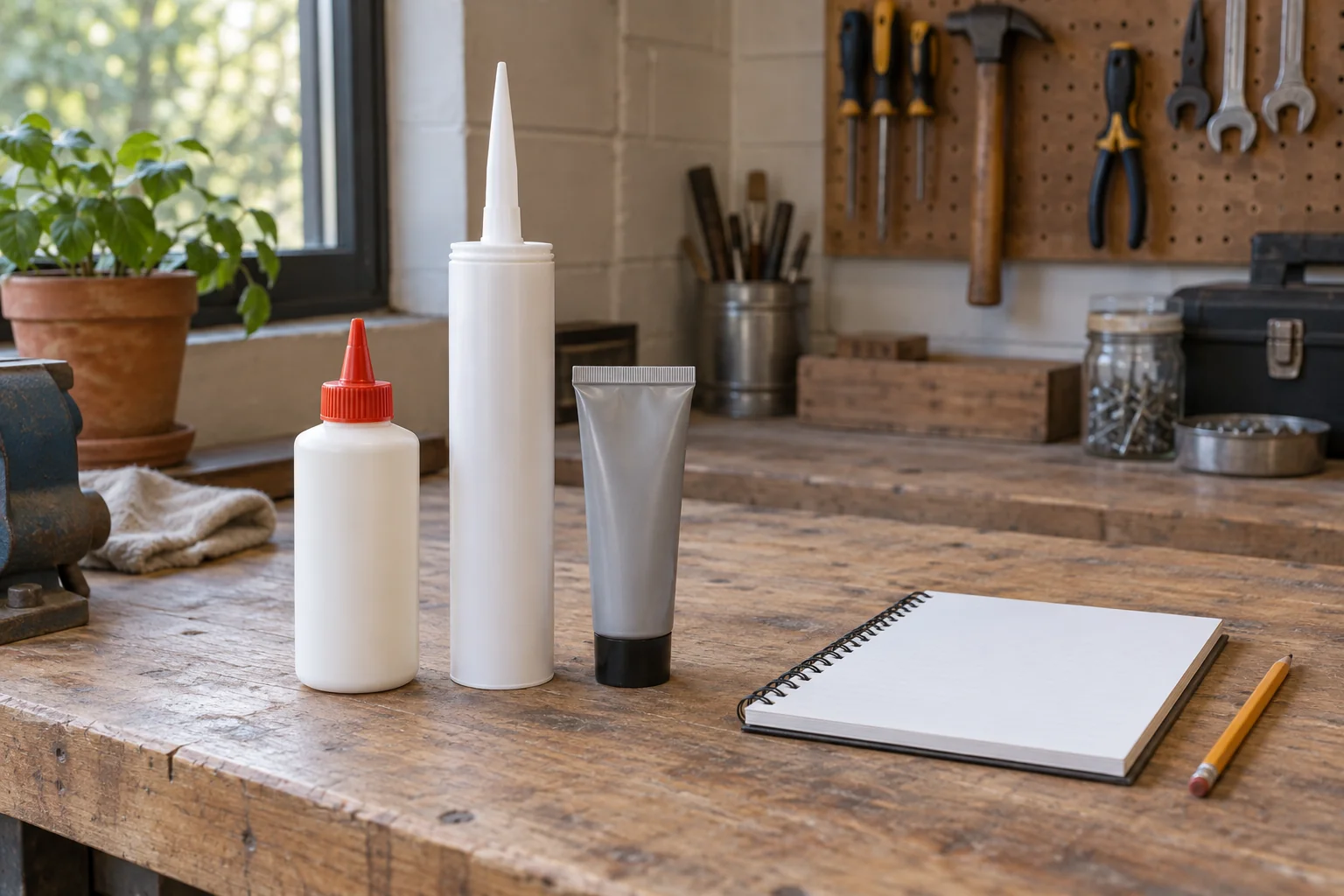
Record workshop consumable shelf life by keeping manufacture, purchase, opening and manufacturer guidance in separate fields. Include the exact product and the source of any date interpretation. A purchase receipt does not reveal how long a bottle sat before you bought it, and an opening date is not automatically the start of every manufacturer’s shelf-life clock.
A useful ledger helps you decide which information to check before a project. It does not certify a chemical product as safe or effective, and it should not replace its label, technical instructions or safety information. Keep products in their original labeled containers and preserve the manufacturer’s warnings.
Start with the exact container
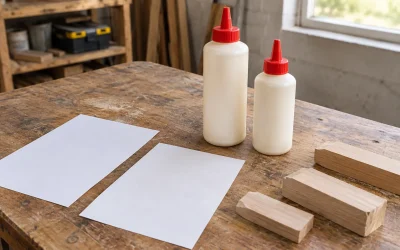
Give each container a simple inventory ID, especially when you own two bottles of the same product. Record its full name, size and any lot or date code exactly as printed. Photograph the code before it becomes obscured by normal workshop use. Do not combine similar product names into a generic “wood glue” entry.
Distinguish the product from the package. A manufacturer’s guidance may address a specific formulation, storage condition or unopened container. Keep those qualifiers beside the shelf-life statement rather than removing them to fit a narrow spreadsheet column. If the relevant guidance cannot be located, use an unresolved status.
Keep four kinds of dates separate
| Date field | Evidence | What it does not establish |
|---|---|---|
| Manufacture date | Official interpretation of the printed code | When you purchased or opened it |
| Purchase date | Receipt or order history | The product’s manufacturing age |
| Opening date | Your dated note | A universal expiry calculation |
| Printed use-by or shelf-life date | Exact package wording | Permission to ignore storage conditions |
| Review date | Your next information check | A manufacturer-approved extension |
If you inherit a container without a receipt, record the purchase date as unknown. If you discover an already-open bottle, do not substitute today’s date for its opening date. You can record “first inventoried today; already open.” That wording preserves a useful event without inventing history.
Use the maker’s date-code explanation
In its official bottle date-code explanation, Titebond describes a code beginning with A followed by nine digits, with year, month and day fields followed by a production-batch field. Treat that as an explanation of the described format, not a decoding rule for every adhesive or every future package. If your container differs, ask the maker.
The Titebond wood-glue guidance also distinguishes stated shelf life from the possible continued usability of some products stored appropriately. That does not support inventing an extra year for an unidentified bottle. Record the exact product-specific guidance and its conditions, then follow the maker’s instructions for any unresolved condition or age question.
Keep a link and the date you consulted it. A saved note that says only “two years” loses the identity, conditions and starting point needed to interpret the number. If support clarifies an ambiguous code, retain the answer with that container’s record rather than applying it to the whole shelf.
Record storage uncertainties as events
Write down known events that might matter under the product’s instructions: a period in an unheated outbuilding, a damaged closure, or a move during which storage conditions were not recorded. Describe what happened without guessing a temperature you did not measure. “Garage storage during winter; temperature unknown” is more useful than an invented minimum.
Do not use the ledger to authorize heating, thinning, mixing or reviving a product. Likewise, a liquid appearance or an apparently normal smell is not a general performance test. Follow the manufacturer’s handling advice, and use local disposal guidance when the product needs to leave the workshop.
Worked example: one bottle with an incomplete history
Suppose container C-07 has a readable lot code and a receipt from last spring, but nobody remembers opening it. This is a fictional example. Enter the receipt date as purchase evidence, photograph the code, and mark opening date unknown. Leave manufacture date unresolved until you have the correct maker’s code explanation.
Next, suppose the product was moved through a cold garage for an unknown period. Add that event without declaring the product ruined or usable. Your next action is a specific support question containing the product, code, photograph and storage uncertainty. A response about C-07 should remain attached to C-07.
If support cannot resolve the uncertainty, reflect that in the project plan. Do not quietly promote the container to “approved” because the job is starting tomorrow. The ledger has already done useful work by revealing that the material assumption was unsupported.
Review before planning the next purchase
Group entries into ready for instruction check, awaiting clarification, and removed from inventory. These are your administrative categories, not manufacturer certifications. Review the containers relevant to the upcoming job before buying duplicates, and verify that any planned application is actually covered by the product instructions.
When a container is finished or disposed of, retain its record if it helps document a completed project. Note what happened and when. Over time, this gives you a practical view of what you use, what repeatedly remains unopened and which package sizes create avoidable leftovers, without pretending a calendar alone proves performance.