Key takeaways
- Track shop vacuum filter part numbers, compatibility evidence and replacement history with a practical machine card and filter log.
Keep one record for the vacuum and a separate history for each replacement filter. The useful details are the vacuum’s complete model number, the filter part number, the manufacturer’s compatibility reference, and what happened to that particular filter. A receipt alone usually cannot tell you which filter is currently installed.
Start with the machine, not the filter’s appearance
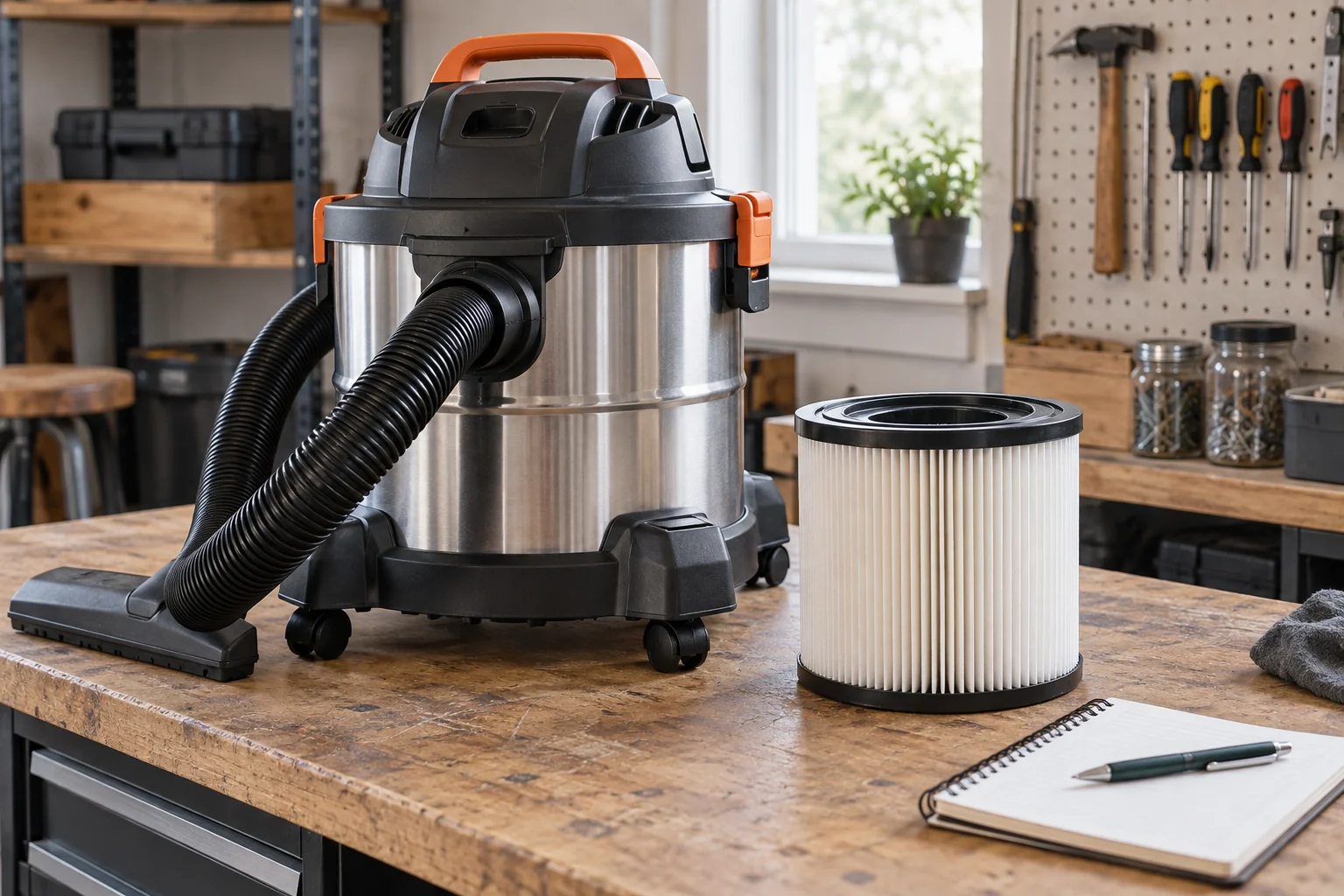
Create a machine card before buying another filter. Copy the model exactly, including letters and suffixes, from an accessible identification label. Add a photograph of that label and a link to the official manual or parts list. If the label is unreadable, ask the manufacturer to identify the machine from available photographs instead of filling the gap with a similar-looking model.
The RIDGID filter directory, for example, separates filter products by application and compatible vacuum sizes, and lists dust bags separately. That makes it a useful starting point for a parts search, but the specific vacuum’s documentation must settle your final choice. Do not treat color, approximate diameter, or a broad category heading as complete compatibility evidence.
Give the machine a simple household identifier such as Garage Vac A. That name belongs on your spreadsheet or storage shelf. Keep labels away from vents, controls and required warnings, and do not attach tape or paper to filter media.
Copy this machine-and-filter register
| Field | What to record | Why it helps next time |
|---|---|---|
| Machine identifier | Garage Vac A; exact model and suffix | Separates similar machines in the household |
| Approved filter reference | Official part number; manual page or manufacturer link | Makes the compatibility decision traceable |
| Application limits | Relevant instructions for the intended material and setup | Prevents a familiar part from being assumed suitable for every job |
| Individual filter identifier | A-01, A-02 and so on, recorded on packaging or in the log | Distinguishes a spare from a previously used filter |
| Purchase evidence | Seller, purchase date, receipt and package photograph | Supports a return or parts inquiry |
| Current state | Unused, installed, removed pending review, or discarded | Keeps an uncertain filter out of the ready-to-use group |
| Care reference | Exact cleaning and replacement instructions for this part | Avoids inventing a routine from a different filter |
Save the compatibility page with the date you checked it. If the maker later replaces a part number, add the new reference and the official confirmation to a new row. Retain the previous entry so an older receipt remains understandable.
Log events without inventing a replacement schedule
Use one line per installation, inspection, permitted cleaning or removal. Record the date, filter identifier, work performed and next action. Describe observations plainly: “paper torn at edge” is more useful than “probably worn out.” Do not run the vacuum merely to create a test result for the log.
A calendar reminder can prompt you to consult the maintenance instructions; it does not establish the filter’s service life. Do not assign a universal monthly replacement interval, washing method or compressed-air cleaning routine. Those decisions depend on the actual machine, filter, collected material and manufacturer instructions. Before handling a filter, follow the model’s shutdown, power-disconnection and handling instructions.
A fictional example of a useful entry
Suppose Garage Vac A has filters A-01 and A-02. Your entry might read: “September 22: A-01 removed; visible damage recorded in photo 04; marked unavailable. A-02 remains unopened. Confirm replacement procedure in saved manual before installation.” This example documents a decision; it does not diagnose damage or approve either filter for a particular material.
If another person borrows the vacuum, ask them to record the material collected and any change they made to its setup. An unknown previous use is a reason to consult the manufacturer’s guidance, not to reset the history to “clean.”
Keep the record usable at the storage shelf
Put a short index beside the stored accessories: machine name, current filter identifier and the location of the full record. Store spare parts as their instructions require, retaining original identification. Keep uncertain or damaged parts clearly separated from ready spares; do not rely on remembering which loose filter was which.
Once a replacement is confirmed, update both the machine card and the individual filter row. Before reordering, check existing spare stock and read the current official compatibility information. This small closing step prevents the common problem of buying a third spare because the first two were never recorded.
What this record cannot establish
A tidy log is not evidence that a vacuum is suitable for hazardous dust, liquids or any other particular material. Nor does a filter label alone establish the performance of the complete vacuum system. Keep those questions tied to the manufacturer’s documentation and the requirements of the actual task. The record’s job is narrower: help you identify the part, find the right instructions and preserve its history.