Key takeaways
- Label leftover wood with measured dimensions, source evidence, coating history and unknowns so future projects begin with reliable material records.
What's inside
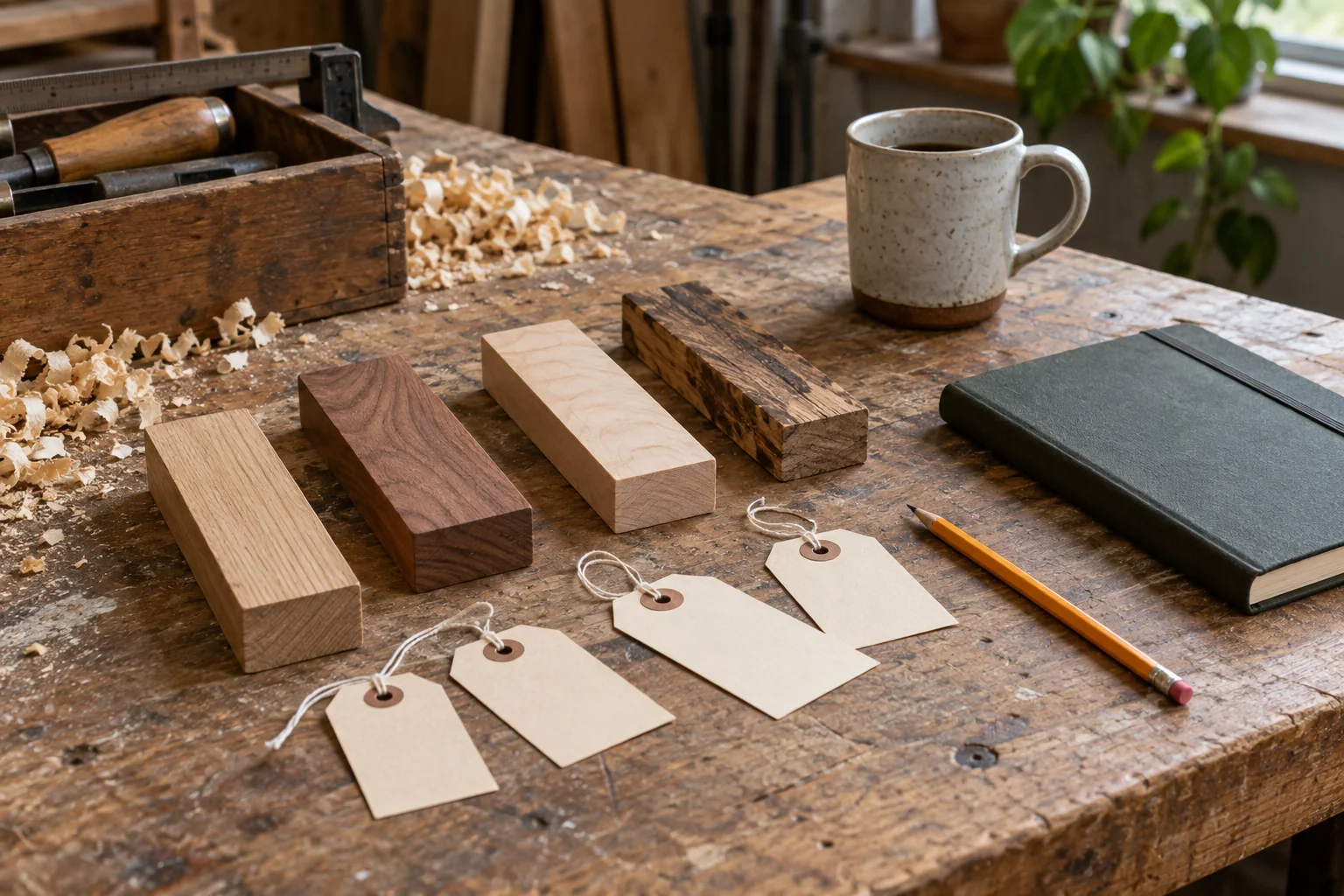
Label leftover wood with a unique piece number, its measured size, the evidence for its material identity and anything still unknown. Keep that label connected to a photograph or purchase record. A board marked only “oak” can lose the information needed to decide whether it belongs in the next project.
This is a stock-identification system for future planning. It does not grade lumber, establish load capacity or certify a used piece as suitable for a particular application. The goal is to prevent a useful offcut from becoming an unidentified object with an increasingly confident story attached to it.
Give each piece an identity before sorting by size
Choose a short identifier such as W-014 and put the same identifier in your notebook or spreadsheet. Photograph the piece beside the identifier, including any original label or stamp that remains. Keep the original markings visible; your stock number supplements them rather than replacing them.
For a group of genuinely identical offcuts from one documented board, a group identifier can work initially. Split the record when one piece is finished, drilled or otherwise changed. A shared label stops being useful when the group no longer has the same history. Record the number of pieces rather than relying on a photograph of a stack.
Separate what you know from what you think
Use an evidence column beside the material description. “Birch plywood, supplier invoice line 3” is different from “possibly birch, appearance only.” Record the latter as uncertain. Do not turn a resemblance, a previous owner’s recollection or an assumed matching color into a verified species, grade or treatment statement.
The Western Wood Products Association’s grade-stamp guide explains that its marks can identify the mill, species, grade and seasoning information. The seasoning information relates to manufacturing conditions; it is not a fresh measurement of an offcut sitting in your garage. Preserve a readable stamp photograph with its context instead of translating it into unsupported current properties.
Where a cut has removed the original stamp, link the offcut to the original board photograph if that connection is known. Do not recreate an official grade stamp or suggest that your handwritten stock label is one. If the connection is uncertain, leave that uncertainty visible for the next person using the inventory.
Measure the piece you actually have
Write thickness, width and length with explicit units. Use actual measurements of the remaining piece rather than copying the nominal purchase size. Note whether a measurement describes the entire outline or a smaller clear rectangle within it. A notched piece can have a generous maximum length while offering much less usable area.
Sketch holes, notches, splits and conspicuous damaged areas on the record. Mark the orientation of the sketch so a future reader can match it to the photograph. Do not subtract an arbitrary allowance and call the remainder defect-free. The next project still needs its own inspection and cutting layout.
| Record field | What belongs there |
|---|---|
| Piece ID and location | W-014; existing low storage bin B |
| Measured outline | Thickness × width × length, units and date |
| Identity evidence | Invoice, original label, stamp photo or unknown |
| Surface history | Known coating or adhesive; unknown where applicable |
| Visible features | Hole, notch or damaged-area sketch |
| Reservation | Proposed project, owner and review date |
Keep coating history separate from wood identity
A known species does not establish what has been applied to its surface. Record a finish or adhesive by its exact product name when you have that information, together with the relevant project record. If the piece came from an old cabinet and the coating is unknown, write “coating unknown” rather than assuming a familiar-looking clear finish.
Do not sand, burn or otherwise process an unknown coating simply to make the inventory more complete. Identification questions can remain open until appropriate advice is available. Likewise, a label saying “outdoor project remainder” does not establish treatment, durability or suitability for food contact.
Worked example: two similar offcuts, different decisions
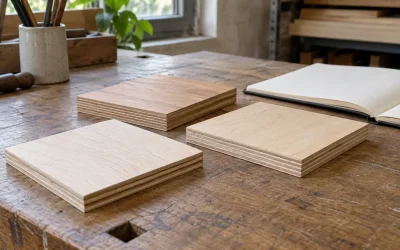
Imagine two pale panels, each approximately the same size. In this fictional example, W-014 is linked to a receipt identifying an unfinished plywood panel. W-015 came from an old shelf with no reliable material or coating record. Their similar appearance is not enough to merge their records.
You reserve W-014 for a decorative divider pending a fresh fit check. W-015 remains in the inventory with an unresolved coating field. Nothing in that decision certifies either piece for a load-bearing job. The practical benefit is that six months later you can see why one piece was shortlisted and the other was not.
Update the record after every change
When a piece is cut, retire its old dimensions and create child identifiers for useful remainders. Link W-014A back to W-014 so its source evidence survives. If it is coated, note the date and product. If it is used up, mark it consumed rather than deleting the only record explaining the finished project’s material.
Finally, check that each stored piece can be found without dismantling an unstable pile. This article does not specify storage-rack construction or capacity. Use suitable existing storage and keep the label readable from the access side. A small, accurate inventory is more helpful than an impressive list containing pieces nobody can identify or retrieve.