
why is my house so dry: A furnace often gets blamed for “removing moisture”; in winter, colder outdoor air with low absolute moisture content enters and is warmed, which lowers its relative humidity even without mechanically removing water.
Quick Answer: A house often feels dry in winter because very cold outdoor air holds little water vapor and, after leaking or ventilating indoors and being heated, its relative humidity falls. First verify the room RH with a hygrometer, then assess air leaks/ventilation and humidify cautiously if needed.
As an Amazon Associate we earn from qualifying purchases.
By DIY Ideas 4 Home Editorial Team
Why This Happens: Causes and Warning Signs
Each line below ties a real-world decision to a visible outcome and an explicit limit. Start with the first check that fits the symptom rather than treating the whole list as required repairs.
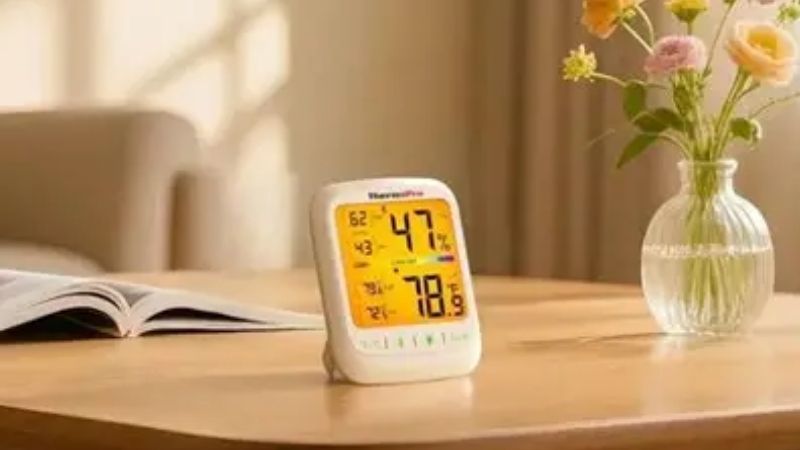
| Decision point | Owner action | Result to check | Stop or exception |
|---|---|---|---|
| Verify actual indoor dryness | Use a hygrometer in representative room air and record RH alongside temperature. | Symptoms alone do not prove the entire home is dry. | Do not add moisture when windows already show condensation. |
| Understand winter air exchange | Notice whether very cold outdoor air is entering at leaky windows, doors or frequent ventilation openings. | When this air warms indoors its RH often falls. | Never block required fresh air to chase a higher humidity figure. |
| Control uncontrolled drafts | Seal identifiable nonessential gaps appropriately while retaining designed ventilation. | Retest comfort and room humidity over normal occupancy. | Do not cover combustion vents. |
| Humidify cautiously if needed | Use a maintained humidifier according to its manual after confirming low RH. | Adjust down at the first sign of wet glass or walls. | EPA advises not to humidify above 50% RH. |
How winter air becomes dry after indoor heating
University of Minnesota Extension illustrates winter outside air warming indoors and sharply declining indoor RH even without removing water vapor.
Indoor winter air can feel dry even though the outdoor air seems damp. Cold outdoor air often contains less water vapor in absolute terms; once that air comes indoors and is warmed, its relative humidity can fall. Heating by itself should not be described as magically destroying water molecules. More often the combination of outdoor conditions, infiltration, ventilation, and indoor heat changes the percentage a hygrometer reads. This is why a drafty house may become especially dry during a cold spell, even if the furnace appears to be working normally.
Why outdoor air leaks and ventilation matter
The U.S. Department of Energy explains that gaps around windows/doors allow uncontrolled air transfer; properly sealed construction helps limit uncontrolled infiltration.
Before purchasing a larger humidifier, record the room temperature and relative humidity where people actually spend time. A reading taken beside a heat register, sunny window, or mist outlet can misrepresent the occupied room. Compare several rooms to see whether dryness is local or widespread. Check whether bathroom and kitchen exhaust fans are running longer than necessary, and whether an obvious air leak is bringing in cold outdoor air. Do not disable required ventilation to make the number rise; instead address unnecessary leaks and use moisture equipment only within safe operating limits.
When whole-house dryness differs from one dry room
DOE notes incoming cold dry air in winter can affect humidity; ventilation is necessary even while weatherizing.
If an existing humidifier seems ineffective, distinguish equipment behavior from building conditions. An evaporative unit may not make visible mist yet still use water and add vapor. An ultrasonic model may have an empty tank, incorrect setting, or mineral buildup affecting its output. Check the approved water-fill and maintenance instructions and then monitor RH rather than relying on the appearance of the mist. A larger unit is not automatically the solution if the current one is improperly installed or if an open window and continuous exhaust are removing moisture faster than expected.
When symptoms do not prove an RH problem
EPA advises a hygrometer/moisture gauge and cites 30-50% general home RH guidance; never diagnose dry-house solely by skin or static.
Cold-weather infiltration through leaks
Use a maintained humidifier according to its manual after confirming low RH.
How to Interpret the Evidence
Heating dry winter outdoor air lowers its RH because warmer air has greater saturation vapor capacity.
Air leaks, required ventilation and the source of supply air determine dryness; sealing should be paired with deliberate IAQ measures.
Adding moisture may help in confirmed dry conditions but invites condensation if excessive.
How to Check the Problem Safely
Begin with observable conditions and proceed only through permitted user controls. A safety alarm, damaged part, live connection or inaccessible component ends the do-it-yourself path.
Step 1: verify actual indoor dryness
Use a hygrometer in representative room air and record RH alongside temperature. Symptoms alone do not prove the entire home is dry.
Do not add moisture when windows already show condensation.
The U.S. EPA explains that ideal RH 30-50%, under 60% where possible; damp surfaces should be addressed promptly.
Comfort complaints are useful but not decisive evidence. Scratchy skin, a dry-feeling nose, or static shocks can occur for reasons other than room humidity, so avoid making health promises about a certain RH setting. Record whether symptoms coincide with measured low humidity and talk with a clinician when symptoms are persistent or concerning. Increasing humidity too far can create condensation at cold windows or support moisture problems elsewhere. A good adjustment is modest, measured, and reversible, with attention to building surfaces rather than a single comfort sensation.
Step 2: understand winter air exchange
Notice whether very cold outdoor air is entering at leaky windows, doors or frequent ventilation openings. When this air warms indoors its RH often falls.
Never block required fresh air to chase a higher humidity figure.
DOE advises post-air-sealing controlled fresh-air ventilation; do not recommend cutting necessary ventilation to make RH rise.
Recheck the house after a change in outdoor weather. A humidifier setting that causes no condensation during a mild day may be too high for colder nights. Look at window corners, exterior walls, and hidden areas behind heavy coverings for signs of persistent dampness. Keep water reservoirs clean and follow the manufacturer’s maintenance schedule if humidification is needed. If the building has drafts and ineffective insulation, correcting those issues may improve comfort without pushing humidity higher. A dry-house investigation is complete only when you know whether the problem lies in measurement, air exchange, appliance output, or a combination of them.
Step 3: control uncontrolled drafts
Seal identifiable nonessential gaps appropriately while retaining designed ventilation. Retest comfort and room humidity over normal occupancy.
Do not cover combustion vents.
A family might be tempted to leave a humidifier running continuously whenever the furnace is on, but that ignores changing weather and the moisture produced by ordinary activities. Observe the room each day and review humidifier output when temperatures drop sharply outdoors. If window frames begin collecting droplets, reduce added moisture and address ventilation. It is safer to treat humidity as a condition to measure and adjust than as a permanently fixed appliance setting.
Step 4: humidify cautiously if needed
Use a maintained humidifier according to its manual after confirming low RH. Adjust down at the first sign of wet glass or walls.
EPA advises not to humidify above 50% RH.
Levoit Classic 300S: manufacturer states 6 L reservoir, up to 60 h claimed run time, auto control (conditions vary).
Products That Help
Useful supplies for the specific checks above can include Levoit Classic 300S humidifier and Honeywell HCM350 humidifier. Confirm the exact size, device compatibility and applicable maintenance instructions first. Equipment and tools do not remove the need to stop for a safety fault.
When to Call a Pro
Give the service provider the model number, the symptoms in time order, your observed operating conditions and any displayed fault code. Do not open sealed electrical, refrigerant or combustion components to collect this information.
Frequently Asked Questions
The answers below separate normal operation, owner-accessible checks and conditions that require manufacturer support or professional service.
Does central heating take moisture out of the air?
Heating does not directly destroy water vapor; cold outside air often has little moisture and becomes low-RH indoor air after warming. Winter infiltration is a common explanation.
Why is my house dry even with a humidifier?
The output may be too low, its settings may already be satisfied, or air exchange may offset added moisture. Measure RH and inspect appropriate operation, not just visible mist.
Can opening a window make a winter house drier?
Yes. Cold outdoor air warmed indoors usually has lower relative humidity, so uncontrolled air exchange can make a house feel drier.
How do I add moisture without causing mold?
Measure first, clean the humidifier and stop increasing RH when window or wall moisture appears. The EPA advises not exceeding 50% RH with humidifier use.
Final Thoughts
Use a hygrometer in representative room air and record RH alongside temperature. EPA advises not to humidify above 50% RH.
