For a frozen whole bird, how long to thaw a turkey depends mostly on weight and method. USDA Food Safety and Inspection Service guidance calls for about 24 hours in a refrigerator for every 4 to 5 pounds, or about 30 minutes per pound when the wrapped bird is submerged in cold water. A 12- to 16-pound turkey generally needs 3 to 4 refrigerator days or 6 to 8 hours in cold water. These are planning ranges, not guarantees for every refrigerator.
Quick Answer: Use the refrigerator when you have several days and a dependable temperature of 40 degrees F or below. Use cold water only if you can change it every 30 minutes and cook immediately afterward. Microwave thawing is possible only when the turkey fits and the appliance instructions permit it. Never thaw raw turkey on the countertop or in hot water.
As an Amazon Associate we earn from qualifying purchases.
By DIY Ideas 4 Home Editorial Team
Turkey Thawing Times by Weight and Method
The USDA FSIS publication “Turkey Basics: Safe Thawing” and the FoodSafety.gov “Turkey Thawing Time” chart provide the same whole-bird planning ranges. The refrigerator column assumes storage at 40 degrees F or below; the water column assumes cold tap water is replaced every 30 minutes. The ranges overlap at category boundaries because bird weight and the rate of thawing are continuous, not separate classes.
| Situation or Input | Recommended Range or Answer | Why | Exception |
|---|---|---|---|
| Whole turkey, 4 to 12 lb | Fridge: 1 to 3 days; cold water: 2 to 6 hours | USDA weight-based thawing chart | Microwave only if size and manual allow |
| Whole turkey, 12 to 16 lb | Fridge: 3 to 4 days; cold water: 6 to 8 hours | Thicker center needs more time | Cold-water thawing requires cooking immediately |
| Whole turkey, 16 to 20 lb | Fridge: 4 to 5 days; cold water: 8 to 10 hours | More frozen mass to thaw safely | Check that the pan and refrigerator shelf fit |
| Whole turkey, 20 to 24 lb | Fridge: 5 to 6 days; cold water: 10 to 12 hours | Largest listed whole-bird range | Keep the entire wrapped bird submerged in cold water |
Refrigerator Thawing: Allow Days, Not Hours
Refrigerator thawing is the least hands-on approach: leave the bird wrapped, put it on a rimmed pan, and set it on the lowest practical shelf so any leaked juices cannot reach ready-to-eat food. USDA FSIS recommends a refrigerator at 40 degrees F or colder throughout thawing. The 24-hours-per-4-to-5-pounds guidance is a starting point, so put a large turkey in early rather than planning around the quickest end of a chart range.
The refrigerator method also offers scheduling flexibility. According to USDA FSIS “Let’s Talk Turkey,” an unstuffed turkey fully thawed in the refrigerator can stay there for another 1 to 2 days before cooking, provided it remains properly chilled. This buffer makes an early start more useful than trying to finish thawing shortly before the oven needs to be turned on.
Cold-Water Thawing: Faster but Supervised
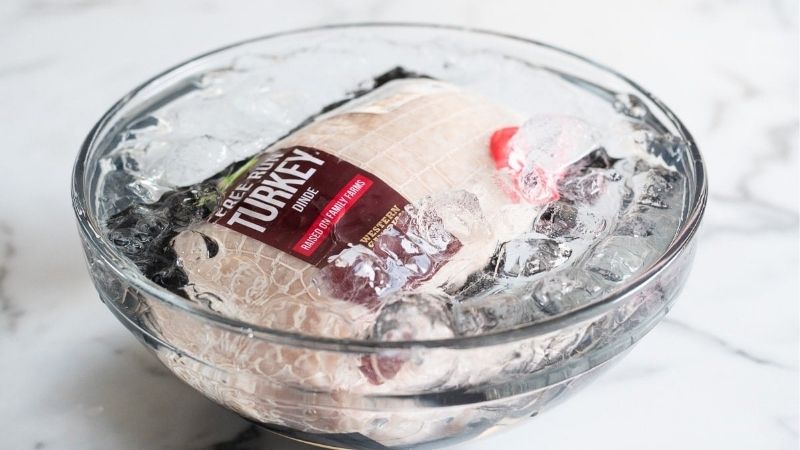
The USDA rate for a whole turkey submerged in cold water is about 30 minutes per pound. Leave the turkey in its sealed, leak-proof packaging or place it inside a sound leak-proof bag before submerging it; leaking packaging can spread contamination and let the meat absorb water. Use cold tap water, change it every 30 minutes, and make sure the bird stays covered by the water during the process.
Unlike a turkey thawed entirely in the refrigerator, a bird thawed in cold water should go straight into cooking when defrosted. USDA FSIS does not recommend using the cold-water method and then keeping the raw bird in the refrigerator for another day. If the package will not fit in the sink or a clean food-safe container, do not improvise with warm water or an outdoor cooler where temperatures cannot be controlled.
Microwave Thawing: Follow the Oven Manual
USDA recognizes microwave thawing as the third safe method, but the time is determined by appliance instructions, power and the size and shape of the turkey. A whole large bird may not turn freely or fit within the permitted weight range. Remove packaging components as directed by the microwave manufacturer and follow its defrost sequence rather than assuming the cold-water chart applies to microwave use.
Parts of the turkey may warm or start cooking while other portions remain icy. USDA FSIS “The Big Thaw” therefore directs consumers to cook immediately after microwave thawing. If your turkey is too large for the rotating tray, choose a refrigerator or cold-water method instead; forcing it into the microwave can leave frozen areas while the edges heat unevenly.
Adjust the Thawing Plan for Your Situation
The chart answers the basic timing question, but the safe next step also depends on refrigerator temperature, available space, how soon dinner begins and whether the turkey is an ordinary raw bird. A package labeled as commercially frozen pre-stuffed poultry is a critical exception: USDA instructions say not to thaw it before cooking. Read the exact package directions before moving any bird from freezer to refrigerator.
Planning Around a Holiday Dinner
Start from your intended cooking day and work backward using the turkey’s labeled weight, not the weight you hoped to buy. If the bird is in the 16- to 20-pound range, USDA’s refrigerator chart calls for 4 to 5 full days before it is defrosted. Add time for seasoning and meal preparation only after you have accounted for safe thawing, because a bird sitting on a counter while you make side dishes is not still refrigerated.
There is a useful difference between thawing and keeping a thawed turkey ready. A bird that finishes refrigerator thawing a little early can remain cold for 1 to 2 days under USDA guidance. By contrast, the cold-water clock should end close to the time you will actually begin cooking. If you cannot devote the full afternoon to changing water, refrigerator thawing is usually easier to fit around work and holiday preparations.
When Your Refrigerator Runs Colder Than Expected
A food refrigerator set below the USDA upper limit can thaw more slowly. In “The Big Thaw,” USDA FSIS notes that food thaws more slowly at 35 degrees F than at 40 degrees F and that different refrigerator zones can have different temperatures. Do not raise the thermostat above the safe limit to speed things up; that changes the conditions protecting everything else in the refrigerator.
Instead, check the actual compartment temperature with a refrigerator thermometer, leave cold air space around the pan, and allow a timing cushion. A package may feel soft around the breast yet still have a rigid cavity or frozen material around the joints. A calendar estimate cannot replace a physical check, particularly if the refrigerator has been unusually full or the door has been opened repeatedly during meal preparation.
When the Turkey Is Still Icy on Cooking Day
If the turkey has been held safely in the refrigerator but the cavity still contains ice, do not leave it on the counter to finish. You can use USDA’s supervised cold-water method to complete thawing, with a leak-proof bag, cold water and changes every 30 minutes, then cook immediately. The amount of time needed for the remaining ice cannot be determined accurately from the full-frozen turkey chart because part of the bird has already thawed.
Another alternative for an ordinary unstuffed raw turkey is oven-roasting directly from frozen, rather than trying unsafe shortcuts. USDA FSIS “Turkey: Alternate Routes to the Table” says to expect cooking to take at least 50 percent longer than for a thawed bird. Do not apply this option to a deep fryer, smoker or grill, and do not put a frozen bird in an oven cooking bag. The thawed-bird roasting timetable no longer applies as written.
Checking Whether the Bird Is Ready to Prepare
Read the wrapper first for any product-specific handling instructions, then assess the cavity and thick sections while the turkey remains on its drip-catching tray. Packaging that bends does not prove that the entire bird is thawed. If the neck or giblet package is still trapped in frozen tissue, the bird is not ready for the usual completely-thawed preparation sequence; give it additional safe thawing time or use the relevant USDA frozen-roasting directions.
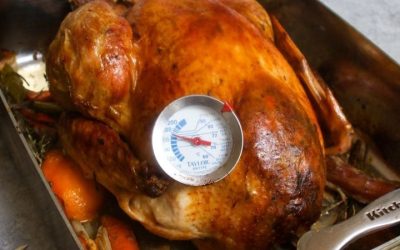
Do not confuse the test for thawing with the test for safe doneness. A turkey can be thawed but still entirely raw. USDA FSIS “Turkey Basics: Safe Cooking” requires a cooked whole turkey to reach 165 degrees F in the thickest part of the breast and the innermost areas of the thigh and wing, measured without touching bone. A meat thermometer is for confirming this cooking endpoint, not for predicting how many refrigerator days a frozen bird still needs.
Products That Help
The Taylor 5924 Fridge/Freezer Thermometer helps you check the temperature that governs refrigerator thawing. Taylor’s product page specifies a 3-inch dial, hang-or-stand placement and indicators for safe storage zones. Its role is to help confirm that the compartment remains at or below 40 degrees F, not to estimate when a turkey’s center will thaw. Check current price and placement requirements before buying.
The ThermoWorks Thermapen ONE is useful for the separate, critical cooking-temperature check after thawing. ThermoWorks’ product specifications list a one-second response time and stated accuracy of plus or minus 0.5 degree F across the main food-temperature range. You do not need a premium thermometer merely to count thawing days, but a dependable food thermometer is worth having before preparing a whole turkey; compare current price with your cooking needs.
Frequently Asked Questions
These cases matter because not every frozen turkey follows the ordinary whole-bird timetable, and a decision made after thawing can affect whether the meal remains safe.
Can I Refreeze a Turkey After It Thaws?
Yes, if it thawed in the refrigerator and has stayed properly refrigerated. USDA FSIS says food thawed in the refrigerator may be refrozen without cooking, although some moisture loss can reduce quality. Turkey thawed by the cold-water or microwave methods should instead be cooked immediately; USDA advises cooking those foods before refreezing. Keep track of the method you used rather than deciding from appearance alone.
Does a Boneless Turkey Breast Need as Many Days?
Usually not if the breast weighs less than a whole turkey, but use its actual weight and the package directions rather than the whole-bird table as an exact promise. USDA’s refrigerator guidance for large frozen poultry items is approximately one day per 4 to 5 pounds, and smaller cuts can still need substantial time to thaw thoroughly. Keep the package covered and chilled; a thick compact breast can remain icy in the middle after the surface softens.
Should I Wash the Turkey Once It Is Thawed?
No. Washing raw poultry can splash contaminated droplets onto the sink, nearby utensils and prepared food. Handle the bird on a clean tray, remove the packaging carefully and wash hands and surfaces that touch raw turkey or its juices with soap and water. The USDA cooking-temperature requirement, not rinsing, is the measure that makes the cooked bird safe to eat.
Do I Thaw a Commercially Pre-Stuffed Frozen Turkey?
No, when it is a commercially frozen pre-stuffed whole turkey intended to be cooked from frozen. USDA FSIS “Stuffing and Food Safety” specifically instructs consumers not to thaw this product before cooking and to follow the manufacturer label. Its stuffing and poultry both must reach 165 degrees F when cooked. This exception is why the front-of-package description and preparation directions should be checked before applying any whole-turkey thawing chart.
Final Thoughts
When planning how long to thaw a turkey, buy the bird early enough that the refrigerator method fits your calendar, then confirm there is a leak-catching pan and enough shelf space before you begin. The often-overlooked decision is what to do with the bird after it thaws: USDA’s 1- to 2-day refrigerated buffer can save a meal plan, while a cold-water or microwave thaw demands immediate cooking. Check the package for special instructions, verify refrigerator temperature, and have a food thermometer ready for the eventual 165-degree-F cooking check.