A GFCI that repeatedly shuts off may be detecting leakage from a damp receptacle, a damaged appliance, or a problem at another outlet it protects. If you are wondering why is my GFCI outlet tripping, look first for water, worn cords, and a recent change in what was plugged in. Do not remove the device or repeatedly force it to reset: a trip may be preventing a serious shock.
Quick Answer: Stop using an outlet that is wet, hot, discolored, sparking, or giving off an odor. Otherwise, unplug accessible dry appliances, try a single reset, and use the built-in TEST button to check the protection. If it trips with everything unplugged, will not reset, or trips again immediately, have a licensed electrician inspect the circuit.
As an Amazon Associate we earn from qualifying purchases.
By DIY Ideas 4 Home Editorial Team
Why Your GFCI Outlet Keeps Tripping
A ground-fault circuit interrupter compares the current leaving on the hot conductor with the current returning on neutral. The Electrical Safety Foundation International (ESFI) explains that a difference signals electricity escaping along an unintended path, possibly through a person. OSHA’s electrical training material describes a GFCI opening a circuit when about 5 milliamps return by another path. That sensitivity is why a small moisture problem can shut off an apparently normal appliance.
| Symptom or Sign | Likely Cause | First Check | DIY or Pro |
|---|---|---|---|
| Trips after rain or a humid spell | Moisture in a connection, fixture, or outdoor outlet | Look for dampness without touching wet equipment | Stop using; electrician if moisture reached electrical parts |
| Trips when one appliance starts | Leakage from the appliance or cord | Unplug that item if dry and safe to handle | Remove item from service; qualified repair if needed |
| Several outlets go dead together | Problem on the GFCI-protected downstream branch | Identify other affected receptacles | External checks only; electrician for wiring |
| Trips or fails to reset after replacement | Incorrect LINE/LOAD connections or circuit fault | Note whether the problem began after installation | Electrician |
| Will not pass TEST and RESET | Failed GFCI or missing supply power | Check accessible breaker status without opening devices | Electrician; replace failed device |
Moisture in the Outlet or Connected Equipment
Water can create a conductive path where electricity should remain isolated. A covered outdoor receptacle may still have a damp box, a wet cord connector, or a nearby light fixture exposed to rain. In a bathroom, a leaking pipe or condensation can produce a similar problem. ESFI’s guidance specifically identifies wet equipment as a reason for ground-fault protection to shut off power.
Do not treat a wet GFCI as a drying experiment. Leave it unused and avoid touching connected equipment that may be wet. If you can safely switch off the affected circuit from a dry location, do so; an electrician should assess water intrusion and any corroded connections before power is restored.
A Faulty Appliance or Frayed Power Cord
A plugged-in device can leak current because its insulation, wiring, heating element, or motor has deteriorated. The GFCI may trip only when a dishwasher heater operates, a hair dryer runs, or outdoor equipment becomes damp. The timing is useful evidence, not proof that the outlet is defective. Leviton’s guidance on what to do when a GFCI trips recommends checking the device and inspecting connected cords and appliances for wear.
If the cord, plug, and surrounding floor are dry, remove the suspect appliance from service. Do not move it to an unprotected outlet to keep using it. An appliance that trips protective devices needs diagnosis or replacement, particularly if the plug is scorched, the cord is split, or the equipment has been exposed to water.
A Ground Fault at Another Protected Receptacle
The outlet with the TEST and RESET buttons may protect other receptacles through its LOAD terminals. Leviton’s GFTR1 instruction sheet distinguishes the incoming LINE connection from LOAD wiring that feeds outlets farther along the circuit. The Home Depot’s installation guide likewise explains that a downstream receptacle can lose power when the upstream GFCI trips.
That means a garage GFCI may shut off because of a connected outlet outdoors, even if nothing is plugged into the GFCI itself. Walk through the rooms and exterior locations that lost power, then make a note of any recent rain, plugged-in device, or damaged cover. Finding the affected group is useful; removing faceplates or tracing concealed cables is an electrician’s job.
Incorrect Wiring After Installation
When tripping starts immediately after an outlet is installed or replaced, wiring deserves particular attention. Leviton’s SmartlockPro instructions explain that reversing the LINE and LOAD connections can prevent the receptacle from resetting. Other faults, including a neutral connected incorrectly on a protected circuit, require professional diagnosis with the circuit safely de-energized.
Do not use the color of a status light as a universal diagnostic rule. Leviton publishes separate indicator guidance for different GFCI families, and other brands may use different signals. Record the model number printed on the device face if readable without removing a cover, note the light pattern, and let a qualified electrician compare it with that exact model’s instructions.
A Failed Device or Loss of Circuit Power
A GFCI is an electrical safety device that can eventually fail, and some self-test models intentionally refuse to reset when protection is no longer available. Leviton’s GFTR1 instruction sheet says a persistent red warning or an inability to reset after the specified procedure may require replacement. However, an outlet that will not reset might also have no power feeding its LINE terminals, so the symptom alone does not prove the receptacle is worn out.
Note whether the breaker in the electrical panel is tripped and whether other lights or receptacles on the circuit work. You can identify a breaker visually if the panel is dry and safe to approach; do not remove the panel cover or work around exposed conductors. A breaker that repeatedly trips or refuses to hold should remain off until the fault is investigated.
How to Diagnose the Trip Without Opening the Outlet
The safest troubleshooting sequence changes only one external condition at a time: first check for danger, then disconnect dry plug-in loads, reset once, and observe what restores the trip. This helps distinguish a faulty appliance from a wiring problem without opening an energized box. ESFI advises testing GFCIs monthly, but diagnostic testing should stop if the device shows damage or an immediate recurring fault.
Step 1: Check for Water, Heat, or Damage
Look at the outlet and connected cords without removing a faceplate. Stop immediately if you see melted plastic, scorch marks, a broken cover, water droplets, or corrosion. A crackling sound, tingling sensation, or burning smell is also a stop sign. If the wall or floor is wet, do not touch the receptacle, buttons, or connected plugs; use a dry, safely accessible breaker location only if you can do so without approaching the hazard.
Write down whether the trip followed rainfall, a spill, a cleaning session, or the start of an appliance cycle. Leviton’s trip-response instructions emphasize checking visible damage and the circumstances of the trip before trying other steps. This short record can prevent an electrician from having to recreate a hazardous condition.
Step 2: Disconnect Dry Plug-In Loads
If the area is completely dry and there are no warning signs, unplug accessible appliances at the affected GFCI and at any outlets it appears to protect. Disconnect extension cords, outdoor tools, bathroom equipment, and countertop devices that were running when power disappeared. Keep each item unplugged for now. You are removing possible sources of leakage, not trying to make a failing circuit acceptable for continued use.
Do not pull a plug attached to submerged or visibly wet equipment. Avoid handling cracked plugs or damaged cords. When there are multiple dead receptacles, identifying their locations is enough; you do not need to guess at the wiring route. The Home Depot’s GFCI guidance notes that a single receptacle can protect other outlets downstream, which explains why unplugging only the one visible device may miss the fault.
Step 3: Reset Once, Then Use the TEST Button
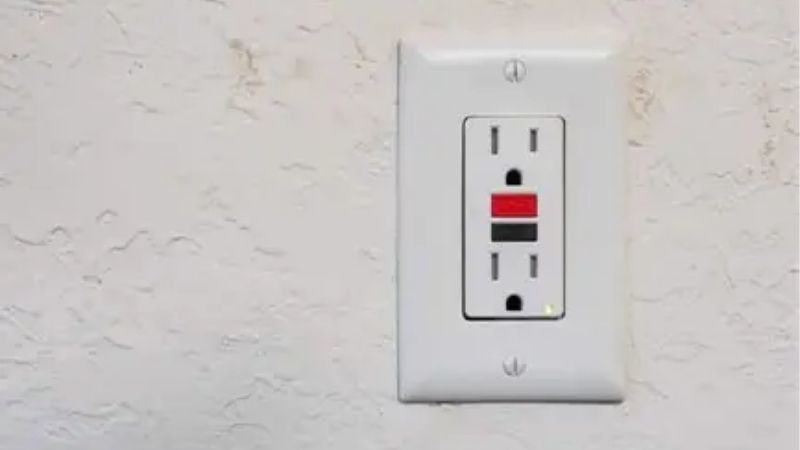
With suspect equipment unplugged and no visible hazard, press RESET according to the outlet manufacturer’s directions. If it holds, plug a small dry night-light into the GFCI, then press TEST. ESFI’s How to Use GFCIs guidance says the light should go out, and RESET should bring it back. ESFI recommends repeating this functional check monthly; a failed test is a reason to replace the protection, not a reason to ignore it.
If the outlet will not reset, trips again immediately, or does not shut power off when you press TEST, stop. Do not keep cycling the buttons to force power back. Note the status indicator, if present, but consult the actual model’s instructions for its meaning. A tripped upstream breaker, wiring issue, or failed GFCI can require different professional fixes even though all may leave the receptacle dead.
Step 4: Reconnect Appliances One by One
If RESET holds and the built-in test passes, reconnect one dry, undamaged appliance at a time. Wait long enough to observe its ordinary operating cycle before connecting the next. A trip that consistently follows one device is a strong clue that the device or its cord should be inspected by a qualified repair professional. Stop after the first repeat trip rather than performing repeated experiments with a potentially unsafe appliance.
If the GFCI trips while everything is unplugged, the fault may be in fixed wiring, a downstream receptacle, a permanently connected appliance, or the protective device itself. Write down which outlets went dead and whether the trip occurs immediately or after time has passed. Those details are more helpful to an electrician than simply reporting that the reset button will not stay in.
Products That Help
The Klein Tools RT210 GFCI Outlet Tester can help with external checks at a dry, accessible three-wire receptacle. Klein’s RT210 product page rates it for 110/125-volt AC outlets at 50/60 hertz and says it can indicate several common wiring faults. Consider it when you need to check more than one accessible outlet. Its lights cannot diagnose every hidden fault, and a suspicious reading is a reason to contact an electrician, not to move wires yourself.
If an electrician determines the receptacle has failed, the Leviton SmartlockPro GFTR1-W is a possible replacement to discuss. Leviton’s product bulletin identifies that white, tamper-resistant GFCI as a 15-amp, 125-volt receptacle with a 20-amp feed-through rating. Those are specifications, not a claim that it fits every circuit. Have the electrician confirm circuit wiring, receptacle rating, box conditions, local requirements, and the appropriate weather-resistant variant if the location is outdoors.
When to Call a Pro
Arrange for a licensed electrician if an outlet remains dead after an appropriate reset, fails its TEST function, trips with plug-in loads removed, or shows heat, water damage, arcing, or discoloration. Call as well when the problem began after renovation, happens in several connected locations, or involves a breaker that will not remain set. Leave the circuit off if there is evidence of overheating or moisture in electrical equipment.
ESFI recommends qualified installation of GFCI protection; its guidance treats these devices as shock-prevention equipment, not convenience switches. An electrician can isolate fixed loads, inspect the supply and downstream wiring, check neutral and grounding conditions, and replace a defective receptacle only after the underlying cause has been addressed. Never bypass the GFCI or substitute an ordinary unprotected outlet simply to stop the interruptions.
Frequently Asked Questions
These questions clarify what a trip means before you decide whether a replacement outlet, an appliance repair, or an electrician’s circuit inspection is the appropriate next step.
Why Does the GFCI Trip but the Breaker Stays On?
Because the devices respond to different hazards. ESFI’s electrical-device guidance describes a conventional circuit breaker as protection against overloads and short circuits, while a GFCI responds to leakage current that could cause electric shock. A GFCI can therefore trip when a breaker sees no reason to open. A repeatedly tripping breaker is a separate fault that also deserves attention; neither symptom should be dismissed.
Can a GFCI Work Without a Ground Wire?
Yes, GFCI shock protection can function in an older two-wire circuit without creating an equipment-ground conductor. Leviton’s explanation of non-grounding outlets notes that a GFCI can be used as a permitted replacement in certain older installations. However, that change does not create a real grounding path for equipment. A licensed electrician should check the installation and apply any required markings, including No Equipment Ground, under the applicable code.
Should I Buy a Plug-In GFCI Tester?
Only if you need a supplemental check of accessible, dry receptacles and understand its limits. Klein Tools lists the RT210 for standard three-wire outlets and warns users to consult a qualified electrician about wiring problems. For the protection’s basic functional check, ESFI describes using the outlet’s own TEST button with a small light. Neither method replaces an electrician’s inspection when nuisance trips persist or moisture is suspected.
Is It Safe to Replace the GFCI With a Regular Outlet?
No. Removing required ground-fault protection to keep an appliance running eliminates a safety feature that may be detecting a real hazard. ESFI explains that GFCIs are intended for places such as kitchens, bathrooms, garages, basements, and outdoors where shock risks can be higher. If the present device is faulty, ask an electrician to install an appropriate replacement and investigate why it tripped, rather than downgrading the receptacle.
Final Thoughts
When you investigate why is my GFCI outlet tripping, the useful result is not simply getting power back: it is learning whether the trip follows an appliance, a wet location, or a fixed part of the circuit. Keep a short record of the weather, affected outlets, and equipment in use, and give it to the electrician if external checks do not identify a safe resolution. If a new GFCI is recommended, confirm the circuit and location requirements before buying a replacement.