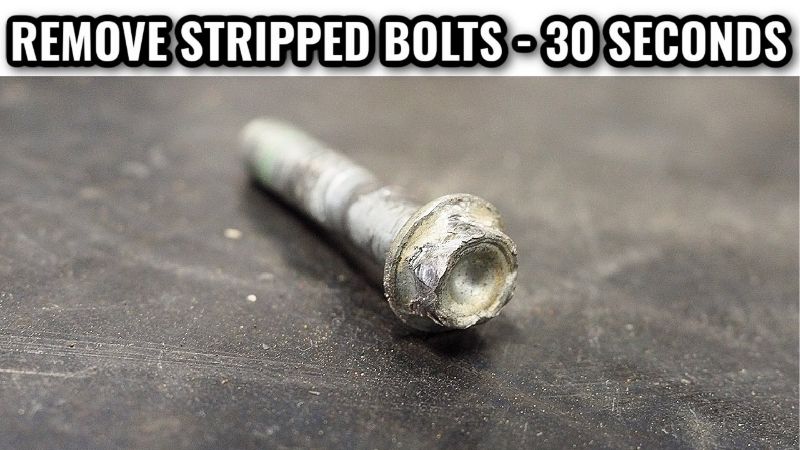
A rounded bolt head can turn a short repair into a frustrating project. To learn how to remove stripped bolts, first identify what has failed: the wrenching flats, an internal hex or Torx recess, or the threads holding the fastener. A six-point socket or specialized gripping tool often works when the bolt head is still intact enough to catch. A bolt that spins without backing out needs a different diagnosis.
Quick Answer: Stop using the slipping tool, clean the fastener, and try a correctly sized six-point socket. If its corners are gone, use gripping pliers or a bolt-extractor socket; reserve drilling for damaged internal drives or broken fasteners. Wear eye protection, keep the workpiece secure, and stop before damaging a safety-critical part or the material around the bolt.
As an Amazon Associate we earn from qualifying purchases.
By DIY Ideas 4 Home Editorial Team
Before You Start: Tools, Materials and Safety
The approach depends more on what the tool can still grip than on how hard you turn. An exposed hex head, a recessed socket-head screw, and a loose bolt spinning in ruined threads may look similar from across the room but demand different methods. Use the table to select the least destructive starting point.
| Tool or Material | Size or Spec | Why You Need It | Substitute |
|---|---|---|---|
| Six-point socket | Exact SAE or metric head size | Contacts more of a worn hex head | Six-point box-end wrench if accessible |
| Penetrating oil | Label-approved metal application | Helps free rusted external threads | Manufacturer-approved penetrant |
| Front-gripping pliers | Capacity matching exposed head | Clamps a rounded bolt from front or side | Quality locking pliers with clearance |
| Bolt-extractor socket | Match damaged head diameter | Bites into remaining outside surface | Alternate extraction socket size |
| Reversible drill and extractor bits | Bit compatible with damaged fastener | Last-resort removal of internal-drive damage | Qualified repair professional |
| Eye protection and work restraint | Suitable for flying metal particles | Reduces injury risk when tools slip or drill | Appropriate rated face protection as needed |
Know Which Part Is Actually Stripped
A rounded external hex head has lost the flat surfaces that a wrench normally engages. A damaged Allen or Torx socket has lost its internal drive recess. In either case the bolt may still be solidly threaded into its hole, so better engagement can allow removal without touching the threads.
Stripped threads are different: the head turns but the fastener does not climb out, or the nut spins on damaged threads. Check whether the bolt and surrounding part move together. On a through-bolt, you may be able to hold the nut from the opposite side; if a threaded insert spins inside wood or thin metal, forcing the head can enlarge the mounting hole instead.
Protect Yourself and the Workpiece
OSHA’s construction eye-protection rule, 29 CFR 1926.102, specifically addresses flying particles and calls for side protection where flying objects are a hazard. Use suitable safety glasses for scraping or striking and more protection where drilling or cutting creates debris. Clamp loose work and clear the tool’s swing path; never place your supporting hand in line with a slipping wrench.
Shut off nearby power before working on an electrical enclosure and isolate water or fuel when a bolt secures plumbing or engine components. Do not spray a flammable penetrant near an ignition source or heat a fastener after applying one. WD-40’s guidance for Specialist Penetrant calls for ventilation, gloves and eye protection, and no open flames. Avoid drilling into concealed wires, fluid lines, or pressurized housings.
Decide Whether the Fastener Is Repairable
Consider the location before sacrificing the head. A cabinet bracket or lawn-equipment cover may be an ordinary DIY repair; a brake assembly, suspension joint, pressure vessel, gas connection, or load-bearing connection deserves a much higher threshold. Some automotive fasteners are torque-to-yield or require replacement after removal, so use the equipment maker’s service procedure rather than reusing a visibly damaged bolt.
Use manual force first where practical. A long breaker bar on a severely rounded head may snap the bolt or shift the damage into threads you cannot reach. If there is no room to keep the tool square to the head, dismantling an adjacent cover for access is often less destructive than pulling at an angle.
How to Remove Stripped Bolts Step by Step
Work from a sound fit to methods that intentionally bite into damaged metal. The aim is to recover the fastener without ruining the threaded hole or neighboring surface. Pause after each attempt and check whether you are actually making progress, rather than repeating a slipping motion.
Step 1: Inspect the Drive and Thread Direction
Brush away grime and look closely under a light. Identify whether the head is external hex, internal hex, Torx, or something else; confirm whether the nut is accessible on the other side. Photograph the assembly before disassembly so a washer, sleeve, or spacer can be returned correctly. The replacement bolt’s markings or a service manual may help identify its proper grade and thread.
Most ordinary fasteners loosen counterclockwise as viewed from the head, but some machinery uses left-hand threads. Check the manual instead of assuming, particularly around rotating equipment. If the head turns freely but does not rise, skip aggressive extractor sockets and address the stripped threads or spinning insert first.
Step 2: Remove Rust and Apply Penetrant
Use a brush to clear paint, dirt, and flaky corrosion so a socket can seat fully. If the fastener is rust-bound and the area is safe for chemicals, direct penetrant toward the thread junction rather than merely coating the top of the bolt. WD-40’s published penetrating-oil instructions advise allowing several minutes to soak before trying the wrench and repeating the application if needed.
Wipe away excess oil that would make pliers slide. Penetrant may help a seized thread but will not restore a missing hex corner or repair internal threads. On plated, painted, plastic, or rubber parts, follow the product’s compatibility directions and test in a discreet area when permitted.
Step 3: Seat a Correctly Sized Six-Point Socket
Try the original nominal size first if enough of the flats remain. Seat the socket all the way down, hold the ratchet axis square to the head, and turn with firm, controlled pressure. Milwaukee’s SHOCKWAVE six-point socket documentation describes non-slip hex geometry intended to reduce fastener rounding; that geometry is more appropriate for this initial attempt than a poorly fitting open-end wrench.
Do not hammer on an undersized ordinary chrome socket or stack extensions that wobble. A socket that rocks or climbs off the head is telling you to stop. If the bolt begins to move, back it out in small increments while checking for thread binding; sudden high torque at the end can strip the last usable threads.
Step 4: Grip an Exposed Head With Pliers
When there is room around the fastener, grip the outside firmly from the front or side using toothed extraction pliers. KNIPEX identifies its TwinGrip 82 01 200 as an 8-inch tool with five adjustment positions and a manufacturer-stated capacity of 5/32 to 7/8 inch for nuts and round stock. That range is a jaw-capacity specification, not a promise that every damaged head within the range will come free.
Set the jaws on solid metal, lock your wrist in line with the intended rotation, and make a modest test movement. Stop if the jaws shave off material without turning the bolt. Gripping pliers can mar the head, which is acceptable when the fastener will be replaced, but they are a poor choice around delicate trim or recessed bolts with no safe jaw access.
Step 5: Use a Dedicated Bolt-Extractor Socket
For a badly rounded external hex head, choose a reverse-fluted extraction socket that fits tightly over what remains. IRWIN’s BOLT-GRIP 10504634 base set contains five nominal extractor sizes: 3/8, 7/16, 1/2, 9/16 and 5/8 inch. IRWIN describes reverse-spiral flutes that bite as removal torque is applied, with a 3/8-inch square drive for a hand ratchet.
Follow the particular extractor’s fit and driving instructions. Align it straight, seat it evenly using only the manufacturer-permitted technique, and apply steady loosening torque. Do not use an ordinary impact accessory with a power impact wrench unless the manufacturer rates that specific accessory for impact use. A head that starts to crack, or a socket that repeatedly skates off, is a reason to reassess rather than increase leverage.
Step 6: Treat Internal-Drive Damage Separately
An extractor socket cannot grip a flush countersunk head that has no accessible outer flats. When the damaged fastener has enough material and safe drill clearance, a matched drilling-and-extraction bit may work. Milwaukee’s M2 Steel Screw Extractor Set 49-57-9001 contains four bits and specifies drilling with side A at high speed in reverse, then extracting with side B at low speed in reverse; those instructions apply to that set, not to every extractor design.
Center the tool carefully and protect the surrounding finish. Drill only when you understand what lies beneath and can keep metal chips out of bearings, electronics, and fluid passages. A broken stud below the surface may need controlled center drilling, thread repair, or specialist machining. If threads are already spinning, extracting the head alone will not restore the attachment; the threaded insert or parent material must be repaired before reassembly.
Products That Help
The IRWIN BOLT-GRIP 10504634 five-piece base set suits rounded external hex heads within its published size selection; its 3/8-inch square-drive design makes sense when you already own a compatible hand ratchet. For exposed fasteners that lack clearance for a socket, the KNIPEX TwinGrip 82 01 200 offers front- and side-gripping jaws and five push-button settings. Compare the actual head size and surrounding clearance before purchasing either tool.
For a damaged recessed screw or a small bolt compatible with its size range, Milwaukee’s four-piece M2 Steel Screw Extractor Set 49-57-9001 provides a different method. Milwaukee lists use on No. 10, 1/4-inch, 5/16-inch and 3/8-inch bolts, among other screw sizes; do not treat that range as coverage for larger automotive bolts or broken studs. Check the exact product model and available sizes on the seller’s listing before buying.
When to Call a Pro
Stop when the head cracks, the extractor snaps, surrounding threads pull out, or drilling would threaten a component you cannot inspect. A broken hardened extractor inside a bolt is especially difficult to drill out with normal workshop bits. If the fastener controls brakes, steering, structural anchorage, pressurized plumbing, or a fuel or gas connection, consult the relevant trade specialist and follow the service manual before disassembly.
After removal, examine both male and female threads. Replace damaged bolts with the specified grade, diameter, pitch, length and coating; verify the torque procedure, including any lubrication or thread-locker instruction. A new bolt driven into damaged threads can fail even when the extraction itself seemed successful. Where an insert or thread repair is needed, it must be appropriate for the connection’s loads.
Frequently Asked Questions
The following situations can look alike at the bolt head but require different choices when you get closer to the fastener.
Will a Stripped Bolt Come Out With a Smaller Socket?
Sometimes a specially designed extraction socket grips a rounded head at a different effective size, but forcing a smaller ordinary socket is risky. It may split the socket or destroy the remaining head. Start with the correct six-point size and move to an actual extractor that the manufacturer specifies for the worn head diameter.
Can You Use Heat to Loosen a Stripped Bolt?
Heat can affect metal expansion, but it is not a safe default for a home repair. Nearby fuel, plastic, finishes, sealed bearings, electrical insulation, and flammable penetrants can make heating hazardous. WD-40’s penetrant guidance warns against open flames during application. If a service manual explicitly calls for a controlled heating method, that is a job for someone equipped to manage the surrounding risks.
What if the Bolt Spins but Will Not Back Out?
That usually signals stripped mating threads, a spinning nut or insert, or a captive fitting that is no longer retained. Watch from the opposite side if accessible. Holding the nut or safely relieving load on the assembly may reveal which component is moving. Do not use a more aggressive head extractor until you know whether the threaded attachment itself needs repair.
Can You Reuse a Bolt After Removing It?
Do not reuse a bolt whose head or threads are visibly damaged. Even a fastener removed without breaking can be single-use under a vehicle or equipment manufacturer’s procedure. Match its replacement specification rather than selecting a similar-looking bolt from a hardware bin; safety-critical joints may require a new nut or washer and a precise tightening sequence.
Final Thoughts
Before deciding how to remove stripped bolts, look at where the damage ends: if the head is rounded but the threads still hold, careful engagement with a six-point socket, gripping pliers, or an extraction socket can preserve the workpiece. If the threads or insert have failed, removal is only half the repair. Make the next step a close inspection of the threaded hole and a check of the equipment’s replacement-fastener and torque requirements, not an automatic attempt to reuse the old hardware.