Key takeaways
- Best overall manual utility pump: Superior Pump 91250 (1/4 HP · up to 1,800 GPH · 1/8 inch solids).
- Best automatic with built-in cutoff: Wayne EEAUP250 (1/4 HP · starts above about 1-3/4 inch · stops near 1/2 inch).
- Best auto or manual choice with a float switch: Flotec FP0S1775A (1/4 HP · about 2 inch minimum operating level).
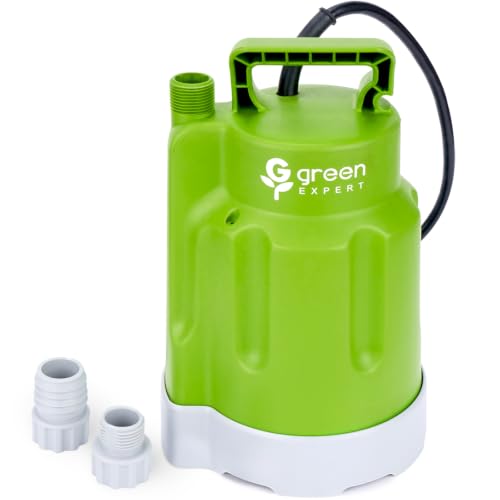
- Best pancake pump for the last inch: Green Expert 1/3 HP (2,000 GPH · about 1/25 inch left).
- Best low-residual alternative: Acquaer 1/3 HP (2,160 GPH · 1/4 inch left · flat suction).
- Best high-flow low-residual: Cleartide 1/3 HP (2,790 GPH · about 1/5 inch left · 1/8 inch solids).
- Best budget auto-or-manual: LEO 1/3 HP (2,250 GPH · about 1/4 inch left · 1/8 inch solids).
- Best for big floods: SEESII 1 HP (5,548 GPH · 1.5 inch NPT) and VEVOR 1/2 HP (3,500 GPH · 1.5 inch NPT · auto only).
The best utility pump for removing standing water is the Superior Pump 91250 (1/4 HP, up to 1,800 GPH) for general flooded yards and cellars, the Wayne EEAUP250 when you want an automatic pump that shuts itself off before running dry, and a flat-suction pancake style pump such as the Green Expert 1/3 HP (about 1/25 inch of water left behind) when the last thin layer is the problem. Standard submersible utility pumps are fast but leave a layer of water behind, usually from about 1/2 inch up to 2 inches depending on the model, so the right pump depends on how much water you must remove and how dry the surface needs to be. This guide ranks pumps by minimum water level, solids handling, discharge fitting and typical use, with the math to estimate how long a job takes.
Our top picks



As an Amazon Associate we earn from qualifying purchases at no extra cost to you.
Quick picks
- Best overall manual utility pump: Superior Pump 91250 (1/4 HP · up to 1,800 GPH · 1/8 inch solids).
- Best automatic with built-in cutoff: Wayne EEAUP250 (1/4 HP · starts above about 1-3/4 inch · stops near 1/2 inch).
- Best auto or manual choice with a float switch: Flotec FP0S1775A (1/4 HP · about 2 inch minimum operating level).
- Best pancake pump for the last inch: Green Expert 1/3 HP (2,000 GPH · about 1/25 inch left).
- Best low-residual alternative: Acquaer 1/3 HP (2,160 GPH · 1/4 inch left · flat suction).
- Best high-flow low-residual: Cleartide 1/3 HP (2,790 GPH · about 1/5 inch left · 1/8 inch solids).
- Best budget auto-or-manual: LEO 1/3 HP (2,250 GPH · about 1/4 inch left · 1/8 inch solids).
- Best for big floods: SEESII 1 HP (5,548 GPH · 1.5 inch NPT) and VEVOR 1/2 HP (3,500 GPH · 1.5 inch NPT · auto only).
How we chose
This is a research-based roundup drawn from published specifications and spec comparisons, not from our own bench work. We looked for portable submersible utility pumps with a stated flow rating and a stated or reported minimum water level, covering both standard pumps and flat-suction pancake designs. When a source did not state a figure, such as the minimum depth of the Superior 91250, we say so rather than inventing one. Specifications change between production runs and between sellers who carry the same pump under similar names, so check the current label before you buy.
Utility pump vs sump pump vs pancake pump
- Utility pump: A portable submersible with a short cord and a garden hose or small NPT outlet, made for temporary jobs such as flooded yards, window wells, pool covers and cellars.
- Sump pump: Installed in a pit to run for years. It is not meant to drag across a floor to pick up standing water.
- Pancake or flat-suction pump: A low-profile utility pump that takes water in from the bottom, so it can clear a thin film. It usually moves less water per hour than a standard pump but leaves far less behind.
What matters when choosing
Minimum water level
This is the depth at which the pump stops moving water. Standard submersibles quit at about 1/2 inch to 2 inches; flat-suction pumps drop to roughly 1/4 inch or much lower. If you are drying a finished floor or a garage slab, this number matters more than horsepower.
Flow in GPH
Rated flow is measured at zero lift. Raise the discharge hose above the pump and the flow drops, and long hoses cost more. Use the rating to compare pumps, then expect real output at roughly half to two-thirds of the number on a long, uphill run.
Solids handling
Many utility pumps pass solids up to about 1/8 inch. Muddy yard water carries sand and grit, which shortens pump life; use a pump rated for larger solids, or place the pump on a block so it does not suck from the bottom silt.
Automatic or manual
Automatic pumps use a float or electronic switch to start and stop. They are convenient for ongoing seepage, but the switch sets the lowest level. Pumps that offer both let you remove or bypass the float to reach lower levels manually. Never leave a manual pump running unattended, since a dry-running pump overheats.
Discharge fitting
Small pumps often use a 3/4 inch garden hose adapter, and larger ones use 1-1/4 or 1.5 inch NPT outlets. A bigger hose cuts friction loss, so use the largest hose the pump accepts and keep the run short and straight.
Comparison table
| Pump | HP | Flow | Water left behind | Solids | Discharge | Operation |
|---|---|---|---|---|---|---|
| Superior Pump 91250 | 1/4 | Up to 1,800 GPH | Not stated | 1/8 inch | 1-1/4 inch NPT plus 3/4 inch adapter | Manual |
| Wayne EEAUP250 | 1/4 | Not stated | About 1/2 inch | Not stated | Not stated | Automatic |
| Flotec FP0S1775A | 1/4 | Not stated | About 2 inch | Not stated | Not stated | Auto or manual |
| Green Expert 1/3 HP | 1/3 | 2,000 GPH | About 1/25 inch | Not stated | Multiple sizes | Auto or manual |
| Acquaer 1/3 HP | 1/3 | 2,160 GPH | 1/4 inch | Not stated | 3/4 inch adapter | Auto or manual |
| Cleartide 1/3 HP | 1/3 | 2,790 GPH | About 1/5 inch | 1/8 inch | Not stated | Auto or manual |
| LEO 1/3 HP | 1/3 | 2,250 GPH | About 1/4 inch | 1/8 inch | 3/4 inch adapter | Auto or manual |
| SEESII 1 HP | 1 | 5,548 GPH | Not stated | Not stated | 1.5 inch NPT | Auto or manual |
| VEVOR 1/2 HP | 1/2 | 3,500 GPH | Not stated | Not stated | 1.5 inch NPT | Auto only |
Worked example: how long will the job take, and how much is left?
Use this step-by-step logic to estimate time and residual water for your own space.
- Compute volume. One gallon fills about 231 cubic inches, so a layer of water over an area holds about 7.48 gallons per square foot per foot of depth. A 1,000 square foot yard under 2 inches (1/6 foot) of water holds about 1,247 gallons (1,000 times 0.1667 times 7.48).
- Derate the pump. A pump rated at 1,800 GPH delivers that figure only at zero lift. Assume about half on a longer hose, so about 900 GPH real.
- Compute time. 1,247 gallons divided by 900 GPH is about 1.4 hours.
- Compute residual water in a room. A 400 square foot garage floor holds about 125 gallons if 1/2 inch is left behind (400 times 0.0417 times 7.48), about 62 gallons at 1/4 inch, and only about 10 gallons at 1/25 inch (400 times 0.0033 times 7.48).
- Choose the pump by the residual you can tolerate. If a few gallons will soak into a finished floor, a standard pump is not enough on its own; follow it with a flat-suction pump or a wet vacuum.
The result shows the common two-pump strategy: use a high-flow pump such as the Superior 91250 to remove the bulk, then switch to a flat-suction pump like the Green Expert or Acquaer to finish.
Best overall: Superior Pump 91250
Specs: 1/4 HP · up to 1,800 GPH · 1/8 inch solids · 1-1/4 inch NPT outlet with 3/4 inch adapter · 10 ft cord · manual operation.
Best for: General-purpose pumping of flooded yards, cellars, window wells and water-filled low spots.
Skip if: You need automatic shutoff, or you need to pick up the last half inch of water; the minimum water level was not stated in the sources we found.
- Pros: Strong flow for its size; common hose and NPT fittings; simple design with no float to jam.
- Cons: Manual, so it must be watched; short cord; leaves a layer of water.
Best automatic with built-in cutoff: Wayne EEAUP250
Specs: 1/4 HP · automatic electronic switch · starts above about 1-3/4 inch · stops near 1/2 inch.
Best for: Ongoing seepage where you want the pump to start and stop on its own and not run dry.
Skip if: The water is shallower than the start level, because it will not trigger automatically, or if you need a published flow rating, since none was stated in our source.
- Pros: Automatic start and stop; protects itself from running dry; leaves only about 1/2 inch.
- Cons: Will not start below about 1-3/4 inch; automatic only in the form we found.
Best float-switch choice: Flotec FP0S1775A
Specs: 1/4 HP · float switch (removable for manual use) · about 2 inch minimum operating level.
Best for: Households that want one pump that can run automatically or manually.
Skip if: You must clear below about 2 inches; the float sets a higher stopping level.
- Pros: Auto and manual modes; familiar name with wide parts support.
- Cons: Higher residual water; flow rating not stated in our source.
Best pancake pumps for the last inch
Green Expert 1/3 HP
Specs: 1/3 HP · 2,000 GPH · about 1/25 inch left · flat suction · auto or manual · multiple discharge adapters.
Best for: Pool covers, garage floors, basement slabs and finished rooms where minimal water must remain.
Skip if: You need to move large volumes quickly or pass big solids.
- Pros: Lowest residual water in this roundup; adapters for different hose sizes.
- Cons: Solids rating not stated; lower flow than larger submersibles.
Acquaer 1/3 HP
Specs: 1/3 HP · 2,160 GPH · 1/4 inch left · flat suction · 3/4 inch adapter · auto or manual.
Best for: Finishing jobs after a bulk pump, and covers or shallow pools.
Skip if: You want the absolute lowest residual, where the Green Expert does better.
- Pros: Low residual; good flow for a pancake pump; both modes.
- Cons: Solids rating not stated; small outlet adapter limits flow.
Cleartide 1/3 HP
Specs: 1/3 HP · 2,790 GPH · about 1/5 inch left · 1/8 inch solids · auto or manual.
Best for: Owners who want high flow and a low residual in one pump.
Skip if: You need a stated discharge size; the figure was not given in our source.
- Pros: Highest flow among the low-residual group; stated solids rating.
- Cons: Discharge details unclear; not a pure flat-suction design in the source.
LEO 1/3 HP
Specs: 1/3 HP · 2,250 GPH · about 1/4 inch left · 1/8 inch solids · 3/4 inch adapter · auto or manual.
Best for: Budget-minded buyers who want a low residual and both operating modes.
Skip if: You need big solids handling or large-diameter hose.
- Pros: Low residual; both modes; stated solids rating.
- Cons: Small adapter limits flow; brand support is less established.
Best for large floods
SEESII 1 HP
Specs: 1 HP · 5,548 GPH · 1.5 inch NPT · auto or manual.
Best for: Large yard floods, drained pools and big basements where volume is the problem.
Skip if: You need a low residual; none was stated, and a 1 HP pump of this class generally leaves more water.
- Pros: Very high flow; 1.5 inch NPT outlet cuts friction loss.
- Cons: Heavy; needs a hose and fittings sized to match; residual not stated.
VEVOR 1/2 HP
Specs: 1/2 HP · 3,500 GPH · 1.5 inch NPT · automatic only.
Best for: Ongoing flood or seepage situations that need high flow and hands-off operation.
Skip if: You need a manual option or a stated low residual.
- Pros: High flow; large outlet; automatic.
- Cons: Automatic only; residual water not stated.
Match the pump to the job
| Situation | Priority | Good fit |
|---|---|---|
| Flooded yard or low spot | Flow and solids | Superior Pump 91250, SEESII 1 HP |
| Cellar with ongoing seepage | Automatic shutoff | Wayne EEAUP250, VEVOR 1/2 HP |
| Finished floor needs to be nearly dry | Lowest residual | Green Expert 1/3 HP, Acquaer 1/3 HP |
| Pool cover or shallow pond | Low residual and portability | Cleartide 1/3 HP, LEO 1/3 HP |
| Auto and manual in one pump | Flexibility | Flotec FP0S1775A |
| Muddy water | Solids rating | Pumps with 1/8 inch or larger solids rating, kept off the bottom silt |
Safety when pumping flood water
- Never wade in water while electrical equipment is plugged in. If water has reached outlets, appliances or the panel, shut power off at the main only if you can do so from a dry spot, otherwise call a licensed electrician or your utility.
- Use a GFCI-protected outlet and an outdoor-rated extension cord of the correct gauge. Keep connections out of the water.
- Unplug the pump before touching, moving or clearing it.
- Do not run a gas-powered pump or generator indoors. Exhaust contains carbon monoxide, which is dangerous in enclosed spaces.
- Treat flood water as contaminated. It can carry sewage and chemicals. Wear waterproof boots and gloves, and discharge away from the foundation, a neighbor’s property and septic systems, following local rules.
- Do not leave manual pumps unattended. A pump that runs dry overheats and can fail.
Setup tips for faster pumping
- Place the pump at the lowest point. Water flows to the pump, and the lowest spot gives the deepest water level.
- Raise the pump slightly. A flat paver or a brick under a standard pump keeps it out of silt and debris, though it raises the minimum water level.
- Use the largest hose it accepts. A short, straight hose cuts friction and improves flow.
- Keep the discharge low. Every foot of lift reduces flow.
- Use two pumps. A high-flow pump for bulk, then a pancake pump to finish, is faster than one pump alone.
- Check the intake screen. Debris blocks the intake and reduces flow; clear it between jobs.
Frequently asked questions
What is the best pump for removing standing water?
For bulk water, a 1/4 to 1/2 HP utility pump like the Superior 91250 works well. For the last thin layer, use a flat-suction pancake pump.
How low can a utility pump drain water?
Standard utility pumps leave roughly 1/2 inch to 2 inches. Flat-suction pumps reach about 1/4 inch or lower, with some models listed near 1/25 inch.
What is a pancake pump?
A pancake pump is a low-profile utility pump with bottom suction. It removes water down to a thin film, but moves less water per hour than a standard pump.
Can a utility pump handle muddy water?
Only small solids. Many are rated for about 1/8 inch. Keep the pump off the bottom silt and clear the intake screen often.
Do I need an automatic or manual pump?
Automatic suits ongoing seepage. Manual or dual-mode suits one-time jobs and lower water levels, but must be watched so it does not run dry.
Can I use a utility pump in a basement flood?
Yes, but only if you can do so safely. Do not enter water with live electricity, use a GFCI outlet and consider calling an electrician first.
What hose should I use with a utility pump?
Use the largest hose the outlet accepts, such as a 3/4 inch garden hose on small pumps or 1.5 inch discharge hose on larger ones.
Why does my pump stop with water still on the floor?
Every pump has a minimum water level, and automatic switches may stop higher than the pump’s intake. Use a flat-suction pump or a wet vacuum for the rest.
Bottom line
Pick by how dry the surface must be. The Superior Pump 91250 handles bulk water, the Wayne EEAUP250 adds automatic cutoff, and flat-suction pumps like the Green Expert 1/3 HP or Acquaer 1/3 HP clear the last thin layer. For big floods, the SEESII 1 HP and VEVOR 1/2 HP bring volume. Estimate volume and residual with the formula above, use the largest hose you can, and put electrical safety first when water is near power.