Key takeaways
- Large lawn, orchard rows or fence lines, already on M18: Milwaukee M18 Switch Tank Backpack Sprayer.
- Lawn weeds and fertilizer-type spraying with a self-contained battery: Chapin 63924 (24V, 4-gallon).
- Typical suburban lot on the Ryobi ONE+ platform: Ryobi ONE+ 18V 4-gallon (P2806BTL).
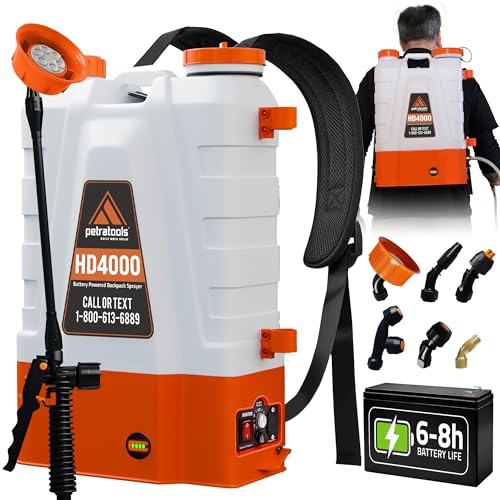
- Long days without swapping batteries: PetraTools HD4000 (12V, 4-gallon).
- Mixed jobs that need a foaming or multi-fan nozzle set: D.B. Smith Field King 190515 battery backpack.
- Small gardens where weight matters: Scotts Professional battery sprayer (2-gallon).
- Ryobi 40V owners: the Ryobi 40V backpack sprayer, with specs to confirm on the current label.
The Milwaukee M18 Switch Tank Backpack Sprayer is the best electric backpack sprayer for most yard work if you already own M18 batteries, the Chapin 63924 is the pick for steady low-pressure lawn and weed spraying on a built-in battery, and the Ryobi ONE+ 18V 4-gallon sprayer (P2806BTL) is the easiest entry into a shared-battery system. The right choice comes down to four numbers: tank size, working pressure, how many tanks one charge delivers, and whether the nozzle set matches your job.
Our top picks


As an Amazon Associate we earn from qualifying purchases at no extra cost to you.
Quick answer: which electric backpack sprayer fits which yard
- Large lawn, orchard rows or fence lines, already on M18: Milwaukee M18 Switch Tank Backpack Sprayer.
- Lawn weeds and fertilizer-type spraying with a self-contained battery: Chapin 63924 (24V, 4-gallon).
- Typical suburban lot on the Ryobi ONE+ platform: Ryobi ONE+ 18V 4-gallon (P2806BTL).
- Long days without swapping batteries: PetraTools HD4000 (12V, 4-gallon).
- Mixed jobs that need a foaming or multi-fan nozzle set: D.B. Smith Field King 190515 battery backpack.
- Small gardens where weight matters: Scotts Professional battery sprayer (2-gallon).
- Ryobi 40V owners: the Ryobi 40V backpack sprayer, with specs to confirm on the current label.
How we chose
This guide is research-based. We compared manufacturer specifications, published runtime claims and professional tool-review write-ups, then kept only models whose tank size, pressure and battery platform could be cross-checked. Runtime numbers from makers and reviewers use different test conditions (tip, pressure mode, battery size), so they are treated as ranges, not promises. Where a spec could not be confirmed, the entry describes the product by spec class and says so. We do not claim to have used any of these sprayers ourselves.
The criteria that matter for yard work, in order:
- Tank capacity: 2 gallons suits beds and patios; 4 gallons suits lawns, fence lines and orchard rows. A full 4-gallon tank of liquid weighs roughly 33 pounds before the sprayer itself, so bigger is not always better for your back.
- Pressure range: Herbicide and fungicide coverage works at low pressure (a fan or cone pattern near 30 to 60 PSI). Reaching into tall shrubs or fruit trees benefits from higher pressure and a narrow stream.
- Runtime per charge: Expressed as tanks per charge, because that is how you actually work.
- Charge time and battery platform: A shared tool battery means a spare is already in your garage; a built-in battery means the sprayer sits on the charger overnight.
- Nozzle variety and chemical compatibility: Flat fan for even lawn passes, cone for foliage, adjustable brass for spot treatments, foaming for marking.
Comparison table
| Model | Tank | Power | Pressure | Reported runtime | Best use |
|---|---|---|---|---|---|
| Milwaukee M18 Switch Tank (3019) | 4 gal system with switch tank design | M18 battery (any capacity) | Up to 140 PSI | About 20 to 27 tanks per charge depending on battery and mode | Large lawns, orchards, fence lines |
| Chapin 63924 | 4 gal | 24V built-in battery system | Up to 45 PSI | About 2 hours continuous | Lawn weed and broadcast spraying |
| Ryobi ONE+ 18V (P2806BTL) | 4 gal | 18V ONE+ battery | Check current label | About 11 tanks per charge | Average suburban yards |
| PetraTools HD4000 | 4 gal | 12V battery | Up to 90 PSI | Several hours; roundups cite 6 to 8 | Long single-battery days |
| D.B. Smith Field King 190515 | 4 gal | Battery | Check current label | Not confirmed | Mixed jobs, nozzle variety |
| Scotts Professional Battery | 2 gal | Battery | Check current label | Not confirmed | Beds, patios, small lawns |
| Ryobi 40V backpack sprayer | 4 gal class | 40V battery | Check current label | Not confirmed | Owners of the 40V platform |
Best electric backpack sprayers, reviewed one by one
1. Milwaukee M18 Switch Tank Backpack Sprayer: best overall for M18 owners
Specs: M18 battery platform · Up to 140 PSI · About 24 ft vertical spray distance · Switch tank design · About 20 tanks per charge with a 4.0Ah battery in the highest mode, up to 27 tanks with a 3.0Ah battery under the reviewer’s conditions.
The standout feature is pressure headroom. Most backpack sprayers top out below 100 PSI, so reaching the top of a tall hedge or a mature fruit tree is a chore. At 140 PSI with a narrow-stream tip, you can reach canopy height without climbing a ladder. The base accepts any M18 battery, including large-capacity packs, which is the practical way to extend a long spraying day.
Pros: highest pressure ceiling in this group; runs on batteries you may already own; multiple pressure modes to stretch runtime; strong reach for orchards and tall shrubs.
Cons: premium cost if you do not own M18 batteries; high pressure encourages drift if you keep it maxed out on lawns.
Best for: large properties, fruit trees, anyone on the M18 platform. Skip if: you only spray a small lawn a few times per season or you are on a different tool battery system.
2. Chapin 63924: best self-contained lawn sprayer
Specs: 4-gallon tank · 24V battery system · Up to 45 PSI · About 2 hours continuous runtime · Made in the USA.
A 45 PSI ceiling sounds low, but it is the right range for the single most common yard job: even coverage of broadleaf herbicide or lawn treatments with a fan nozzle. Low pressure also means larger droplets and less drift. Two hours of continuous spraying is far more than a typical residential lot needs.
Pros: gentle pressure suits lawns; long continuous runtime; domestic manufacture; no need to own another tool battery platform.
Cons: not for reaching tall branches; locked into the maker’s battery.
Best for: homeowners treating lawns and driveways. Skip if: you need to spray fruit trees or siding above one story.
3. Ryobi ONE+ 18V 4-gallon sprayer (P2806BTL): best entry point on a shared platform
Specs: 4-gallon tank · 18V ONE+ battery · About 11 tanks per charge (manufacturer-style rating).
Eleven tanks is about 44 gallons of mixed solution, which covers a typical suburban yard multiple times. Because it shares batteries with the rest of the ONE+ line, a second battery costs less than a second sprayer.
Pros: broad battery compatibility; enough capacity for most homes; widely available replacement parts.
Cons: lower pressure ceiling than the Milwaukee; runtime depends heavily on tip choice.
Best for: mid-size yards and gardens in a Ryobi household. Skip if: you need canopy reach for orchards.
4. PetraTools HD4000: best for long runtime on one battery
Specs: 4-gallon tank · 12V battery · Up to 90 PSI · Several hours reported (roundups cite 6 to 8 hours).
The 12V pack is a small, dedicated battery, and the claimed runtime is the longest here. Runtime claims vary with pressure setting, so treat 6 to 8 hours as a low-pressure best case. It also has more pressure range than the Chapin, making it a reasonable middle option between lawns and shrubs.
Pros: long reported runtime; 90 PSI covers most hedge work; independent battery.
Cons: proprietary battery; runtime figures come mostly from roundup sites, so expect less in practice.
Best for: all-day spraying sessions, large gardens. Skip if: you prefer swapping a shared power-tool battery.
5. D.B. Smith Field King 190515 battery backpack: best nozzle variety
Specs: 4-gallon tank · Battery powered · Four nozzles: low-volume fan, high-volume fan, adjustable brass, foaming.
The nozzle kit is the reason to choose it. A low-volume fan suits herbicides at label rate, a high-volume fan suits fertilizer-type liquids and wetting agents, the brass adjustable handles spot treatments, and the foaming nozzle shows exactly where you have sprayed, which prevents double-dosing on lawns.
Pros: four nozzles in the box; foam marking; same brand sells a manual 4-gallon sibling.
Cons: pressure and battery specs should be confirmed on the current listing before purchase.
Best for: mixed tasks across lawn, garden and fence line. Skip if: you want published high-pressure reach.
6. Scotts Professional battery sprayer: best compact option
Specs: 2-gallon tank · Battery powered · Single adjustable nozzle (fan, cone, stream).
Two gallons is about 17 pounds of liquid, a real difference on the shoulders compared with a full 4-gallon tank. One adjustable nozzle handles beds, patios, pavers and small lawns without a nozzle swap.
Pros: lighter when full; simple nozzle; fewer refills than a handheld pump.
Cons: frequent refills on large areas; single nozzle limits precision.
Best for: small yards, patio weed control. Skip if: your lawn is larger than a typical suburban lot.
7. Ryobi 40V backpack sprayer: for the 40V platform
Specs: 4-gallon class · 40V battery · confirm tank, pressure and runtime on the current manufacturer page.
This model matters mainly if you already run the Ryobi 40V mower or trimmer line. We could not confirm its runtime numbers, so rely on the manufacturer page rather than any third-party figure.
Best for: 40V platform owners. Skip if: you have no Ryobi batteries, since the Chapin and PetraTools are self-contained alternatives.
Group by buyer criteria: concrete thresholds
Yard size
- Under 5,000 square feet of total spray area: a 2-gallon unit is enough.
- 5,000 to 20,000 square feet: a 4-gallon model with a spare battery or a runtime above 10 tanks.
- Above 20,000 square feet or an orchard: choose a high-pressure model with large battery options.
Pressure
- 30 to 60 PSI: lawn herbicide, fertilizer solutions, mulch-bed pre-emergents.
- 60 to 100 PSI: hedges, rose beds, vegetable gardens, fence lines.
- Above 100 PSI: tall shrubs and fruit trees only.
Battery platform
- Own M18 or ONE+ batteries already: pick the matching sprayer.
- Own neither: choose a self-contained 24V or 12V model.
Worked example: tanks, area and runtime for a real yard
Use this step-by-step logic to size a sprayer before buying. All inputs below are planning assumptions, not product claims.
- Measure the area. A 60 by 90 foot lawn is 5,400 square feet.
- Find the label rate. Many lawn herbicide labels call for a carrier volume of about 1 gallon per 1,000 square feet. Always read your own product label.
- Total solution needed: 5,400 / 1,000 = 5.4 gallons per application.
- Tanks needed: 5.4 / 4 = 1.35, so two fills with a 4-gallon tank (the second tank is only 35 percent full).
- Add the rest of the yard. Fence line and beds add another 2 gallons, giving 7.4 gallons, or two fills.
- Runtime check. A sprayer rated for 11 tanks per charge can handle this job about five times before recharging. A sprayer rated for 2 hours continuous covers it easily because the spray time itself is under 30 minutes.
- Battery math for shared platforms. Battery energy equals volts times amp-hours. An 18V 4.0Ah pack holds 72 watt-hours, and a 12.0Ah pack holds 216 watt-hours, so a larger pack triples the work per charge at the same draw.
The conclusion: for a typical suburban lot, runtime is rarely the limit. Weight, nozzle choice and drift are. Buy for pressure range and nozzle set first, and runtime second, unless your property exceeds an acre.
Safety and use guidance
- Read the pesticide or herbicide label, and follow the rate, protective equipment and re-entry intervals it states.
- Wear chemical-resistant gloves, eye protection, long sleeves and closed shoes when mixing and spraying.
- Do not spray in wind that carries mist off target; choose a calm morning or evening.
- Release pressure and depressurize hoses before swapping nozzles.
- Dedicate one sprayer to herbicides and another to fertilizer or fungicide to avoid cross-contamination that can injure plants.
- Triple rinse the tank after each use and dispose of rinse water according to the label, never into storm drains.
- Store batteries indoors, away from extreme heat or freezing temperatures.
Maintenance tips that extend sprayer life
- Flush with clean water after every session, running the pump for 30 seconds.
- Clean the inline filter and nozzle screen at least monthly in the season; clogs are the top cause of weak output.
- Check seals and hoses for cracking each spring. Oil-based or acidic products can degrade standard seals.
- Recharge before long storage and top up the battery every few months.
- Do not leave solution in the tank for more than a day; residue crystallizes and damages valves.
Frequently asked questions
What size electric backpack sprayer do I need for a typical yard?
A 4-gallon tank suits most yards under an acre. It balances fewer refills against a full weight near 35 pounds. For small patios and beds, a 2-gallon model is lighter and enough.
If you spray monthly, the larger tank saves refills, but pair it with a padded harness and fill partially for heavy jobs.
How many tanks can one battery charge spray?
It ranges from about 11 tanks on a mid-range 18V model to 20 or more on a high-capacity M18 pack, depending on pressure mode.
Higher pressure and finer tips drain batteries faster. Use the lowest pressure that gives even coverage, and runtime climbs noticeably.
Is more PSI always better?
No. Lawn and weed work performs best at low pressure, which creates larger droplets and less drift. High PSI helps only for reach into tall plants.
Excess pressure also atomizes liquid into fine mist that drifts onto neighboring plants and wastes product.
Can I use one sprayer for herbicide and fertilizer?
It is better not to. Trace herbicide residue can injure ornamentals or vegetables sprayed later, even after rinsing.
If you must share, triple rinse, run clean water through the hose and nozzle, and test on a small sacrificial plant first.
Are electric backpack sprayers better than manual pump ones?
For repeated or large jobs, yes: constant pressure, no pumping fatigue and more even coverage. Manual models suit occasional small jobs and cost less.
Electric units add battery, charger and electronics to maintain, so they pay off with frequent use.
What nozzles should I look for?
A flat fan nozzle for lawns, an adjustable cone or brass nozzle for spot work, and optionally a foaming nozzle for marking applied areas.
Having at least two interchangeable nozzles lets one machine handle lawns, beds and fence lines.
Do electric backpack sprayers work with oil-based products or strong chemicals?
Only if the manufacturer lists compatibility. Standard seals can swell or fail with oils, solvents and some acids.
Look for Viton seals in the specifications and check the label of the product you plan to spray.
How should I store the sprayer over winter?
Flush, drain and dry the tank, hose and pump, then store the sprayer indoors with the battery partially charged and removed.
Leave the lid vented to avoid mildew and keep seals out of freezing temperatures to prevent cracking.
Final verdict
If you have M18 batteries and tall plants to reach, buy the Milwaukee M18 Switch Tank. If you mainly treat lawns, the Chapin 63924 gives the right pressure range and generous continuous runtime without a battery ecosystem. For Ryobi households, the ONE+ 18V 4-gallon unit is the practical choice, and the D.B. Smith Field King 190515 earns its place when nozzle variety matters most. Size the sprayer to your yard with the worked calculation above, confirm any marked specs on the current manufacturer page, and follow the chemical label every time.