Key takeaways
- Crosscut capacity: Measure your widest common board and add two inches. A 12-inch sliding saw handles nominal 2×12 stock and wide shelf boards flat; a 10-inch slider tops out closer to 12 or 13 inches, which is plenty for face frames and 1×8 casework but tight for wide panel work.
- Single vs. double bevel: Single bevel tilts one direction, so you flip the workpiece for opposing angles. Double bevel tilts both ways and pays off fast on crown molding, mitered boxes, and anything with matched compound cuts on both ends.
- Cut-line reference: Lasers drift out of calibration and vanish in bright shop light. A shadow-line LED system casts the blade’s own silhouette on the wood, so it never needs adjusting and stays visible outdoors.
- Fence and detent quality: Positive stops at common angles save setup time, but only if the miter detent plate is machined tight and the tall sliding fence supports baseboard on edge without flex. Check that the fence halves slide clear of the blade at full bevel.
- Dust management and footprint: Bag collection is a courtesy at best. Look for a shroud shaped to feed a 2.5-inch hose, and confirm the rear slide rails have clearance if you plan to push the saw against a wall.
What's inside
Standing in the tool aisle with a tape measure in your pocket and a half-finished bookcase in the garage is a specific kind of frustration. Every miter saw looks capable, the spec stickers all shout about amps and RPM, and none of it tells you whether the thing will cut a clean 45 on a 1×10 without leaving burn marks or blowing out the back edge. Worse, “compound sliding” gets stamped on boxes that only do half of what the name implies, so buyers end up with a chop saw that can’t reach across a wide board.
I build furniture in a two-car garage, and the miter saw is the one machine I touch on every project. This guide sorts through the models that actually earn bench space, covering what the slide mechanism buys you, when a single bevel is enough, and where cheaper saws cut corners you’ll feel on your third project. Below are the picks worth your money in 2026, followed by the specs that matter and the ones that don’t.
As an Amazon Associate we earn from qualifying purchases.


🛒 Best Price Today on Amazon
Prime members get fast, free shipping on everything above, plus member-only deals. New members get a 30-day free trial — cancel anytime.
How to Choose a Compound Sliding Miter Saw (2026)
- Crosscut capacity: Measure your widest common board and add two inches. A 12-inch sliding saw handles nominal 2×12 stock and wide shelf boards flat; a 10-inch slider tops out closer to 12 or 13 inches, which is plenty for face frames and 1×8 casework but tight for wide panel work.
- Single vs. double bevel: Single bevel tilts one direction, so you flip the workpiece for opposing angles. Double bevel tilts both ways and pays off fast on crown molding, mitered boxes, and anything with matched compound cuts on both ends.
- Cut-line reference: Lasers drift out of calibration and vanish in bright shop light. A shadow-line LED system casts the blade’s own silhouette on the wood, so it never needs adjusting and stays visible outdoors.
- Fence and detent quality: Positive stops at common angles save setup time, but only if the miter detent plate is machined tight and the tall sliding fence supports baseboard on edge without flex. Check that the fence halves slide clear of the blade at full bevel.
- Dust management and footprint: Bag collection is a courtesy at best. Look for a shroud shaped to feed a 2.5-inch hose, and confirm the rear slide rails have clearance if you plan to push the saw against a wall.
The Best Compound Sliding Miter Saws (2026) Reviewed
DEWALT DWS780 12-Inch Double Bevel Sliding Compound
This is the saw I recommend when someone plans to keep building for years, mostly because the XPS shadow light replaces laser fiddling with a cut line you can trust straight out of the box. Double bevel plus a 12-inch blade means crown molding, wide shelves, and tall baseboard all get handled without flipping stock, and the detents hold their setting after months of shop abuse.
DEWALT DWS779 12-Inch Double Bevel Sliding Compound
Mechanically this is the DWS780’s twin minus the shadow light, and the 3,800 RPM motor delivers the same generous crosscut capacity for noticeably less money. If you’re comfortable marking your line and trusting the blade, the savings buy a very good 80-tooth blade with change left over.
DEWALT DWS715 12-Inch Single Bevel Compound
No slide here, so crosscut width is limited, but the 15-amp motor and 12-inch blade give it real muscle for trim, 2×4 framing, and repetitive chop work. It’s the compact, budget-conscious option for a shop where most cuts happen on narrow stock.
DOVAMAN 10-Inch Sliding Miter Saw
The dual-speed motor and three included TCT blades make this a sensible pick if you cut aluminum trim or plastic alongside hardwood. Ambidextrous controls and nine positive stops are welcome touches, though the 3.5 by 13.4-inch capacity means you’ll plan around thick, wide stock.
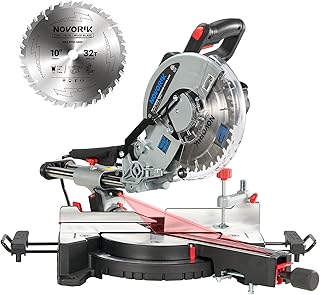
NOVORIK 10-Inch Single Bevel Sliding Miter Saw
A straightforward 15-amp slider that covers the fundamentals at an entry price, with a laser guide and enough reach for standard shelving and trim. Worth swapping the stock blade early, but the slide action is smooth enough for clean furniture joinery once it’s tuned.
Frequently Asked Questions
Is a sliding miter saw worth the extra cost?
If you build furniture, yes. Cabinet sides, shelves, and tabletop breadboards routinely exceed the 6 to 8 inches a non-sliding saw crosscuts, and working around that limitation with a circular saw and guide eats more time than the price difference is worth.
Do I need 12 inches, or will 10 do?
Ten-inch sliders cover most furniture work and cost less to re-blade. Step up to 12 inches when you regularly cut 2×12 stock, tall baseboard on edge, or thick hardwood where the larger blade’s slower tip speed and deeper capacity help.
How accurate are these saws out of the box?
Assume they need checking. Verify the blade square to the table and fence with a machinist square, confirm the 45-degree stops against a reliable reference, and adjust before your first real cut. Ten minutes of setup prevents gappy miters later.
Can I use one saw for both trim and furniture joinery?
Yes, but swap blades. A 32 to 40-tooth blade rips through framing lumber quickly, while a 60 to 80-tooth fine-finish blade leaves the glue-ready surfaces furniture work demands.
Final Thoughts
For a shop that builds real furniture, the DEWALT DWS780 is the pick worth stretching for, since the shadow light and double bevel remove two ongoing annoyances rather than just adding features. The DWS779 gets you the same cutting capability for less if you don’t mind marking your own lines, and the DOVAMAN 10-inch slider is the sensible starting point for a smaller shop cutting mixed materials on a tighter budget.