Key takeaways
- Rip capacity: Anything under 24″ forces you to flip full sheets mid-cut. A 32-1/2″ rip lets you split a 4×8 sheet down the center in one pass, which is the difference between building a cabinet in an afternoon and fighting it all weekend.
- Fence repeatability: Lock the fence, measure at the front of the blade, then measure at the back. If those numbers drift more than a hair, your glue joints will show it. Rack-and-pinion fences hold parallel far better than single-point clamps.
- Motor type: Universal motors spin fast and start hard; worm drive gearing trades RPM for torque and shrugs off wet pressure-treated stock. Direct-drive is lighter, worm drive is calmer under load.
- Dust collection: A shrouded blade with a 2-1/2″ port pulls most of the fines out of the air. Below-table-only collection means you will be sweeping a lot and breathing more than you should.
- Stand and footprint: A rolling stand that folds flat matters more than you expect in a shared garage. Check the deployed height too — 32″ to 34″ keeps your hips behind the cut and your sightline over it.
What's inside
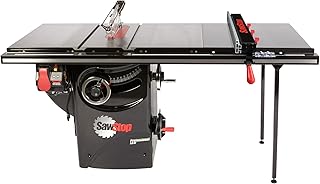
Anyone who has tried to break down a sheet of 3/4″ plywood on sawhorses knows the moment things go wrong: the offcut sags, the kerf pinches, and suddenly you are wrestling a spinning blade instead of guiding it. That single frustration is what pushes most home woodworkers toward a real table saw. The trouble is that the phrase “cabinet table saw” gets attached to almost anything with a fence and a stand, and a genuine cabinet saw — a 400-pound, 3HP, 220V machine bolted to a shop floor — is not what most garage shops need or can even power.
This guide takes the honest route. Every saw below is a portable or benchtop machine that delivers cabinet-saw-style results for furniture work: repeatable rip cuts, square crosscuts, and clean edges you can glue up without jointing. I have used or set up all of these classes of saw building casework, shaker doors, and live-edge tables, and the notes below reflect what actually matters once sawdust is flying — fence repeatability, dust capture, and whether the stand stays put when you lean into a cut.
As an Amazon Associate we earn from qualifying purchases.



🛒 Best Price Today on Amazon
Prime members get fast, free shipping on everything above, plus member-only deals. New members get a 30-day free trial — cancel anytime.
How to Choose a/an Cabinet Table Saw (2026)
- Rip capacity: Anything under 24″ forces you to flip full sheets mid-cut. A 32-1/2″ rip lets you split a 4×8 sheet down the center in one pass, which is the difference between building a cabinet in an afternoon and fighting it all weekend.
- Fence repeatability: Lock the fence, measure at the front of the blade, then measure at the back. If those numbers drift more than a hair, your glue joints will show it. Rack-and-pinion fences hold parallel far better than single-point clamps.
- Motor type: Universal motors spin fast and start hard; worm drive gearing trades RPM for torque and shrugs off wet pressure-treated stock. Direct-drive is lighter, worm drive is calmer under load.
- Dust collection: A shrouded blade with a 2-1/2″ port pulls most of the fines out of the air. Below-table-only collection means you will be sweeping a lot and breathing more than you should.
- Stand and footprint: A rolling stand that folds flat matters more than you expect in a shared garage. Check the deployed height too — 32″ to 34″ keeps your hips behind the cut and your sightline over it.
The Best Cabinet Table Saw (2026)s Reviewed
DEWALT DWE7491RS 10″ with Rolling Stand
This is the saw I recommend when someone says they want to build furniture, full stop. The rack-and-pinion fence tracks dead parallel through its whole 32-1/2″ range, and the foldable rolling stand deploys in about ten seconds without a wrestling match.
SKIL SPT99-11 Worm Drive Table Saw
The worm drive gearing gives this one a distinctly unhurried feel in thick hardwood — it bogs down far later than a comparable direct-drive saw. The 30″ rip capacity and beefy stand make it a legitimate small-shop workhorse rather than a jobsite compromise.
DEWALT DWE7485 8-1/4″ Compact
The 8-1/4″ blade means shallower maximum depth of cut, but you get the same fence quality in a saw one person can carry up basement stairs. For trim, face frames, and drawer parts, it punches well above its footprint.
Prostormer 10″ Table Saw with Stand
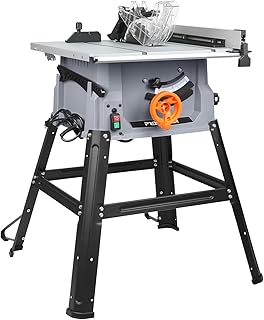
A sensible entry point if you are still deciding how deep into woodworking you want to go. The 45° bevel and 5000 RPM motor handle decking, trim, and general DIY cutting well; just plan to check the fence for square before precision joinery.
Mini Precision Craft Table Saw (96W)
Not a furniture saw, and it does not pretend to be. With seven speeds, a 1/2″ depth capacity, and four blades, it is the tool you reach for when cutting acrylic drawer dividers, PCB stock, or thin inlay banding that a 10″ blade would obliterate.
Frequently Asked Questions
Is a portable saw really a substitute for a cabinet saw?
For accuracy, largely yes — modern rack-and-pinion fences rival cast-iron machines. What you give up is mass, which means less vibration damping and more effort feeding heavy hardwood.
Do I need 220V wiring?
No. Every saw here runs on a standard 15A 120V circuit, though you should avoid sharing that circuit with a dust extractor or space heater.
What about the miter saw in the lineup?
A 10-inch compound miter saw complements a table saw rather than replacing it. Table saws rip along the grain; miter saws crosscut to length and cut angles far more comfortably.
Should I upgrade the stock blade?
Almost always. A 40- to 60-tooth ATB combination blade transforms cut quality on any of these saws for around the price of a decent chisel.
Final Thoughts
For most home furniture builders, the DEWALT DWE7491RS is the safest bet — the fence and rolling stand justify the price on the first cabinet you build. Choose the SKIL SPT99-11 if you cut thick hardwood or wet lumber often and want the extra torque, or the compact DEWALT DWE7485 if shop space and portability outrank raw rip capacity.