Shopping for a table saw is where a lot of first shop builds stall out. Spec sheets read like they were written by three different people, the amp rating is identical across a $200 saw and a $700 one, and nobody tells you that the rip fence — not the motor — is what determines whether your cabinet doors come out square. Meanwhile the reviews split into two camps: pros who think anything under a cabinet saw is a toy, and weekend builders who bought on price and are now shimming their fence with playing cards.
I build furniture in a single-bay garage, which means my saw has to cut a 3/4″ hardwood panel dead straight and then get out of the way so I can park. This guide is written from that constraint. Below are six saws worth your money in 2026, sorted by what they actually do well: which ones hold a fence setting through a full day of ripping, which ones fold down and roll into a corner, and which budget models are genuinely usable versus the ones that’ll frustrate you by the third project.
Our top picks



As an Amazon Associate we earn from qualifying purchases at no extra cost to you.
🛒 Best Price Today on Amazon
Prime members get fast, free shipping on everything above, plus member-only deals. New members get a 30-day free trial — cancel anytime.
How to Choose a/an Table Saw For Money (2026)
- Fence quality over horsepower: Nearly every 10″ jobsite saw runs a 15-amp motor, so that number tells you almost nothing. What separates them is whether the fence locks parallel to the blade every single time. A rack-and-pinion fence is worth paying up for — you crank both ends together instead of tapping one end and hoping.
- Rip capacity you’ll actually use: If you plan to break down plywood, you want at least 24″ to the right of the blade so you can rip a sheet in half. Around 32″ lets you handle full-width crosscuts on cabinet sides. Under 20″ and you’ll be reaching for a track saw constantly.
- Cut depth at 45 degrees: Manufacturers advertise the 90° number and bury the bevel figure. A saw that cuts 3-1/4″ flat might only manage 2-1/4″ tilted, which matters the moment you’re mitering thick stock for a waterfall edge.
- Stand design and mobility: A rolling stand that folds like a hand truck changes how you use a small shop. Scissor stands are lighter and cheaper but you’ll be lifting the whole saw to reposition it. Weigh that against how often the tool moves.
- Blade upgrade path: The stock blade on almost every saw in this range is a 24-tooth framing blade. Budget $40 for a 40- or 60-tooth combination blade — it’s the single cheapest improvement you can make and it turns a mediocre saw into a decent one.
The Best Table Saw For Money (2026)s Reviewed
DEWALT DWE7491RS 10″ with Rolling Stand
This is the saw most furniture builders end up owning, and the 32-1/2″ rip capacity plus rack-and-pinion fence is why — you can break down sheet goods without a helper and trust the fence to return to a setting. The foldable rolling stand deploys in about ten seconds and takes up roughly a closet’s worth of floor space when collapsed.
SKIL TS6307-00 15 Amp 10″ Jobsite Saw
SKIL’s rack-and-pinion fence tracks impressively true for the price, and the integrated folding stand means there’s no separate accessory to buy or lose. The onboard dust port and worm-drive-style build quality make this the value pick for anyone who wants near-DEWALT accuracy without the premium.
DEWALT DWE7485 8-1/4″ Compact
The smaller blade gives up cut depth, but at roughly 54 pounds this is the one you can carry up basement stairs one-handed. For face frames, drawer parts, and trim work it’s plenty of saw, and it shares DEWALT’s excellent fence hardware with its bigger sibling.
DOVAMAN DTS10A 10″ Table Saw
The copper motor and 3.35″ cut depth at 90° punch above the price bracket, and the single-side extension wing gives you meaningful support when ripping wider boards. Expect to spend an hour dialing in the fence and blade alignment out of the box — do that work and it cuts cleanly.
10″ 5000RPM Saw with 36 x 25″ Tabletop
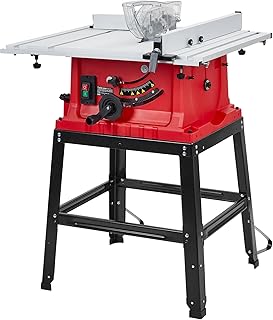
That oversized cast tabletop is the standout feature here, giving you real workpiece support instead of the postage-stamp surface most budget saws offer. Adjustable depth and a full 0–45° bevel cover standard furniture joinery, and the included cover is a genuine plus for a garage that gets dusty.
Frequently Asked Questions
Is a jobsite saw good enough for building furniture?
Yes, with two caveats. Add a quality blade and check that your fence is parallel to the blade before each project. Where jobsite saws struggle is ripping thick hardwood — take your time, use a slower feed rate, and consider a thin-kerf blade to reduce load on the motor.
Do I need a 10″ saw, or will 8-1/4″ work?
An 8-1/4″ saw cuts around 2-1/2″ deep at 90°, which handles 4×4 stock in a single pass and everything thinner easily. Go 10″ if you plan to cut thick slabs, bevel heavy stock, or want the wider selection of specialty blades.
What safety features actually matter?
A riving knife is non-negotiable — it prevents the kerf from closing on the blade, which is what causes most kickback. Also confirm the saw has anti-kickback pawls and a blade guard that’s easy to reinstall, because a guard you dread putting back on is a guard you’ll leave off.
Should I build an outfeed table?
It’s the highest-value shop upgrade you can make with scrap plywood. Nothing improves cut quality more than having your workpiece supported past the blade instead of tipping off the back edge mid-rip.
Final Thoughts
If your budget stretches to it, the DEWALT DWE7491RS is the saw you buy once — the fence and rolling stand justify the spend over years of projects. The SKIL TS6307-00 is the smartest value in the group, delivering rack-and-pinion accuracy for meaningfully less, while the DEWALT DWE7485 is the right call for tight spaces and anyone who moves their saw more than they use it.