Key takeaways
- SCFM at 90 PSI: This is the airflow number that decides what tools you can run. Brad and pin nailers sip air and need under 1 SCFM. Framing nailers, ratchets, and orbital sanders want 4 SCFM or more — check your thirstiest tool and buy above it, not at it.
- Noise level in dBA: A standard pancake compressor runs around 78–80 dBA, loud enough to end a conversation. Ultra-quiet oil-free models sit near 56–60 dBA, roughly a household fan. If your shop shares walls with living space, this single spec will change how often you actually use the tool.
- Tank volume versus recovery: Bigger tanks mean longer runs between cycles, but a fast-recovering pump matters more for intermittent work. For nailing and blow-off, 1 to 6 gallons is plenty. For sanding or spraying, get 8 gallons minimum and expect the motor to work.
- Oil-free versus oil-lubricated: Oil-free pumps skip the maintenance and run at any angle, which suits a hobby shop perfectly. Oil-lubricated units last longer under daily commercial load but need level placement and regular checks. For furniture work, oil-free is the right call.
- Weight and how it moves: Anything over 40 pounds needs wheels or a handle you’d trust on stairs. An aluminum tank saves real weight over steel and won’t rust from condensation, which matters if you forget to drain it after a long session.
What's inside
Shopping for an air compressor gets confusing fast because the spec that matters most is buried behind the numbers on the box. Tank size grabs attention, horsepower sounds impressive, but the figure that actually determines whether your brad nailer stalls mid-baseboard is SCFM at 90 PSI. A 6-gallon pancake with strong airflow will outwork a bigger tank with a weak pump every single time. Add in the noise question, which nobody thinks about until they fire one up in an attached garage at 8am, and it’s easy to buy wrong twice before getting it right.
This guide is written from the workbench, not the spec sheet. I’ve run these compressors through cabinet assembly, upholstery work, trim installation, and the endless small jobs that come with building furniture at home — pin nailing drawer boxes, blowing sawdust out of joinery before glue-up, spraying finish, topping off shop cart tires. Below you’ll find the models worth your money in 2026, what each one is genuinely good at, and where the tradeoffs land so you can match the machine to the work you actually do.
As an Amazon Associate we earn from qualifying purchases.




🛒 Best Price Today on Amazon
Prime members get fast, free shipping on everything above, plus member-only deals. New members get a 30-day free trial — cancel anytime.
How to Choose a/an Air Tool Compressor (2026)
- SCFM at 90 PSI: This is the airflow number that decides what tools you can run. Brad and pin nailers sip air and need under 1 SCFM. Framing nailers, ratchets, and orbital sanders want 4 SCFM or more — check your thirstiest tool and buy above it, not at it.
- Noise level in dBA: A standard pancake compressor runs around 78–80 dBA, loud enough to end a conversation. Ultra-quiet oil-free models sit near 56–60 dBA, roughly a household fan. If your shop shares walls with living space, this single spec will change how often you actually use the tool.
- Tank volume versus recovery: Bigger tanks mean longer runs between cycles, but a fast-recovering pump matters more for intermittent work. For nailing and blow-off, 1 to 6 gallons is plenty. For sanding or spraying, get 8 gallons minimum and expect the motor to work.
- Oil-free versus oil-lubricated: Oil-free pumps skip the maintenance and run at any angle, which suits a hobby shop perfectly. Oil-lubricated units last longer under daily commercial load but need level placement and regular checks. For furniture work, oil-free is the right call.
- Weight and how it moves: Anything over 40 pounds needs wheels or a handle you’d trust on stairs. An aluminum tank saves real weight over steel and won’t rust from condensation, which matters if you forget to drain it after a long session.
The Best Air Tool Compressor (2026)s Reviewed
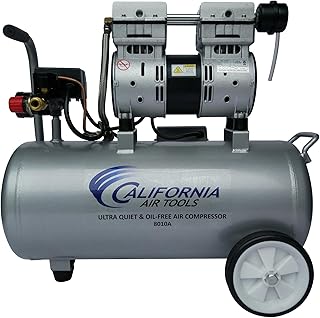
California Air Tools 8010A Ultra Quiet 8-Gallon
At 60 dBA with an 8-gallon aluminum tank and wheels, this is the compressor I reach for during full-day shop sessions where I’m running a sander or spraying lacquer. The dual-piston pump recovers quickly and the low RPM motor is built to be rebuilt rather than replaced, which makes it a genuine long-term buy.
California Air Tools CAT-4610AC Twin Tank
The 4.6-gallon twin aluminum tank splits the difference beautifully — enough stored air for continuous trim nailing, still light enough to carry to a job across the house. It’s the best-balanced quiet compressor in the lineup for someone building furniture in a garage bay.
DEWALT DWFP55126 Pancake, 6 Gallon
Two point six SCFM at 90 PSI and 165 max PSI make this the workhorse pick, and the high-efficiency motor starts reliably in a cold winter garage. It’s noisy compared to the California units, but nothing at this price runs two nailers simultaneously with less fuss.
BOSTITCH BTFP02012-WPK Kit
Buying the kit is the smart move if you’re starting from zero — you get the 6-gallon pancake plus hose and fittings, so you’re working the day it arrives. Lighter than most rivals at around 29 pounds, with a high-flow regulator that holds pressure well during rapid firing.
California Air Tools CAT-1P1060S 1-Gallon
At 56 dBA and under 30 pounds, this little one-gallon is the pin nailer and blow-gun companion, ideal for apartment shops and detail work. Don’t ask it to run anything with real airflow demand, but for drawer boxes and dust clearing it’s near-silent and always ready.
Frequently Asked Questions
What size compressor do I need for furniture building?
For brad nailers, pin nailers, staplers, and blow-off work, anything from 1 to 6 gallons with roughly 1 SCFM will cover you. Step up to 8 gallons if you plan to spray finish or run an orbital sander.
Are quiet compressors actually quieter in practice?
Yes, and the difference is larger than the numbers suggest. Decibels are logarithmic, so a 60 dBA unit feels roughly a quarter as loud as an 80 dBA one — you can hold a conversation and skip hearing protection.
Does oil-free mean shorter lifespan?
Under hobby and light-trade use, no. Oil-free pumps wear faster in continuous commercial duty, but the low-RPM designs used by California Air Tools are rated for thousands of hours and use replaceable components.
Do I really need to drain the tank?
Every session. Compressed air condenses moisture inside the tank, and standing water rusts steel from the inside until the tank fails. Aluminum tanks are more forgiving, but open the drain valve anyway — it takes ten seconds.
Final Thoughts
If you’re building furniture in a shop attached to your home, the California Air Tools 8010A is the compressor to own — quiet enough to run all afternoon, with the airflow and tank capacity for spraying and sanding. For a lighter, more portable quiet option, the CAT-4610AC twin tank hits the sweet spot between capacity and carryability. And if noise isn’t a concern and you want maximum airflow per dollar, the DEWALT DWFP55126 pancake remains the most capable value on the list.