Key takeaways
- Resaw height first: Classic cast-iron 14s cut about 6 inches tall stock. If you plan to slice veneers or resaw wide boards, look for a saw with 12-plus inches of throat depth or one that accepts a riser block, and pair it with the motor to pull it.
- Motor and voltage: One horsepower handles curves, joinery, and light resawing on a 120V circuit. Anything past 1-1/2 HP really wants a 240V outlet, so check your panel before you fall for the spec sheet.
- Guides you can actually adjust: Ball-bearing guides above and below the table stay cooler and hold narrow blades truer than phenolic blocks. Tool-free adjusters matter more than you’d think when you swap between a 1/8-inch scroll blade and a 3/4-inch resaw blade.
- Frame rigidity and tension: Grab the upper wheel housing and flex it. A welded or heavy cast frame with a stout tension spring is what keeps a wide blade from drifting mid-cut, and it’s the one thing you can’t upgrade later.
- Table, trunnion, and dust: Look for a ground cast-iron table on a wide trunnion that returns to 90 degrees reliably, plus a 4-inch dust port near the lower wheel. Band saws throw fine dust straight down, so lower-housing collection beats a port bolted anywhere else.
What's inside
A 14-inch band saw is the machine that quietly changes how you build. Once there’s one in the corner of the shop, curved aprons stop being a router-template project, rough 8/4 walnut stops being a lumberyard milling fee, and bookmatched drawer fronts become a Saturday afternoon instead of a wish. The trouble is that “14-inch” describes the wheel diameter and almost nothing else. Two saws with the same badge number can differ by a full horsepower, four inches of resaw height, and a frame stiff enough to actually hold blade tension.
This guide sorts the current crop by the things you feel at the machine: how square the table stays after a few tilts, whether the guides can be dialed in without a shim stack, how much tension a 1/2-inch resaw blade will take before the upper wheel starts to complain, and how the saw behaves twenty minutes into a long rip. Below are the picks worth your bench space in 2026, from cast-iron workhorses to dual-voltage saws that fit a one-car garage.
As an Amazon Associate we earn from qualifying purchases.


🛒 Best Price Today on Amazon
Prime members get fast, free shipping on everything above, plus member-only deals. New members get a 30-day free trial — cancel anytime.
How to Choose a 14-Inch Band Saw (2026)
- Resaw height first: Classic cast-iron 14s cut about 6 inches tall stock. If you plan to slice veneers or resaw wide boards, look for a saw with 12-plus inches of throat depth or one that accepts a riser block, and pair it with the motor to pull it.
- Motor and voltage: One horsepower handles curves, joinery, and light resawing on a 120V circuit. Anything past 1-1/2 HP really wants a 240V outlet, so check your panel before you fall for the spec sheet.
- Guides you can actually adjust: Ball-bearing guides above and below the table stay cooler and hold narrow blades truer than phenolic blocks. Tool-free adjusters matter more than you’d think when you swap between a 1/8-inch scroll blade and a 3/4-inch resaw blade.
- Frame rigidity and tension: Grab the upper wheel housing and flex it. A welded or heavy cast frame with a stout tension spring is what keeps a wide blade from drifting mid-cut, and it’s the one thing you can’t upgrade later.
- Table, trunnion, and dust: Look for a ground cast-iron table on a wide trunnion that returns to 90 degrees reliably, plus a 4-inch dust port near the lower wheel. Band saws throw fine dust straight down, so lower-housing collection beats a port bolted anywhere else.
The Best 14-Inch Band Saws (2026) Reviewed
Powermatic PWBS-14CS (1-1/2 HP)
This is the saw to buy if resawing is the point rather than an occasional favor: the 1-1/2 HP motor, hefty trunnion, and rock-steady tension system push a 3/4-inch blade through hard maple without wandering. It’s a real investment and it wants a 240V circuit, but it’s also the one you’ll hand down.
JET JWBS-14SFX-BLK (1.75 HP)
JET’s SFX platform gives you serious resaw height out of the box, so there’s no riser-block surgery and no re-tuning a taller frame later. The tool-free guide adjustments and generous tension range make blade changes fast, which in practice means you’ll actually use the right blade for the cut.
JET JWBS-14CS (1 HP)
The traditional cast-iron 14 done properly: smooth, quiet, and accurate enough for chairmaking curves and tenon cheeks straight off the machine. It runs happily on 120V and accepts a riser kit if your ambitions grow.
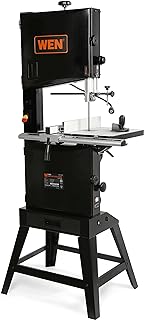
WEN BA1411 (1 HP, Two-Speed)
A genuinely good value with a cast-iron table, dual-voltage 1 HP motor, and two blade speeds so you can slow things down for non-ferrous metal or acrylic. Budget an hour to fine-tune the guides and tracking on setup, and it punches far above its price.
WEN BA1487 (Two-Speed, with Stand)
Same two-speed thinking with an included stand, which makes it a tidy answer for a shop where the saw shares floor space with a car. Best treated as a curve-cutting and light-resaw machine rather than a veneer slicer.
Frequently Asked Questions
What does the “14-inch” measurement mean?
It’s the wheel diameter, which loosely sets the throat width, the maximum cut you can make to the left of the frame. Resaw height is a separate spec, so always check both.
Do I need a riser block?
Only on traditional 6-inch-capacity saws, and only if you want to resaw taller stock. Adding one means a longer blade, re-tuned guides, and more demand on the motor, so a taller factory frame is the cleaner path if resawing is a priority.
Can a 14-inch band saw cut metal?
Yes, if it has a low speed range and you fit the right bimetal blade. Two-speed saws like the WEN models handle aluminum and brass; single-speed woodworking saws run far too fast for steel.
Which blade should I start with?
A 1/2-inch, 3 TPI hook blade for resawing and a 1/4-inch, 6 TPI blade for curves covers nearly all furniture work. Cheap stock blades are usually the real cause of a “bad” saw.
Final Thoughts
If you resaw regularly and have 240V available, the Powermatic PWBS-14CS is the long-game buy, with the JET JWBS-14SFX-BLK close behind for its out-of-the-box resaw height and painless blade changes. For a first serious saw on a 120V circuit, the JET JWBS-14CS is the classic done right, while the WEN BA1411 and similar dual-speed cast-iron-table saws deliver most of the capability for a fraction of the outlay.