Key takeaways
- Miter slot fit: Confirm your slot is the standard 3/4″ wide by 3/8″ deep T-slot before buying. Expandable miter bars matter more than the spec sheet suggests, since a bar that rocks even slightly transfers that slop straight into your cut.
- Pressure direction: Featherboards push sideways into the fence; push blocks apply downforce and feed. You want both. Using one to do the other job is where kickback and burned edges come from.
- Non-marring materials: EVA and nylon contact surfaces grip without denting softwoods or leaving marks on pre-finished panels. Hardwood or aggressive rubber feathers can leave witness lines you’ll have to sand out.
- Tool-free adjustment: If repositioning takes a hex key, you’ll skip it on the cut where you need it most. One-knob or lever clamping gets used; fussy hardware gets left on the shelf.
- Repeatability hardware: Flip stops, positive angle detents, and precision setup bars are what let you cut part number twelve identical to part number one. This is the difference between a rack of matching drawer sides and a pile of near-misses.
What's inside
Most table saw frustration has nothing to do with the saw. A cabinet saw with a sharp blade will still burn edges, creep off a line, and spit stock back at you if the workpiece isn’t held tight against the fence and the table. That’s the gap accessories fill: they take the variable that’s hardest to control by hand — consistent pressure and consistent reference — and make it repeatable. Anyone who has ripped a 30-inch piece of cherry while trying to keep it flat, keep it against the fence, and keep their fingers accounted for knows exactly which part of that job needs help.
This guide covers the accessories that actually change how your cuts come out: featherboards that apply steady lateral pressure, push blocks that give you grip and downforce without putting a palm near the blade, thin-rip jigs for repeatable narrow strips, aftermarket miter gauges for crosscuts your stock gauge can’t hold, and setup blocks for dialing in blade height and fence alignment. Everything below fits standard 3/4″ x 3/8″ miter slots unless noted, so it works on most contractor and cabinet saws without modification.
As an Amazon Associate we earn from qualifying purchases.



🛒 Best Price Today on Amazon
Prime members get fast, free shipping on everything above, plus member-only deals. New members get a 30-day free trial — cancel anytime.
How to Choose Table Saw Accessories (2026)
- Miter slot fit: Confirm your slot is the standard 3/4″ wide by 3/8″ deep T-slot before buying. Expandable miter bars matter more than the spec sheet suggests, since a bar that rocks even slightly transfers that slop straight into your cut.
- Pressure direction: Featherboards push sideways into the fence; push blocks apply downforce and feed. You want both. Using one to do the other job is where kickback and burned edges come from.
- Non-marring materials: EVA and nylon contact surfaces grip without denting softwoods or leaving marks on pre-finished panels. Hardwood or aggressive rubber feathers can leave witness lines you’ll have to sand out.
- Tool-free adjustment: If repositioning takes a hex key, you’ll skip it on the cut where you need it most. One-knob or lever clamping gets used; fussy hardware gets left on the shelf.
- Repeatability hardware: Flip stops, positive angle detents, and precision setup bars are what let you cut part number twelve identical to part number one. This is the difference between a rack of matching drawer sides and a pile of near-misses.
The Best Table Saw Accessories (2026) Reviewed
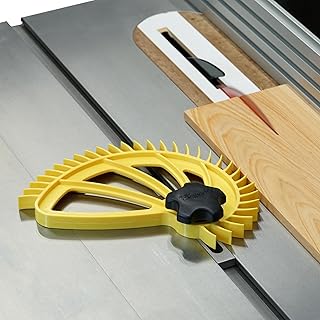
Hedgehog Spiral Safety Featherboard
The spiral geometry is the whole point here: instead of flexible fingers that ride along the edge, the DuPont nylon spiral rolls forward and locks backward, so stock feeds smoothly but won’t walk back toward you. One-knob setup means you’ll actually reposition it between cuts instead of working around it.
BOW Products EVA Featherboard
The AnchorPRO miter bar is the standout — it expands to eliminate slot play, which is what most featherboards get wrong. Soft EVA feathers grip hard without marring veneer or melamine, and they’re replaceable, so a chewed-up set doesn’t mean replacing the whole board.
Milescraft 3406 GrabberPRO
A proper push block does two things at once: pins the workpiece to the table and drives it past the blade, all while keeping your hand elevated and behind the cut. The GrabberPRO’s grip surface and heel work equally well on the jointer and router table, which is why it tends to live on the saw and get borrowed constantly.
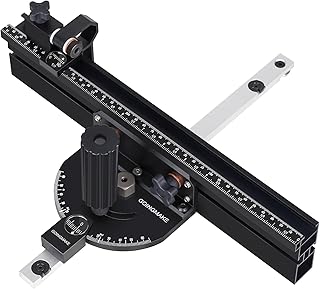
GOINGMAKE Compact Miter Gauge
Stock miter gauges are short, loose, and stop-free. This one adds a 360mm fence and a multifunction flip stop, so you can batch out identical crosscuts without measuring each piece, and the positive angle detents get you back to 45° and 90° without a square.
GOINGMAKE Thin Rip Jig
Cutting repeat 1/4″ strips by moving the fence is a losing game — every cut is a new measurement. This jig references off the far side of the blade so you reset the fence against a fixed bearing, producing strips of identical width for edge banding and bent laminations.
Frequently Asked Questions
Do I still need a splitter or riving knife if I use a featherboard?
Yes. Featherboards control lateral drift; a splitter or riving knife keeps the kerf from closing on the back of the blade. They address different failure modes and work best together.
Should a featherboard go before or after the blade?
Before, always — positioned so pressure is applied ahead of where the blade enters the wood. Pressure applied past the blade pinches the offcut into the teeth and invites kickback.
Are aluminum setup blocks worth it over a combination square?
For blade height, dado depth, and fence offsets, yes. A 14-piece set of ground bars gives you a physical reference to bump the blade against, which is faster and more repeatable than reading a rule at an angle.
Will these fit a portable jobsite saw?
Usually, as long as it has a full-length 3/4″ x 3/8″ T-slot. Measure first — some compact saws use shallower or non-T slots that won’t accept an expanding miter bar.
Final Thoughts
If you’re building a setup from scratch, start with the Hedgehog spiral featherboard and the Milescraft GrabberPRO — that pairing covers the pressure and control gap that causes most bad rips. Add the aluminum setup blocks next; they’re inexpensive, and precise blade height and fence alignment quietly improve every cut you make afterward.