Key takeaways
- Tooth count matches the cut, not the price tag: 24–32 teeth rip lumber fast and clear chips well; 60 teeth is the sweet spot for hardwood crosscuts; 80–120 teeth is what you want for melamine, veneered plywood, and finish trim where the cut face is the finished face.
- Arbor size is non-negotiable: nearly every 10-inch saw sold in North America uses a 5/8-inch (16mm) arbor. Confirm it before ordering, and never shim a blade to fit a spindle it wasn’t bored for.
- Kerf thickness affects your motor as much as your wood: thin-kerf blades (roughly 0.090–0.098″) remove less material and let underpowered or cordless saws spin up to speed without bogging. Full-kerf plates are stiffer and truer but demand more torque.
- Grind geometry tells you the tearout story: ATB (alternate top bevel) teeth slice fibers cleanly for crosscuts. TCG (triple chip) grinds survive laminate and MDF abrasion. High-ATB with a negative hook angle is the combination that keeps a miter saw from climbing into the workpiece.
- Plate quality outlives tooth count: laser-cut expansion slots, a tensioned steel body, and anti-vibration gullets keep the blade flat under heat. A warped premium blade cuts worse than a flat budget one, so store blades hanging or sleeved, never stacked bare.
What's inside
The blade that came bolted to your miter saw was chosen to keep the saw’s price down, not to give you clean shoulders on a walnut apron or tearout-free crosscuts in birch ply. That factory 24- or 40-tooth carbide plate is fine for chopping studs, but the moment you start building furniture, it starts costing you time: fuzzy end grain, splintered veneer, and a burnished burn line that no amount of sanding fully erases. Most people blame their saw. Usually it’s the blade.
Swapping in the right 10-inch blade is the cheapest meaningful upgrade you can make to a chop saw or table saw, and it takes about ninety seconds with a hex wrench. Below are the 10-inch blades worth spending money on in 2026, sorted by what they actually excel at, plus the specs that matter when you’re standing in the aisle trying to decode kerf, hook angle, and tooth count.
As an Amazon Associate we earn from qualifying purchases.



🛒 Best Price Today on Amazon
Prime members get fast, free shipping on everything above, plus member-only deals. New members get a 30-day free trial — cancel anytime.
How to Choose a Miter Saw Blade 10 Inch (2026)
- Tooth count matches the cut, not the price tag: 24–32 teeth rip lumber fast and clear chips well; 60 teeth is the sweet spot for hardwood crosscuts; 80–120 teeth is what you want for melamine, veneered plywood, and finish trim where the cut face is the finished face.
- Arbor size is non-negotiable: nearly every 10-inch saw sold in North America uses a 5/8-inch (16mm) arbor. Confirm it before ordering, and never shim a blade to fit a spindle it wasn’t bored for.
- Kerf thickness affects your motor as much as your wood: thin-kerf blades (roughly 0.090–0.098″) remove less material and let underpowered or cordless saws spin up to speed without bogging. Full-kerf plates are stiffer and truer but demand more torque.
- Grind geometry tells you the tearout story: ATB (alternate top bevel) teeth slice fibers cleanly for crosscuts. TCG (triple chip) grinds survive laminate and MDF abrasion. High-ATB with a negative hook angle is the combination that keeps a miter saw from climbing into the workpiece.
- Plate quality outlives tooth count: laser-cut expansion slots, a tensioned steel body, and anti-vibration gullets keep the blade flat under heat. A warped premium blade cuts worse than a flat budget one, so store blades hanging or sleeved, never stacked bare.
The Best Miter Saw Blade 10 Inch (2026)s Reviewed
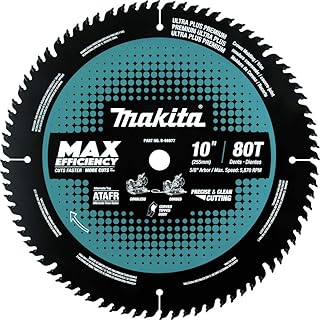
Makita B-66977 10″ 80T Max Efficiency
Makita’s thin-kerf 80-tooth is the blade I reach for when the cut has to be glue-ready off the saw, with a plate thin enough that a 15-amp miter saw never labors through 4/4 maple. The anti-vibration slots and micro-fine ATB grind produce a polished face on veneered plywood, and it holds that edge far longer than its price suggests.
WEN BL1080 10-Inch 80-Tooth
A genuinely capable ultra-fine finish blade at a hobbyist price, the BL1080’s carbide teeth leave crisp edges on trim, casing, and cabinet parts without the burnishing you get from cheap high-tooth-count plates. Feed it slowly and keep it out of thick stock, and it punches well above its cost.
WEN BL1060 10-Inch 60-Tooth
If you only own one blade, make it a 60-tooth like this one. It crosscuts hardwood cleanly, still rips 3/4-inch stock without excessive heat, and clears chips better than an 80- or 120-tooth blade ever will, which makes it the most useful all-rounder in the lineup.
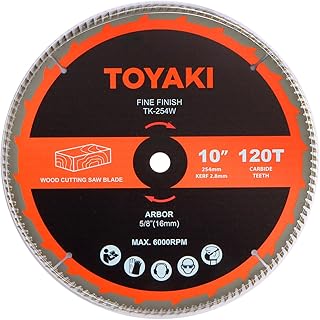
120-Tooth Fine-Finish Professional Blade
With 120 teeth on a 10-inch plate, this is a specialist: melamine shelving, pre-finished ply, aluminum trim, and anything where chipout ruins the part. Keep feed pressure light and cuts shallow, because that many teeth generate heat fast in thick material.
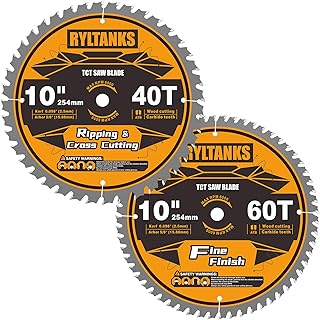
40T + 60T 2-Pack
Pairing a 40-tooth ripper with a 60-tooth finish blade covers roughly 90% of furniture work for less than most single premium blades cost. Ideal if you own both a table saw and a miter saw and want a dedicated blade living in each.
Frequently Asked Questions
Can I use a table saw blade on a miter saw?
Usually yes, if the diameter and arbor match, but check the hook angle. Aggressive positive-hook rip blades can self-feed on a sliding miter saw, so choose a neutral or negative hook for chop cuts.
How often should a blade be sharpened?
Watch the cut, not the calendar. When you see scorching, increased feed resistance, or fuzzy fibers on end grain, it’s time. Quality carbide typically tolerates three or four professional sharpenings.
Do more teeth always mean a better cut?
No. High tooth counts leave smoother faces but produce finer dust and shed heat poorly, so forcing a 120-tooth blade through thick hardwood burns the wood and dulls the carbide prematurely.
Is a multi-blade pack worth it over one good blade?
For most home shops, yes. Having the correct tooth count for each task beats compromising with one blade, and swapping blades is faster than sanding out tearout.
Final Thoughts
For furniture-grade results with the fewest compromises, the Makita B-66977 80T is the blade worth saving for, while the WEN BL1060 60-tooth remains the smartest single-blade choice for a mixed workflow of rips and crosscuts. If you’re outfitting two saws at once, the 32T/60T/80T 3-pack gets you framing, finish, and ultra-fine coverage for roughly the cost of one premium plate.