Key takeaways
- SCFM at 90 PSI: This single figure decides whether a tool runs continuously or in frustrating bursts. Add up the SCFM draw of the tools you use together, then add roughly 30 percent headroom. An HVLP gun and a sander at once can easily demand 10 to 12 SCFM.
- Electrical reality check: Nearly every 60-gallon unit runs on 230V single-phase and many ship without a plug. Confirm you have a dedicated circuit with the right breaker size before ordering, and budget for an electrician if your shop panel is not already set up.
- Oil-lubricated versus oil-free: Oil-lubricated pumps run quieter, cooler, and last considerably longer under sustained load, at the cost of periodic oil changes. Oil-free saves maintenance but wears faster and is noisier in a closed garage.
- Duty cycle and pump design: Cast-iron, belt-driven pumps turning slower RPM handle long spraying sessions far better than direct-drive units. If you finish furniture regularly, this is where to spend the money.
- Service access and moisture control: Look for a reachable oil sight glass, an accessible drain valve, and room to add a filter and regulator. Water in the line ruins a finish faster than any other single variable, so plan your downstream air treatment from day one.
Anyone who has built a dining table, sprayed a lacquer finish, or torn down an old dresser for reupholstering knows the moment your air supply gives up. The pancake compressor that handled your brad nailer starts short-cycling the second you pick up a DA sander, and suddenly you are standing in the shop waiting on a pressure gauge instead of working. A 60-gallon tank is where that waiting stops. It is the size that finally matches the tools furniture builders actually reach for: HVLP spray guns, orbital sanders, framing nailers, and the occasional impact wrench when a project turns into a repair job.
The trouble is that spec sheets on stationary compressors read like a wall of numbers, and the ones that matter most are not the ones printed largest on the box. This guide walks through what separates a workhorse from a headache in 2026, then breaks down the leading 60-gallon models by who they suit best, from weekend furniture makers to shops running air tools most of the day.
Our top picks


As an Amazon Associate we earn from qualifying purchases at no extra cost to you. Ratings are shown as listed on Amazon.
🛒 Best Price Today on Amazon
Prime members get fast, free shipping on everything above, plus member-only deals. New members get a 30-day free trial — cancel anytime.
How to Choose a/an Air Compressor 60 Gallon (2026)
- SCFM at 90 PSI: This single figure decides whether a tool runs continuously or in frustrating bursts. Add up the SCFM draw of the tools you use together, then add roughly 30 percent headroom. An HVLP gun and a sander at once can easily demand 10 to 12 SCFM.
- Electrical reality check: Nearly every 60-gallon unit runs on 230V single-phase and many ship without a plug. Confirm you have a dedicated circuit with the right breaker size before ordering, and budget for an electrician if your shop panel is not already set up.
- Oil-lubricated versus oil-free: Oil-lubricated pumps run quieter, cooler, and last considerably longer under sustained load, at the cost of periodic oil changes. Oil-free saves maintenance but wears faster and is noisier in a closed garage.
- Duty cycle and pump design: Cast-iron, belt-driven pumps turning slower RPM handle long spraying sessions far better than direct-drive units. If you finish furniture regularly, this is where to spend the money.
- Service access and moisture control: Look for a reachable oil sight glass, an accessible drain valve, and room to add a filter and regulator. Water in the line ruins a finish faster than any other single variable, so plan your downstream air treatment from day one.
The Best Air Compressor 60 Gallon (2026)s Reviewed
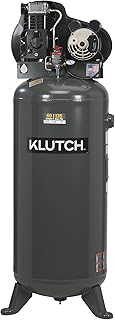
Klutch 60-Gallon Vertical, 3.7 HP
The Klutch earns its place through sensible engineering rather than headline numbers, with genuinely maintenance-friendly access that makes oil changes a five-minute job instead of a knuckle-scraping ordeal. It delivers steady output for demanding garage and shop air-tool work, which is exactly what you want when a finishing session runs long.
Campbell Hausfeld 60 Gallon Vertical, 175 PSI
The 175 PSI ceiling is the standout here, storing meaningfully more usable air in the same tank volume and stretching the interval between motor starts. Campbell Hausfeld has decades of parts availability behind it, which matters more than most buyers realize when a pressure switch fails five years in.
VEVOR 60 Gallon Heavy-Duty, 5 HP Oil-Lubricated
At 12 SCFM at 90 PSI, this is the strongest airflow in the group and the one that will keep a spray gun and a sander running simultaneously without stalling. The 145 PSI max is lower than some rivals, but the oil-lubricated pump and generous flow make it the better pick for continuous shop use.
DEWALT 60 Gallon Vertical, 3.7 HP
DEWALT brings the most predictable ownership experience of the bunch, with widely stocked replacement parts and a service network most brands cannot match. Output sits in the middle of the pack at 155 max PSI, making it a solid all-rounder for a mixed-use furniture and repair shop.
VEVOR 60 Gallon Heavy-Duty, 4 HP Oil-Free
The oil-free pump removes routine maintenance entirely, a real advantage if your compressor lives in a corner you rarely visit. Ten SCFM at 90 PSI covers most single-tool furniture work comfortably, though expect more noise and a shorter service life than the lubricated alternatives.
Frequently Asked Questions
Is 60 gallons overkill for furniture building?
Not if you spray finishes or sand with air tools. Both draw air continuously, and a smaller tank means the motor never stops. The larger tank also lets the pump cool between cycles, which extends its life.
Do I need a special electrical circuit?
Yes. These units require 230V single-phase power on a dedicated circuit, typically 20 to 30 amps depending on the model. Many ship without a plug so you can hardwire or match your existing outlet.
How often should I drain the tank?
After every working session, or daily if the compressor runs regularly. Condensation collects at the bottom and corrodes the tank from the inside. An automatic drain valve is an inexpensive upgrade worth making.
Will one of these run an HVLP spray gun?
All six can, but check your gun’s SCFM rating first. Most HVLP guns need 8 to 13 SCFM at 90 PSI for continuous spraying, so the higher-flow models give you a comfortable margin on large tabletops and cabinet doors.
Final Thoughts
For most furniture makers, the Klutch 60-Gallon strikes the best balance of reliable output and genuinely serviceable design, making it the easiest unit to live with over a decade. If your priority is raw airflow for extended spraying, the VEVOR 5 HP oil-lubricated model delivers the most SCFM in this group, while the DEWALT 60 Gallon is the safe choice for anyone who values easy parts availability and a proven support network over chasing the top spec.