Key takeaways
- Blade span versus room size: A 42-inch fan handles bedrooms and offices up to roughly 150 square feet. Step up to 44 or 48 inches for living rooms, and remember blade tips should clear walls by at least 18 inches.
- Motor type: DC motors draw less power, run noticeably quieter, and usually offer six speeds instead of three. AC motors like the one in the Hunter Builder Deluxe are proven and cheaper to replace, but you will hear them at high speed.
- Light output and color temperature: Look for 3CCT models that switch between roughly 3000K, 4000K, and 5000K. A fixed 6500K panel in a bedroom will feel like a dentist’s office. Dimming is worth paying for.
- Control method: Remotes are standard now, but check whether the receiver is separate or integrated. A separate receiver needs space above the canopy, which is tight on some flush mounts. Pull chains never need batteries.
- Mounting depth and box rating: Confirm your electrical box is fan-rated and braced. Hugger fans concentrate load close to the ceiling, so a light-duty box is not acceptable. Measure the total drop before you commit to a ceiling under seven and a half feet.
What's inside
Anyone who has stood on a ladder in a room with eight-foot ceilings knows the frustration: a standard downrod fan puts the blades right at forehead height for taller family members, and the whole assembly starts to feel like it is closing in on the room. Hugger fans, also called low-profile or flush-mount fans, solve that by bolting the motor housing directly to the ceiling plate. The tradeoff used to be weak airflow and buzzing motors, but the current crop of DC-motor models has largely closed that gap.
I have installed enough of these to know that the spec sheet only tells half the story. What actually matters is how the canopy sits against your ceiling, whether the wiring compartment gives your hands room to work, and whether the light kit produces usable light instead of a dim glow. Below are six hugger fans worth your attention in 2026, followed by the buying criteria I use and honest notes on where each one fits.
As an Amazon Associate we earn from qualifying purchases.




🛒 Best Price Today on Amazon
Prime members get fast, free shipping on everything above, plus member-only deals. New members get a 30-day free trial — cancel anytime.
How to Choose a/an Hugger Ceiling Fan With Light (2026)
- Blade span versus room size: A 42-inch fan handles bedrooms and offices up to roughly 150 square feet. Step up to 44 or 48 inches for living rooms, and remember blade tips should clear walls by at least 18 inches.
- Motor type: DC motors draw less power, run noticeably quieter, and usually offer six speeds instead of three. AC motors like the one in the Hunter Builder Deluxe are proven and cheaper to replace, but you will hear them at high speed.
- Light output and color temperature: Look for 3CCT models that switch between roughly 3000K, 4000K, and 5000K. A fixed 6500K panel in a bedroom will feel like a dentist’s office. Dimming is worth paying for.
- Control method: Remotes are standard now, but check whether the receiver is separate or integrated. A separate receiver needs space above the canopy, which is tight on some flush mounts. Pull chains never need batteries.
- Mounting depth and box rating: Confirm your electrical box is fan-rated and braced. Hugger fans concentrate load close to the ceiling, so a light-duty box is not acceptable. Measure the total drop before you commit to a ceiling under seven and a half feet.
The Best Hugger Ceiling Fan With Light (2026)s Reviewed
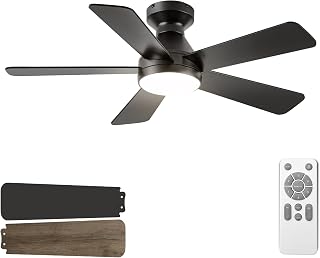
Matte Black 44″ Low Profile 5-Blade Fan
The 44-inch span gives it more reach than the common 42-inch models without adding visual bulk, and the DC motor is genuinely quiet at mid speeds. Matte black powder coat holds up well and hides dust better than gloss finishes.
48″ Retractable Ceiling Fan with Light
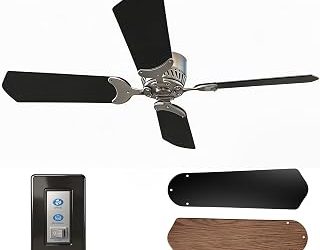
The retractable blades tuck away when the fan is off, which makes it the best option for rooms where a fan feels visually intrusive. Six speeds and an industrial black finish suit lofts and open kitchens, though the mechanism means more moving parts to eventually service.
Hunter Builder Deluxe 52″ New Bronze
This is the conservative choice and the one I recommend to anyone who wants a fan that will still be spinning in fifteen years. Pull chain operation means no remote to lose and no receiver to fail, and Hunter’s WhisperWind motor moves serious air at 52 inches.
42″ 5-Blade Recessed Mount with App Control
Full memory function plus app connectivity makes this the smart-home pick, and forward/reverse operation means it earns its keep in winter. The recessed mount sits tighter to the ceiling than most, so verify your box depth before ordering.
42″ Wood Blade Flush Mount Fan
Real wood-tone blades warm up a room that all-metal fans leave feeling clinical, and the power-off memory means it returns to your last setting after an outage. Dimmable, reversible, and quiet enough for a nursery.
Frequently Asked Questions
Will a hugger fan cool a room as well as a downrod fan?
Close, but not identical. Flush mounting reduces air circulation above the blades, costing you maybe 10 percent of effective airflow. A DC motor with six speeds more than compensates in most rooms.
What ceiling height requires a hugger fan?
Anything under eight feet. Code requires seven feet of clearance from floor to blade, and a hugger typically drops eight to eleven inches total versus fifteen or more for a downrod setup.
Can I install one of these myself?
Yes, if you are comfortable killing the circuit at the breaker and verifying it is dead with a tester. The harder part is supporting the motor housing while connecting wires, so use the mounting hook most brands include and have a second person on hand.
Are these fans safe for covered patios?
Only if the model is rated damp or wet location. The ETL-listed flush mount options in this roundup are suitable for covered outdoor spaces, but never install an indoor-only fan where it can catch blowing rain.
Final Thoughts
For most rooms, the Matte Black 44-inch low-profile fan is the sweet spot on airflow, noise, and price. If you want proven longevity over features, the Hunter Builder Deluxe is hard to beat, and the 42-inch wood blade flush mount is the one I would put in a bedroom where looks matter as much as function.