Key takeaways
- Compare sanding sponge product codes, grade labels, abrasive faces, and stated applications with a worksheet that keeps uncertain equivalents visible.
Compare sanding sponges by their exact product series and documented abrasive grade, not by color or the word “fine” alone. Build a small label comparison sheet before substituting a sponge from another brand. When the manufacturer does not provide a numerical grade or equivalence, record that uncertainty instead of inventing a conversion.
Why the short grade name is insufficient
Even within one manufacturer’s catalog, a descriptive grade can appear beside different numbers. A 3M sanding-sponge product list identifies particular Dust Channeling products as 120 Grit Fine and 180 Grit Fine. Separately, its Two-Sided Sanding Sponge 23815 page names that specific product Fine 320–400. These examples show why a grade word is not a universal numerical lookup.
They do not establish that those products are interchangeable, or that a particular sponge is suitable for your finish. The examples come from different product families and markets. Use the documentation for the exact item offered where you shop.
Make a product identity card first
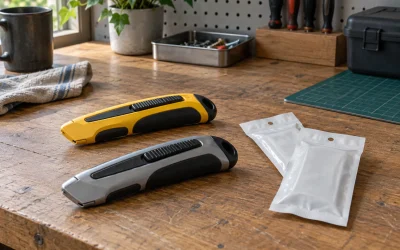
Photograph or transcribe the packaging before discarding it. Include the brand, family, model or stock number, package quantity, and any suffix on the grit number. A shopping page may combine several variants, so confirm which one is actually selected. A picture of a fine sponge beside a listing for an assorted pack is not enough to identify every included piece.
| Field | Sponge A | Sponge B |
|---|---|---|
| Brand, family, and product code | Copy exact label | Copy exact label |
| Descriptive grade | Record wording | Record wording |
| Number or range, including prefix | Record or mark unstated | Record or mark unstated |
| Standard named by manufacturer | Record or mark unstated | Record or mark unstated |
| Grade on each abrasive face | Identify separately | Identify separately |
| Shape and stated applications | Record limits | Record limits |
This is an evidence sheet, not a rating table. Two products can share one entry and differ in several others. Leave both original labels visible when comparing a replacement rather than overwriting the old product’s grade with a guessed equivalent.
Separate grade from the sponge’s shape
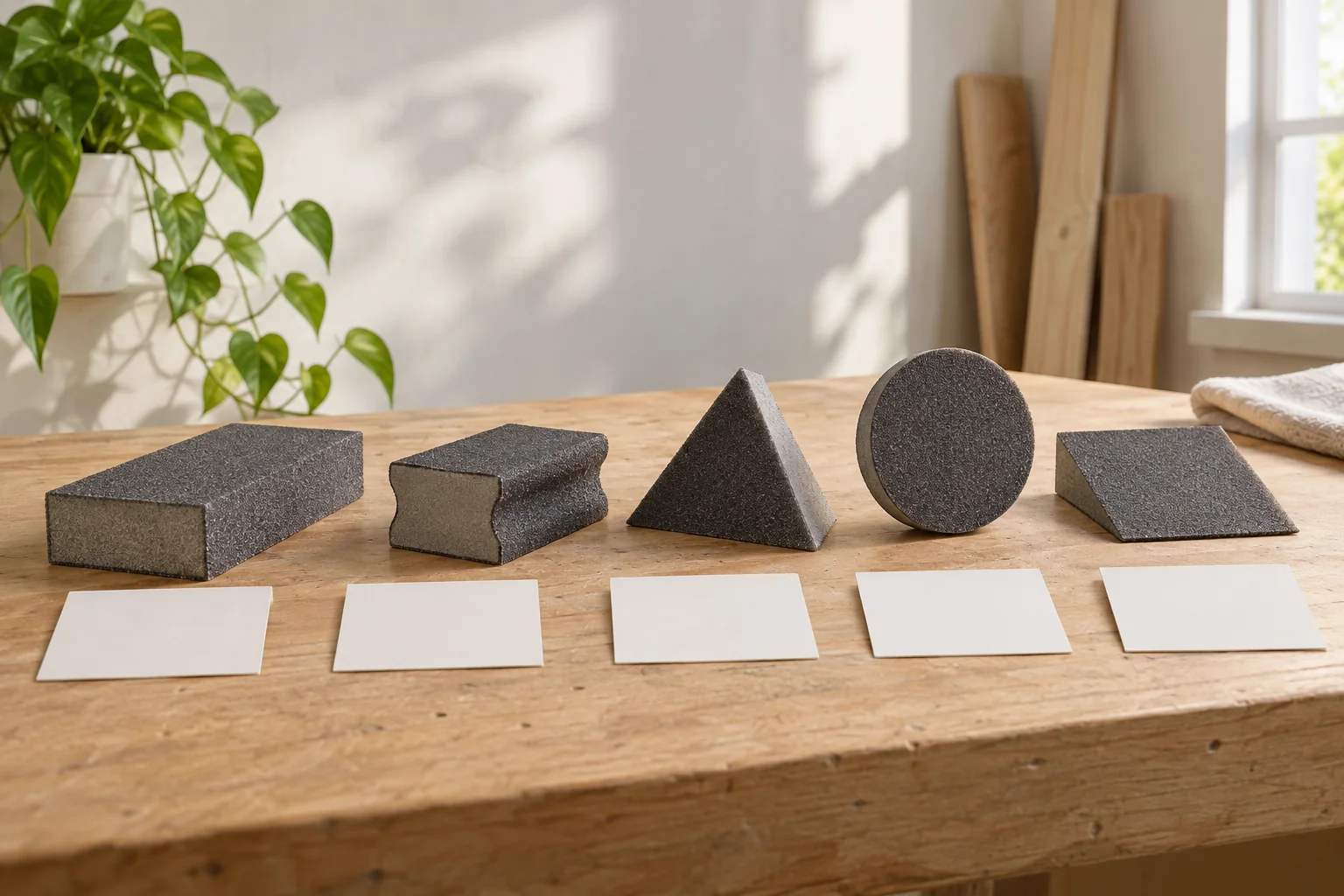
A block, thin pad, and angled sponge present different shapes to the work. Record the geometry you need to reach, such as a flat test board or a small profile, without assuming the shape guarantees a particular finish. Check which faces are abrasive and whether the manufacturer assigns different grades to different faces.
If a package contains two grades, label the individual sponges according to the package before separating them. Keep the label where it will not transfer onto the work or obscure required instructions. Color can help you recognize your own stored item after identification, but it should not become a cross-brand grade standard.
Ask a precise substitution question
Instead of asking a seller for “the same fine sponge,” provide the product code you used, the surface material, the coating if any, and the stage of the job. Ask whether the proposed item has a documented comparable grade and is intended for that application. Keep a written response with the comparison sheet.
If only the descriptive grade is available, you can still make an informed decision to wait for more information. Record “numerical grade not stated” rather than assigning a familiar sandpaper number. A retailer’s title is less helpful than a manufacturer specification that clearly matches the stock number in your hand.
Make a controlled trial where appropriate
For a suitable, identified material, compare candidates on matching scrap prepared with the same coating system, following the material and abrasive instructions. Mark separate areas and record the product used on each. Keep the technique consistent enough that your notes can be understood later, but do not present a casual trial as laboratory proof of equivalent abrasive performance.
Unknown old coatings, hazardous dust, or a valuable finished surface are reasons to resolve the material and preparation method first. This guide does not provide a dust-control plan or authorize sanding an unidentified coating. A small hidden patch also does not prove that a method is safe for every part of a finished object.
Keep the decision with the remaining supplies
Finish your sheet with one of three outcomes: documented match for the intended task, trial needed on suitable material, or information missing. Store the remaining sponge with its identity card. Next time, you will compare a known product rather than a worn, anonymous block.
For machine abrasives, there is another separate compatibility check: our sanding-sheet dust-hole pattern guide covers physical fit. Matching a hole pattern does not answer the grade question, and a hand sponge does not use that mounting test.