The best outdoor extension cord for most homes is a 12 gauge, 50-foot cord with an SJTW or SJOOW jacket and a lighted, sealed plug end; it safely carries 15 amps for hedge trimmers, electric mowers, pressure washers and holiday lighting without overheating or dropping much voltage. Go to 14 gauge only for light loads like string lights, and step up to 10 gauge if you regularly run 100 feet or more.
Our top picks
 Southwire Outdoor Extension Cord
- ALL PURPOSE EXTENSION CORD for Indoor and Outdoor…
- HIGHLY VISIBLE yellow jacket provides extra safety and…
- Flexible vinyl jacket provides protection of the cord…
 Southwire Yellow Jacket Heavy Duty Extension Cord
- Durable Outdoor Power: The Southwire Yellow Jacket Extension…
- Gauge: This flexible electric cord has a 12…
- High-Visibility Extension Cord: Yellow Jacket extension cords are…
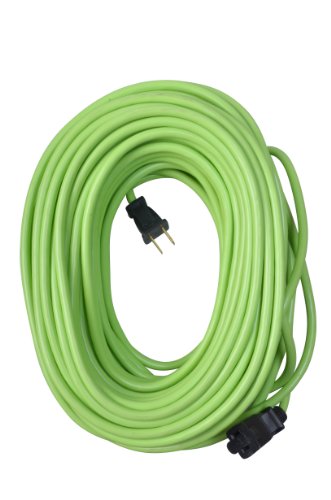 Southwire Outdoor Extension Cord
- LIGHT DUTY EXTENSION CORD
- A 16/2 cord means the wire thickness is…
- 10A rating at 125V
| Product | Key specs | |
|---|---|---|
| Southwire Outdoor Extension Cord | ALL PURPOSE EXTENSION CORD for Indoor and Outdoor… HIGHLY VISIBLE yellow jacket provides extra safety and… Flexible vinyl jacket provides protection of the cord… | Check price |
| Southwire Yellow Jacket Heavy Duty Extension Cord | Durable Outdoor Power: The Southwire Yellow Jacket Extension… Gauge: This flexible electric cord has a 12… High-Visibility Extension Cord: Yellow Jacket extension cords are… | Check price |
| Southwire Outdoor Extension Cord | LIGHT DUTY EXTENSION CORD A 16/2 cord means the wire thickness is… 10A rating at 125V | Check price |
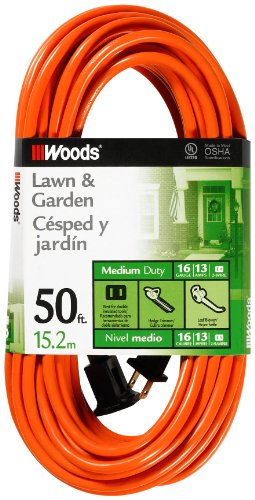 Southwire Woods 50ft Outdoor Extension Cord Southwire Woods 50ft Outdoor Extension Cord | Optimized for Outdoor Power Tasks: The Southwire Extension… Gauge: This flexible electric cord has a 16… Outdoor Extension Cord: Whether you need an extension… | Check price |
As an Amazon Associate we earn from qualifying purchases at no extra cost to you.
Read the jacket code before anything else
Every outdoor-rated cord has letters printed on the jacket. They tell you more than any marketing label:
- S – service grade (rated to 600V, heavier duty). SJ – junior service (300V), the common household grade.
- W – rated for outdoor and wet locations. Without a W, the cord is not a weatherproof extension cord.
- T – thermoplastic (vinyl) jacket. Cheaper, stiffer in the cold.
- E – thermoplastic elastomer. More flexible and abrasion-resistant.
- OO – oil-resistant outer jacket and insulation, useful in garages and driveways.
So an SJTW cord is a standard vinyl outdoor cord, while SJOOW and SJEOW are rubber-like, stay flexible in freezing weather and survive being dragged across concrete much better.
Gauge and length: the table that prevents burned-out motors
Longer, thinner cords lose voltage. A motor starved of voltage draws more current, runs hot and wears out faster. Use the device’s amp rating (printed on its label) and the length you need:
| Tool load | Example | 25 ft | 50 ft | 100 ft | 150 ft |
|---|---|---|---|---|---|
| 0–5 amps | String lights, leaf blower (small), fountain pump | 16 ga | 16 ga | 14 ga | 12 ga |
| 5–10 amps | Hedge trimmer, string trimmer, electric chainsaw (light) | 16 ga | 14 ga | 12 ga | 10 ga |
| 10–13 amps | Corded mower, electric pressure washer, chainsaw | 14 ga | 12 ga | 10 ga | Not recommended |
| 13–15 amps | Heavy pressure washer, wet tile saw, heater | 12 ga | 12 ga | 10 ga | Not recommended |
Remember that a lower gauge number means thicker wire. A 12 gauge extension cord has roughly 60% more copper than a 14 gauge cord of the same length.
Picks by situation
All-round yard work: 12 gauge, 50 ft, SJTW
This is the cord that handles almost everything around a typical suburban lot with a backyard under about 80 feet deep. A 50 ft 12/3 cord weighs about 7–9 lb, coils into a 14-inch loop, and usually costs $35–$60.
Cold climates and rough surfaces: SJOOW or SJEOW
Vinyl cords stiffen below about 20°F and crack when uncoiled hard. Rubber-jacketed cords stay pliable to around -40°F and resist abrasion from concrete and gravel. Expect to pay 30–60% more than vinyl.
Holiday lights and low loads: 14 or 16 gauge, green or black
Thinner cords blend into landscaping and are easier to hide. Look for outdoor-rated models with a W on the jacket and multiple outlets on the end. Keep total load under the cord’s rating, usually 13 amps for 14 gauge and 10 amps for 16 gauge.
Long runs to the back fence: 10 gauge, 100 ft
A heavy duty outdoor extension cord in 10 gauge keeps voltage drop under about 3% at 15 amps over 100 feet. It is heavy, around 20–25 lb, so pair it with a cord reel.
Lots of reaching and storing: a cord reel
Wall-mount or cart reels with 12 or 14 gauge cord save untangling time. Always fully unwind a reel before running a high-amp tool; coiled cord traps heat.
Features worth paying for
| Feature | Why it matters | Typical added cost |
|---|---|---|
| Lighted plug end | Confirms power at the far end; quick fault check | $3–$8 |
| Locking or twist connector | Prevents the tool cord pulling free mid-cut | $5–$15 |
| Built-in GFCI plug | Shock protection where outlets are not GFCI-protected | $15–$30 |
| Triple-tap end | Runs lights and a pump from one cord | $3–$10 |
| Bright orange or yellow jacket | Easier to see before the mower hits it | None |
Safety rules for using a cord outdoors
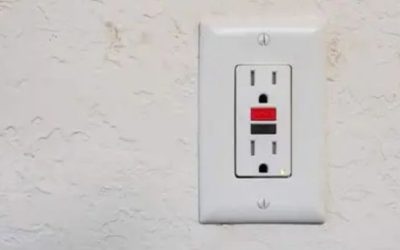
- Plug into a GFCI-protected outdoor outlet with a weatherproof “in-use” cover. Test the GFCI monthly.
- Keep the connection between the cord and the tool off the ground; a plastic connection box or a bucket upside down over the joint keeps rain and sprinkler water out.
- Never run cords through doorways or windows where they can be pinched, and never bury a standard extension cord.
- Do not use an extension cord as permanent wiring for a shed or pond pump. If something needs power year-round, have an electrician install an outdoor circuit.
- Avoid plugging one cord into another. Joints are the most common place for heat buildup and water intrusion.
What wears first and how long a cord lasts
The plug ends fail first. Bent ground pins, cracked molded ends and frayed jacket near the plug are the typical signs. Replace any cord with exposed copper, a missing ground pin or melted plastic. UV exposure also breaks down vinyl jackets, so a cord left in the sun all summer can turn chalky and brittle within 2–3 seasons. Stored dry, coiled loosely in an over-under pattern and kept out of direct sun, a quality 12 gauge cord commonly lasts 8–10 years.
FAQ
Can I use an indoor extension cord outside for a few minutes?
It is not recommended. Indoor cords lack weather-resistant insulation and often have lighter wire. Use a cord with W on the jacket.
Is a 12 gauge extension cord overkill for a leaf blower?
For a 12-amp blower on 50 feet, 12 gauge is the right size. For a small 6-amp blower on 25 feet, 14 or 16 gauge works.
Can an outdoor cord be left out all winter?
It is better not to. Snow, salt and UV shorten the jacket’s life, and frozen cords crack when moved.