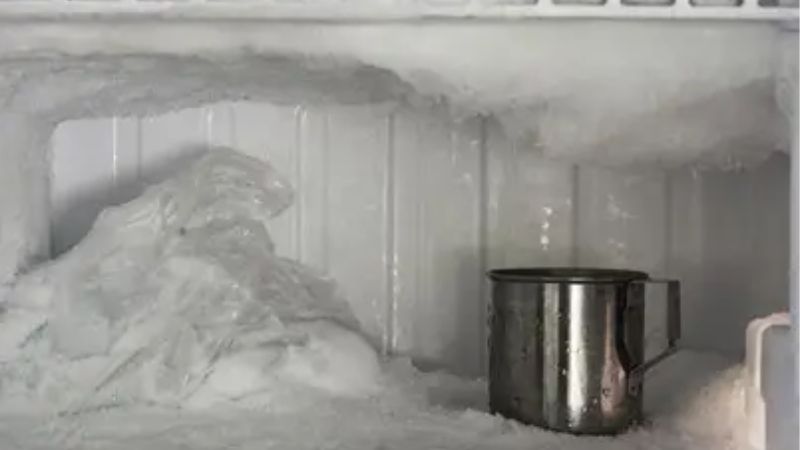
The usual answer to why is my freezer frosting up is moist air entering through a door that is opened often, blocked by a package, or not sealing tightly. A small amount of frost can also be normal in a manual-defrost freezer. Thick ice returning to the back wall of a frost-free model is different: it may point to a failed fan or automatic defrost component.
Quick Answer: Check that the door shuts fully, clean and inspect its gasket, uncover interior vents, and confirm the freezer is holding about 0°F. Identify whether the model is manual-defrost or frost-free before removing ice. Stop and arrange service if heavy frost returns or cooling weakens; do not pry ice away or open electrical panels.
As an Amazon Associate we earn from qualifying purchases.
By DIY Ideas 4 Home Editorial Team
Why Your Freezer Is Frosting Up: Common Causes
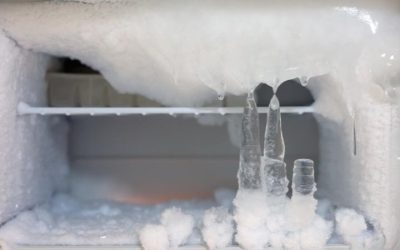
Frost itself is frozen moisture, not proof that your freezer is set too cold. Humid room air enters, water vapor settles on cold surfaces, and ice crystals collect. Whirlpool’s Frosting in the Freezer Section guidance links this process to door openings, door seals, and blocked vents. The location of the ice often helps narrow the diagnosis before you touch any controls.
| Symptom or Sign | Likely Cause | First Check | DIY or Pro |
|---|---|---|---|
| Frost around doorway or on food packages | Door opened often or held ajar | Look for a protruding box, basket, or drawer | DIY first |
| Ice concentrated along one gasket edge | Dirty, folded, torn, or misaligned seal | Clean and run a paper-resistance check | DIY inspection; repair if damaged |
| Localized icy patches near vents | Packages restricting cold-air circulation | Move food clear of model-specific vents | DIY first |
| Gradual frost on chest-freezer walls | Normal accumulation in a manual-defrost unit | Confirm defrost type in the owner’s manual | Owner maintenance |
| Solid frost sheet on rear wall in a frost-free model | Possible automatic defrost or fan problem | Check closure and airflow before service | Technician if persistent |
1. The Door Is Not Closing Completely
A freezer can look closed while a protruding pizza box, an overfilled bin, a crooked shelf, or an ice-covered drawer keeps the door slightly open. Incoming damp air hits the cold interior and forms a fine, often fluffy layer of frost. Whirlpool’s instructions for chest-freezer lid closure identify misplaced baskets, food packages, and excessive existing frost as frequent obstructions.
Check the whole closing path, not just the handle. On a bottom-drawer freezer, pull the drawer out and look for items caught behind it or under the basket. If the door was left ajar once and the frost appeared suddenly, correcting that obstruction may stop the problem without any replacement parts.
2. The Door Gasket Has a Gap
The flexible gasket must contact the cabinet evenly. Food residue can keep it from gripping; a torn or hardened corner may admit room air continuously. Ice clustered along one side of the opening is a useful clue, though it is not enough to prove a gasket defect. GE Appliances’ Refrigerator – Frost in Freezer guidance also asks owners to check door alignment and leveling.
Look for splits, twisted sections, and places where the seal does not sit flat. If the door was recently removed or its swing reversed, check the installation instructions before attempting a hinge adjustment. Some designs need a model-specific gasket; avoid buying a generic replacement simply because its dimensions seem close.
3. Humid Air Is Entering Repeatedly
Opening the freezer frequently replaces dry chilled air with household air that may contain considerable moisture. Whirlpool notes that some frost on packages or interior walls is possible during humid months, particularly in homes without air conditioning. A warm load, a container without a lid, or a dispenser chute that does not close may add to the moisture problem.
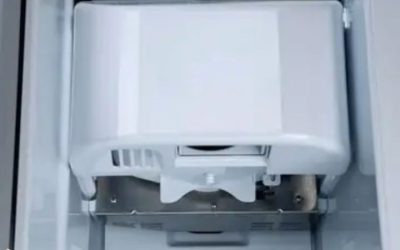
Consider what changed when the frost first appeared. A freezer that became icy after a party, grocery restock, or prolonged door opening may behave normally once the door stays closed again. Frigidaire’s Freezer Frost Build Up support article specifically identifies an incompletely closed ice chute flap on applicable refrigerator models, so check that opening if your appliance has a dispenser.
4. Food Is Blocking the Interior Airflow
Frost-free refrigerators move cold air through passages that vary by model. A bag pushed against a supply vent can interrupt circulation and contribute to localized icing or warmer areas elsewhere. Whirlpool’s freezer-frost troubleshooting advises keeping airflow paths open, and Frigidaire warns against packing products directly in the path of cold air.
This does not mean an almost-empty freezer is inherently better. The goal is to avoid covering the actual inlets and outlets, not to enforce an invented universal shelf gap. Find the vent locations in your manual, move packages away from them, and confirm that bins can slide freely into their intended positions.
5. Defrost Behavior Is Normal or Has Failed
Manual-defrost freezers deliberately allow frost to accumulate, and the owner periodically removes it. Frost-free refrigerators and many upright freezers instead use a control, sensor, and heater arrangement to clear frost from the hidden evaporator. GE Appliances’ Types of Defrost Systems article explains that automatic systems may run on a time schedule or adapt to usage.
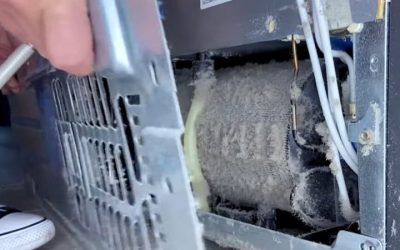
A thin layer accumulating gradually on a manual-defrost chest freezer is expected. A thick, stubborn sheet covering the rear wall of a frost-free unit is not. GE’s Ice on Freezer Wall support page says a nonrunning freezer fan or unresolved accumulation warrants service. A heater, sensor, wiring, or control fault is possible, but frost patterns alone cannot establish which component has failed.
How to Stop Freezer Frost Step by Step
Start with reversible checks that do not expose wiring or refrigeration tubing. If the food seems soft, measure the temperature and protect it before diagnosing convenience issues. FoodSafety.gov recommends a freezer temperature of 0°F or below; use an appliance thermometer rather than judging safety from the presence of ice on the walls.
Step 1: Identify the Freezer Type
Read the product label and the owner’s manual for the exact model. Look for the terms manual defrost, partial automatic defrost, frost-free, or automatic defrost. A chest freezer may need routine manual thawing, while a frost-free refrigerator should manage ordinary evaporator frost automatically. GE Appliances separates these designs in its Types of Defrost Systems instructions.
Note where frost sits: at the door lip, on packages, over the back panel, or across many exposed walls. Write down whether it appeared slowly or after a single event. This simple record is more useful to a repair technician than an unqualified claim that the machine is freezing too hard.
Step 2: Clear the Door and Test Its Seal
Push all packages completely back into their storage areas without blocking vents. Reseat crooked baskets, clear the drawer rails, and verify the door can close without force. Once surfaces are safe to touch and power is disconnected for any cleaning required by your manual, wipe food residue off the accessible gasket with a soft cloth and mild soapy water, then dry it.
For a simple seal check, Whirlpool’s upright-freezer guidance recommends closing the door on a dollar bill or piece of paper and pulling gently. Repeat around the perimeter. Noticeably less resistance in one area suggests a weak seal, but inspect for trapped dirt and uneven alignment before assuming the gasket must be replaced. Never force a warped door into place.
Step 3: Reorganize Food Around the Vents
Locate the air supply and return openings described in your manual. Remove bags pressed directly against them, separate large packages that prevent drawers from seating, and close any dispenser ice flap completely. Frigidaire’s freezer troubleshooting ties blocked vents to frost formation and restricted circulation.
After changing the arrangement, close the door and avoid repeated inspection. If you must retrieve items frequently, use bins so everything can be found quickly. The desired outcome is a clear closing path and unobstructed vents, not a claim that every visible ice crystal will disappear immediately.
Step 4: Measure Temperature, Then Observe
Put a fridge/freezer-rated thermometer in a stable place inside the freezer according to its instructions. FoodSafety.gov’s emergency food guidance uses 0°F or below as the target temperature for frozen storage. A freezer display may show the setpoint rather than the actual temperature, so a separate measurement helps distinguish a seal or airflow problem from a cooling problem.
Do not keep opening the door to watch the number change. Frigidaire’s Freezer – Not Freezing or Not Cooling support guide says temperature may need about 24 hours to stabilize after conditions change. Check the manual for your particular model and compare measurements after a suitable period of ordinary closed-door operation. If the cabinet is too warm or the frost keeps growing, stop resetting the thermostat colder and investigate further.
Food that has partially thawed deserves its own safety assessment. FoodSafety.gov says food can generally be refrozen or cooked if it still contains ice crystals or is at 40°F or below, but decisions vary by food type and exposure. Follow its food-specific chart rather than tasting questionable food, and discard perishable foods that have been held above 40°F for longer than the safety guidance allows.
Step 5: Handle Existing Ice Safely
For a manual-defrost freezer, follow the exact shutoff, food-transfer, draining, and thawing procedure in your model’s care instructions. Whirlpool’s How to Defrost the Freezer guide recommends defrosting applicable chest-freezer models when the frost reaches roughly 1/4 inch thick. This is not a reason to perform routine manual defrosting on a normally functioning frost-free appliance.
If the manual directs you to disconnect power, do so before cleaning or removing approved access pieces. Protect frozen food in another operating freezer or adequately chilled storage while the cabinet is off. Whirlpool specifically warns against using a hair dryer, heater, knife, or ice pick to accelerate melting because of electrical hazards or damage to the cooling surfaces. Do not remove the inside rear panel or force a scraper behind it.
If a frost-free freezer repeatedly develops a thick wall of ice even after checking closure, seals, loading, and settings, book a qualified appliance technician. Clearing the ice once can temporarily restore airflow without repairing the defect underneath, so recurrence matters more than a brief return to normal operation.
Products That Help
The Taylor 5924 Fridge/Freezer Thermometer is a straightforward way to check real cabinet temperature without relying on the control display. Taylor’s official 5924 product page describes a 3-inch dial that can hang or stand, and listed a price of $9.99 as of October 2026. It is useful for a one-time baseline reading; verify the current price and placement instructions before buying.
The ThermoWorks RT801 Digital Fridge/Freezer Alarm Thermometer is better suited to tracking changes between door openings. ThermoWorks’ RT801 owner’s manual specifies an external probe that measures from -58°F to 158°F and a 39.4-inch probe cable, plus minimum/maximum memory and high/low alarm features. It can help document a warming trend before a service visit, but it cannot tell you whether a heater, sensor, fan, or control board is defective. Confirm the current listing and how to route its cable without defeating your freezer’s seal.
When to Call a Pro
Arrange professional service if a frost-free unit forms a solid rear-wall ice sheet again, its fan does not appear to operate when the manual says it should, the freezer will not hold a safe temperature, the door is visibly misaligned, or the gasket is damaged beyond routine cleaning. GE Appliances’ Ice on Freezer Wall instructions recommend service when fan operation or normal owner checks do not resolve the problem.
Unplug or disconnect power before any user-permitted maintenance, as GE instructs, and do not dismantle evaporator covers, probe live circuits, or handle refrigerant tubing. Stop using an appliance with damaged wiring, sparking, or a suspected electrical fault. A technician can evaluate defrost-heater circuits, sensors, fan operation, and hinge alignment without risking punctures or electrical injury.
Frequently Asked Questions
The pattern of ice, rather than the word frost alone, determines what to check. These common questions help distinguish a temporary moisture event from a condition that needs maintenance or service.
Is a Little Frost in the Freezer Normal?
It can be normal after frequent door openings in humid conditions, especially on exposed packages, and gradual frost is expected in a manual-defrost freezer. Whirlpool’s freezer-frost guide acknowledges some moisture and frost during high-humidity months. By contrast, GE Appliances says a frost-free unit should not accumulate heavy ice on its freezer wall. Identify the freezer type and watch whether the frost disappears or keeps expanding.
Why Is Frost Only Near the Freezer Door?
Frost concentrated by the rim commonly indicates warm, humid air entering through the gasket or an incompletely closed door. Check for food packages touching the door, debris in the seal, a shifted basket, and uneven paper resistance along that edge. A torn gasket or poorly aligned hinge may require the manufacturer-approved replacement or service; reducing the temperature setting will not seal a physical gap.
Should I Set the Freezer Colder to Remove Frost?
No. Frost is a moisture and airflow issue, so selecting the coldest temperature may not resolve its cause. Frigidaire’s frost-buildup guidance identifies settings colder than its recommended 0°F as one possible contributor to overfreezing conditions. Aim for the model’s recommended storage setting and measure the cabinet temperature using a freezer-rated thermometer. If food is thawing while heavy ice covers the rear panel, request service rather than repeatedly changing controls.
How Much Frost Means It Is Time to Defrost?
For applicable manual-defrost chest freezers, Whirlpool recommends removing ice when it reaches about 1/4 inch. GE Appliances’ Manual Defrosting guidance lists a range of about 1/4 to 1/2 inch on certain small manual-defrost refrigerator designs, showing why the owner’s manual must take priority. A frost-free model should not need routine manual defrosting to function. If a thick frost sheet repeatedly returns, investigate the underlying condition rather than treating the symptom indefinitely.
Final Thoughts
Freezer frost is easiest to resolve when you separate moisture entering through a door from restricted airflow and failed automatic defrosting. Check for a blocked closure first, clean and assess the gasket, free the vents, and confirm that the cabinet reaches about 0°F. Gradual ice in a manual-defrost unit calls for the manual’s thawing schedule; recurrent heavy ice in a frost-free freezer calls for service. For better decisions, check the current price and placement instructions for a Taylor 5924 or ThermoWorks RT801 thermometer, and choose replacement gaskets only by your exact appliance model.