Key takeaways
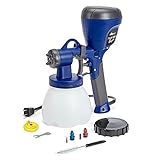
- Best for spot treatment: Chapin 20024 2-gallon, with an adjustable nozzle and anti-clog filter.
- Best for small yards and tight spaces: Chapin 20004 1-gallon, light and easy to store.
- Best for drift control with a handheld: Chapin 26021XP Pro 2-gallon, with brass, flat fan and cone tips and a lock-on trigger.
- Best for wide-mouth filling and durability: Solo 458 Professional 3-gallon with Viton seals.
- Best manual backpack for broadcast spraying: Field King 190328 4-gallon with a herbicide pressure regulator and Viton seals.
- Best battery backpack for large lawns: PetraTools HD4000 4-gallon, adjustable 40 to 90 PSI.
- Best wheeled option for driveways and walkways: Scotts 190617 3-gallon lithium-ion cart sprayer.
For spot-treating weeds around a typical home, the Chapin 20024 2-gallon and the Chapin 20004 1-gallon pump sprayers are the practical picks; for a lawn of 5,000 square feet or more, step up to the Field King 190328 manual backpack or the PetraTools HD4000 battery backpack, and choose the Scotts 190617 wheeled cart if you want to walk a driveway or edge line without carrying a tank.
A weed sprayer has one job: put a measured amount of herbicide on the weed and nowhere else. That means nozzle pattern, pressure control and tank size matter more than raw power. This guide compares manual, battery and wheeled sprayers by what each does well, gives concrete thresholds for yard size, and walks through a mixing calculation so you do not guess at dilution.
Our top picks


As an Amazon Associate we earn from qualifying purchases at no extra cost to you.
Quick picks
- Best for spot treatment: Chapin 20024 2-gallon, with an adjustable nozzle and anti-clog filter.
- Best for small yards and tight spaces: Chapin 20004 1-gallon, light and easy to store.
- Best for drift control with a handheld: Chapin 26021XP Pro 2-gallon, with brass, flat fan and cone tips and a lock-on trigger.
- Best for wide-mouth filling and durability: Solo 458 Professional 3-gallon with Viton seals.
- Best manual backpack for broadcast spraying: Field King 190328 4-gallon with a herbicide pressure regulator and Viton seals.
- Best battery backpack for large lawns: PetraTools HD4000 4-gallon, adjustable 40 to 90 PSI.
- Best wheeled option for driveways and walkways: Scotts 190617 3-gallon lithium-ion cart sprayer.
How we chose
This guide is based on research, not first-hand evaluation. We compared published specifications, manufacturer descriptions and buyer guidance for current weed-sprayer models, and we left out any spec that sources did not support. The criteria that follow are the ones that decide whether a sprayer controls weeds without damaging the lawn.
- Spray pattern: Flat fan tips give even, overlapping coverage across a lawn. Cone tips suit spot treatment. A jet tip reaches into cracks. Foam tips show where you have sprayed.
- Pressure: Herbicides are best applied at low pressure, roughly 20 to 40 PSI at the nozzle, to produce larger droplets that resist drift. Sprayers with a regulator or adjustable pressure give you that control.
- Tank size: 1 gallon for spot work, 2 to 3 gallons for yards up to about 5,000 square feet, 4 gallons or more for larger turf.
- Seals: Viton resists the solvents and surfactants in many concentrates. EPDM is acceptable for most water-based herbicides.
- Ergonomics: Weight when full, shoulder strap padding, wide fill opening, and a trigger lock for long sessions.
- Cleanability and dedicated use: A wide mouth and removable filter make flushing easier, which prevents herbicide residue from injuring other plants.
Spray type comparison
| Sprayer type | Typical tank | Pressure control | Best area | Main drawback |
|---|---|---|---|---|
| Handheld pump | 1 to 3 gal | You pump; fixed or adjustable tip | Under 5,000 sq ft, driveway cracks | Frequent pumping, tank weight in hand |
| Manual backpack | 4 gal | Lever pump; some have regulators | 5,000 to 20,000 sq ft | Pumping fatigue, 30+ lb when full |
| Battery backpack | 4 to 5 gal | Adjustable PSI | Large lawns, fence lines | Heavier, battery maintenance |
| Battery handheld | 2 gal | Adjustable | Small to medium yards | Run time limits |
| Wheeled cart | 3 gal | Battery pump | Driveways, sidewalks, long paths | Wheels struggle on soft turf and steps |
Side-by-side specs
| Model | Type | Tank | Pressure | Nozzles | Seals |
|---|---|---|---|---|---|
| Chapin 20004 | Handheld pump | 1 gal | Manual pump | Adjustable | Not confirmed |
| Chapin 20024 | Handheld pump | 2 gal | Manual pump | 1 adjustable, anti-clog filter | Not confirmed |
| Chapin 26021XP Pro | Handheld pump | 2 gal | 40 to 60 PSI | 3 (brass, flat fan, cone) | Not confirmed |
| Roundup 190260 | Handheld pump | Pump-sprayer class | Manual pump | 3 nozzles, lockable shutoff | Not confirmed |
| Solo 458 Professional | Handheld pump | 3 gal | 50 PSI | 4 (adjustable, fan, cone, jet) | Viton |
| Field King 190328 | Manual backpack | 4 gal | Up to 150 PSI, regulator | 7 (brass, flat fans, foam) | Viton |
| PetraTools HD4000 | Battery backpack | 4 gal | 40 to 90 PSI | 6 (shower, mist, flat fan, brass) | Not confirmed |
| Scotts 190617 | Wheeled cart | 3 gal | Lithium-ion pump | 3-in-1 nozzle | Not confirmed |
Handheld pump sprayers
Chapin 20024 2-Gallon
Spec line: 2-gallon poly tank · single adjustable nozzle · anti-clog filter · made in the USA
Best for: Homeowners treating clover, dandelions and crabgrass in beds, patios and lawn patches.
Skip if: You need to cover a lawn over 5,000 square feet; hand pumping will wear you out.
- Pros: simple; easy to refill; the filter reduces clogs with wettable products.
- Cons: only one nozzle; no pressure regulator.
Chapin 20004 1-Gallon
Spec line: 1-gallon poly tank · adjustable nozzle · manual pump
Best for: Small yards, a few weedy beds, or when you want a second sprayer to keep herbicide separate from fertilizer or fungicide.
Skip if: You will mix more than a gallon per session.
- Pros: light; inexpensive; stores in a shed shelf.
- Cons: frequent refills; small tank.
Chapin 26021XP Pro 2-Gallon
Spec line: 2-gallon tank · 40 to 60 PSI · three tips (brass, flat fan, cone) · stainless steel wand · lock-on trigger
Best for: Mid-range buyers who want a flat fan for turf and a cone for spots, plus a wand that does not flex.
Skip if: You use concentrates that specify Viton seals and cannot confirm them on this unit.
- Pros: three useful tips; stainless wand; lock-on trigger eases long sessions.
- Cons: still a hand-pumped, handheld tank.
Roundup 190260
Spec line: pump sprayer · three nozzles · lockable shutoff · five-year warranty
Best for: Buyers who want a ready-to-use, warrantied sprayer with several nozzle options at an entry-level to mid-range price.
Skip if: You want a documented tank size or seal material before buying; confirm both on the packaging.
- Pros: three nozzles; lockable shutoff; long warranty.
- Cons: seal material not confirmed in published specs.
Solo 458 Professional 3-Gallon
Spec line: 3-gallon UV-resistant tank · 50 PSI · four nozzles (adjustable, fan, cone, jet) · Viton seals · 4.5-inch fill opening
Best for: Frequent users who mix concentrates and want a wide fill opening and solvent-tolerant seals.
Skip if: You only treat a few weeds per month; a 3-gallon tank is heavy to carry by hand.
- Pros: Viton seals; very wide mouth; four nozzles including a jet for cracks.
- Cons: heavier than a 1 or 2 gallon model; costs more.
Backpack sprayers
Field King 190328 Manual Backpack
Spec line: 4-gallon tank · up to 150 PSI with herbicide regulator · seven nozzles (brass, flat fans, foam) · Viton seals
Best for: Lawns from about 5,000 to 20,000 square feet where you want a flat fan and a regulator for low-pressure herbicide passes.
Skip if: Pumping tires you out; consider a battery model instead.
- Pros: regulator for herbicide pressure; foam tip marks coverage; Viton seals.
- Cons: manual lever pumping; weighs over 30 pounds with a full tank.
PetraTools HD4000 Battery Backpack
Spec line: 4-gallon tank · 40 to 90 PSI adjustable · six nozzles (shower, mist, flat fan, brass) · 8Ah lead-acid battery · 6 to 8 hours of run time
Best for: Large lawns, fence lines and long driveways where walking and spraying for an hour or more is routine.
Skip if: You dislike heavy battery packs or only treat a small lawn.
- Pros: no pumping; adjustable pressure; strong run time for a day of work.
- Cons: lead-acid battery adds weight; seals not confirmed as Viton.
Wheeled sprayer
Scotts 190617 Wheeled Cart
Spec line: 3-gallon tank · lithium-ion pump · 3-in-1 nozzle · wheeled frame
Best for: Driveways, sidewalks and long straight paths where you want to roll the tank rather than carry it.
Skip if: Your yard is hilly, soft, or full of steps; wheels bog down.
- Pros: no carrying; no pumping; consistent pressure from the battery pump.
- Cons: hard to push on soft turf; the 3-in-1 nozzle gives less pattern choice than a multi-tip backpack.
Match the sprayer to your yard
| Your situation | Recommended type | Tank | Nozzle |
|---|---|---|---|
| Weeds in patio and driveway cracks | Handheld pump | 1 to 2 gal | Jet or narrow cone |
| Spot weeds in lawn under 2,500 sq ft | Handheld pump | 1 to 2 gal | Adjustable cone |
| Broadleaf control across 5,000 sq ft | Handheld 3 gal or battery handheld | 2 to 3 gal | Flat fan |
| Lawn over 10,000 sq ft | Backpack, manual or battery | 4 gal | Flat fan with regulator |
| Long driveway and sidewalks | Wheeled cart or battery handheld | 2 to 3 gal | Fan or jet |
Worked example: mixing for a 6,000 square foot lawn
Many lawn herbicide labels give a rate per 1,000 square feet and a carrier volume. Always follow your own label; the numbers below are an illustration of the method.
- Suppose the label calls for 1 ounce of concentrate per gallon of water, applied at 1 gallon of finished spray per 1,000 square feet.
- Lawn area: 6,000 square feet, so you need 6 gallons of finished spray.
- Concentrate needed: 6 gallons times 1 ounce equals 6 ounces.
- With a 2-gallon sprayer filled to about 1.5 gallons of working volume, you need four fills. Each fill uses 1.5 ounces of concentrate and covers about 1,500 square feet.
- With a 4-gallon backpack filled to 3.5 gallons, you need two fills: the first at 3.5 ounces and the second at 2.5 ounces for the remaining 2.5 gallons.
- Check coverage by spraying a measured 1,000 square foot patch with water first and noting how many gallons it took. Adjust walking speed until that patch uses the label volume.
The same method works for any product: area divided by 1,000, times the label volume, gives the finished spray; multiply by the per-gallon rate to get the concentrate.
Drift control and safety
- Spray when wind is light, generally below 10 miles per hour, and never when rain is expected within the label’s rain-free window.
- Use low pressure and coarse droplets. A flat fan tip at low PSI reduces fine mist that drifts onto ornamentals and vegetable beds.
- Keep the nozzle low, near the weed. For tight spots, use a cardboard shield.
- Wear gloves, eye protection, long sleeves and closed shoes. Read the label for any required respirator.
- Keep pets and children off treated areas until the label says the spray has dried.
- Do not spray near storm drains, wells, ponds or streams. On driveways, runoff can carry herbicide into the street.
- Mix only what you need, and apply the leftover according to the label rather than pouring it down a drain.
Cleaning and storage
- Empty any leftover mix by applying it per the label.
- Rinse the tank with clean water and spray the water through the wand until the nozzle runs clear.
- Remove and rinse the nozzle and filter.
- Keep one sprayer for herbicides only and mark it clearly. Residue from herbicides can damage plants if used later for fertilizer or foliar feed.
- Store indoors out of freezing weather with the pressure released and the lid loosened.
Frequently asked questions
What is the best sprayer for spot-treating weeds in a lawn?
A 1 to 2 gallon handheld pump sprayer with an adjustable nozzle is best. It is light, cheap and gives precise control over where the herbicide lands.
Choose a model with a lock-on trigger if you will treat many spots.
Can I use one sprayer for herbicide and fertilizer?
It is best not to. Herbicide residue can injure plants even after rinsing, so keep a dedicated, labeled sprayer for weed killer.
A second 1-gallon sprayer is inexpensive insurance.
Which nozzle is best for broadleaf weeds across a lawn?
A flat fan nozzle at low pressure. It delivers even, overlapping coverage and produces larger droplets that resist drift.
Use a cone or jet tip for single weeds and cracks.
Are battery sprayers worth it for weeds?
For lawns above roughly 5,000 square feet or for long sessions, yes. They remove hand pumping and keep a steady pressure.
For a few spot treatments a month, a manual handheld is simpler and cheaper.
How do I stop herbicide from drifting?
Spray in light wind, keep pressure low, use a flat fan or low-drift tip, and hold the nozzle close to the target.
Avoid spraying on hot afternoons, when fine droplets evaporate and travel farther.
Do I need Viton seals for weed killer?
Not always. Many water-based herbicides work with common seals, but some concentrates and surfactants are harsher. Check your product label.
Viton gives the most margin if you use concentrates frequently.
Is a wheeled sprayer better than a backpack?
Wheeled carts are easier on your back for flat driveways and walkways, but backpacks handle slopes, soft turf and tight beds better.
Pick by terrain, not by price.
How often should I clean a weed sprayer?
After every use. Rinse the tank, run clean water through the wand and clear the filter to prevent clogs and residue buildup.
A quick flush takes about five minutes and extends the life of seals and nozzles.
Bottom line
Start with how much ground you cover and how precise you need to be. Chapin 20024 or 20004 covers spot work, the Chapin 26021XP Pro adds a flat fan and stainless wand, and the Solo 458 brings Viton seals and a wide mouth. For larger lawns, the Field King 190328 and PetraTools HD4000 backpacks save time, and the Scotts 190617 cart is useful on driveways. Keep one sprayer only for herbicide, spray in calm wind and always follow your product label.