Key takeaways
- Frame rigidity: All-metal construction beats extruded aluminum with plastic gantry plates every time. Flex under cutting load shows up as tapered walls and tool marks, and no amount of slower feeds fully compensates for a frame that moves.
- Spindle vs. trim router: A dedicated 400W–710W spindle runs quieter, holds RPM under load, and accepts ER11 collets for real tooling. Brushed DC spindles on budget kits bog down in hardwood and wear out faster than most buyers expect.
- Motion hardware: Ball screws and linear rails on all three axes deliver repeatability that V-wheels and lead screws simply can’t match. Backlash in a lead screw setup means your finishing pass never lands where the toolpath says it should.
- Z-axis clearance: Anything under 100mm limits you to thin stock and short bits. Adequate Z-height lets you clamp a workholding jig, run a longer end mill, and still surface a 3/4″ board without collision.
- Control and workflow: Offline controllers free up your laptop, while wireless app control simplifies job queuing. GRBL compatibility matters most — it keeps you inside a mature ecosystem of free CAM tools and community-tested settings.
Standing in a garage full of clamps and half-finished projects, the question isn’t whether a CNC router would help. It’s which one won’t turn into a $900 paperweight after the third failed cut. Spec sheets blur together, rigidity claims go unproven, and the difference between a machine that carves clean walnut inlays and one that chatters through pine is buried in details nobody advertises loudly: frame stiffness, spindle power under load, and whether the Z-axis has enough clearance for a workholding setup that actually works.
This guide sorts through desktop CNC routers built for wood-focused shops, from entry-level kits that teach the fundamentals to closed-loop machines that hold tolerance through long production runs. Each pick has been evaluated on rigidity, usable work envelope, spindle capability, and how much fettling it takes before the first good part comes off the table. Furniture makers, sign carvers, and anyone cutting joinery templates will find something here that matches both budget and ambition.
Our top picks



As an Amazon Associate we earn from qualifying purchases at no extra cost to you. Ratings are shown as listed on Amazon.
🛒 Best Price Today on Amazon
Prime members get fast, free shipping on everything above, plus member-only deals. New members get a 30-day free trial — cancel anytime.
How to Choose a Cnc Router Wood (2026)
- Frame rigidity: All-metal construction beats extruded aluminum with plastic gantry plates every time. Flex under cutting load shows up as tapered walls and tool marks, and no amount of slower feeds fully compensates for a frame that moves.
- Spindle vs. trim router: A dedicated 400W–710W spindle runs quieter, holds RPM under load, and accepts ER11 collets for real tooling. Brushed DC spindles on budget kits bog down in hardwood and wear out faster than most buyers expect.
- Motion hardware: Ball screws and linear rails on all three axes deliver repeatability that V-wheels and lead screws simply can’t match. Backlash in a lead screw setup means your finishing pass never lands where the toolpath says it should.
- Z-axis clearance: Anything under 100mm limits you to thin stock and short bits. Adequate Z-height lets you clamp a workholding jig, run a longer end mill, and still surface a 3/4″ board without collision.
- Control and workflow: Offline controllers free up your laptop, while wireless app control simplifies job queuing. GRBL compatibility matters most — it keeps you inside a mature ecosystem of free CAM tools and community-tested settings.
The Best Cnc Router Wood (2026)s Reviewed
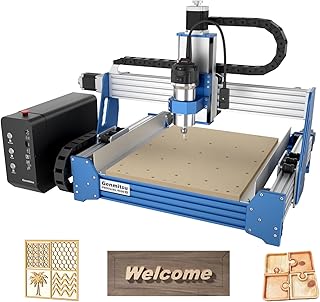
Genmitsu PROVerXL 4030 V2
Closed-loop NEMA 23 steppers give this machine something rare at its price: the controller knows when a step is missed and corrects it, which means a crashed bit doesn’t quietly ruin the rest of a two-hour job. The 400W spindle paired with a 400 × 300 × 110mm envelope hits the sweet spot for cabinet parts and drawer fronts.
NBS-6040 CNC Router
Linear rails and ball screws across every axis, plus a 710W spindle and a 610 × 410mm bed, make this the pick for anyone who’s outgrown a smaller table. The 2.8″ offline controller means you can start a job and walk away with your laptop, which matters more than it sounds once you’re running long carves.
Genmitsu PROVerXL 4030S
The 4030S upgrades the platform with a 710W spindle and 130mm of Z-height, so thicker stock and taller jigs stop being a compromise. Wireless app control is genuinely useful for monitoring a run from across the shop rather than hovering over a USB cable.
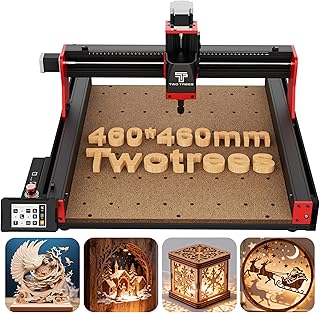
Twotrees TTC450 Pro
The all-metal build and NEMA 57 stepper give this one unusual torque for a compact footprint, and the 3.5″ touchscreen keeps setup off your computer entirely. It handles aluminum and acrylic alongside wood, which broadens what you can prototype without a second machine.
FoxAlien Masuter Pro
A solid all-metal structure at a beginner-friendly price makes the Masuter Pro a sensible first machine that won’t need replacing in six months. It cuts MDF, nylon, and hardwood cleanly with conservative feeds, and the assembly process teaches you enough about the mechanics to troubleshoot confidently later.
Frequently Asked Questions
Do I need dust collection from day one?
Yes. Routing MDF and plywood produces fine dust that clings to rails, ball screws, and electronics. A shop vac with a simple shoe-and-hose setup extends machine life considerably and keeps the cut line visible while you’re dialing in feeds.
Is a 3018-class kit worth buying?
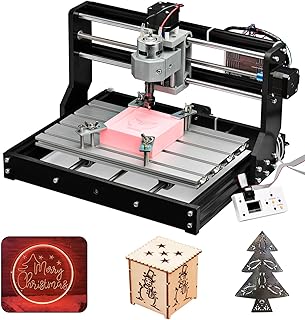
The Genmitsu 3018-PRO earns its place as a learning platform — small, forgiving, and cheap enough that mistakes don’t sting. Its 300 × 180 × 45mm envelope and lighter frame limit it to soft woods, engraving, and PCB work rather than furniture components.
What software should I plan on using?
Fusion 360’s personal license, Carbide Create, and VCarve cover most furniture workflows, and all three export G-code that GRBL controllers accept. Budget a few evenings for learning CAM; the machine is the easy part.
How much bench space and support do these need?
Add roughly 12 inches around the stated footprint for gantry travel, cable routing, and clamping access. A rigid bench matters too — a wobbly table transmits vibration straight into the cut and undoes the frame rigidity you paid for.
Final Thoughts
For most home furniture shops, the Genmitsu PROVerXL 4030 V2 offers the best balance of closed-loop precision and practical work area, while the NBS-6040 is the clear step up when project size drives the decision. Beginners who want a machine that grows with them should look hard at the FoxAlien Masuter Pro — its all-metal frame means the skills you build transfer directly to bigger tools later.