Key takeaways
- Tooth count vs. the cut: Rip solid lumber with 24 to 40 teeth so the gullets clear chips fast. Crosscut and sheet goods want 60 to 80 teeth for a cleaner exit. Trying to rip 2-inch oak with an 80-tooth blade is how you smell burning wood and stall the motor.
- Arbor and diameter: Nearly every 10-inch contractor and jobsite saw takes a 5/8-inch arbor, but compact saws often run 8-1/4 inch blades. Measure before you buy, and check whether the blade includes a diamond knockout if your saw uses that arbor style.
- Plate thickness and kerf: Thin-kerf blades pull less amperage, which helps on 15-amp jobsite saws. Full-kerf plates resist deflection better but demand more from the motor. Match the kerf to your riving knife or splitter thickness so stock doesn’t bind.
- Grind geometry: ATB (alternate top bevel) slices cleanly through cross grain. TCG and flat-top grinds hold up better in laminate and man-made panels. A combination blade splits the difference and is a fair one-blade answer if you swap infrequently.
- Multi-packs vs. one good blade: Two- and three-blade sets cost less per blade and let you dedicate one to construction lumber, where hidden nails and grit live. Keep your finish blade clean and out of the framing pile.
What's inside
The blade that shipped with your table saw is a compromise. It has to cut plywood, rip 2x4s, and crosscut trim without being especially good at any of it, which is why your first project ends up with burn marks on the maple and tearout along the veneer edge. Most people blame the saw. Usually it’s the 24 carbide teeth spinning at 4,000 RPM through material they were never ground for.
I’ve swapped enough blades in a small garage shop to know what actually matters: tooth count matched to the cut, a plate flat enough not to wander, and a hook angle that doesn’t fight the feed. Below are six blades and blade sets worth putting on an arbor in 2026, from budget multi-packs that cover framing through finish work, to a single-purpose 80-tooth for glue-ready edges. Nothing exotic, nothing that needs a cabinet saw to justify itself.
As an Amazon Associate we earn from qualifying purchases.



🛒 Best Price Today on Amazon
Prime members get fast, free shipping on everything above, plus member-only deals. New members get a 30-day free trial — cancel anytime.
How to Choose a Saw Blades For Table Saw (2026)
- Tooth count vs. the cut: Rip solid lumber with 24 to 40 teeth so the gullets clear chips fast. Crosscut and sheet goods want 60 to 80 teeth for a cleaner exit. Trying to rip 2-inch oak with an 80-tooth blade is how you smell burning wood and stall the motor.
- Arbor and diameter: Nearly every 10-inch contractor and jobsite saw takes a 5/8-inch arbor, but compact saws often run 8-1/4 inch blades. Measure before you buy, and check whether the blade includes a diamond knockout if your saw uses that arbor style.
- Plate thickness and kerf: Thin-kerf blades pull less amperage, which helps on 15-amp jobsite saws. Full-kerf plates resist deflection better but demand more from the motor. Match the kerf to your riving knife or splitter thickness so stock doesn’t bind.
- Grind geometry: ATB (alternate top bevel) slices cleanly through cross grain. TCG and flat-top grinds hold up better in laminate and man-made panels. A combination blade splits the difference and is a fair one-blade answer if you swap infrequently.
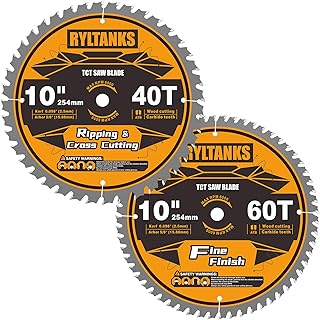
- Multi-packs vs. one good blade: Two- and three-blade sets cost less per blade and let you dedicate one to construction lumber, where hidden nails and grit live. Keep your finish blade clean and out of the framing pile.
The Best Saw Blades For Table Saw (2026)s Reviewed
FOXBC 10-Inch 80-Tooth Ultra Finish Blade
This is the blade you mount when the cut edge is the finished edge, especially on veneered plywood and melamine where chipout ruins a panel. Feed it slowly and let the tooth count do the work; push hard in thick hardwood and you’ll get burn instead of polish.
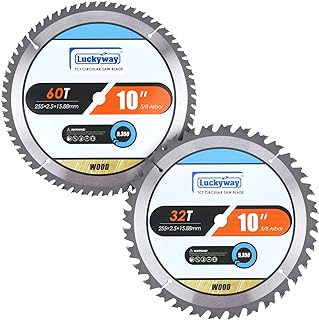
Luckyway 10-Inch Two-Pack, 60T and 32T
A sensible pairing that covers the two jobs most home shops actually do: rough construction cuts with the 32-tooth and clean crosscuts with the 60. For the money it’s a genuinely practical way to stop compromising with a single general-purpose blade.
DEWALT 10-Inch 40-Tooth Fine Finish (DWA11040)
Forty teeth is the sweet spot if you only want one blade on the saw, and DEWALT’s carbide holds an edge longer than most in this price bracket. It rips cleanly, crosscuts respectably, and runs smooth on underpowered jobsite motors thanks to the thin kerf.
FOXBC 8-1/4 Inch 60-Tooth Fine Finish
Compact jobsite saws are badly served by stock blades, and this is a straightforward upgrade for them. The diamond knockout means it fits both arbor styles, and 60 teeth gets you close to trim-quality cuts without bogging down a smaller motor.
10-Inch Three-Pack, 32T / 60T / 80T
The most complete starter kit here, giving you a dedicated blade for framing, general woodworking, and fine finish work in one purchase. Label them, keep the 80-tooth away from anything that’s touched dirt, and this set will cover a year of varied projects.
Frequently Asked Questions
How often should I change or sharpen a blade?
Watch the cut, not the calendar. Increased feed resistance, burn marks on clean stock, and rising tearout all signal a dull edge. Carbide blades can typically be professionally sharpened two to four times before the teeth get too thin.
Will a thin-kerf blade work on my saw?
Almost certainly, and it’s often the better choice on 15-amp saws because it removes less material per pass. Just confirm your riving knife isn’t thicker than the kerf, or the stock will pinch behind the blade.
Why does my blade leave burn marks?
Usually pitch buildup, too high a tooth count for the material, or a fence that’s out of parallel with the blade. Clean the blade with a dedicated resin remover first; that alone fixes it more often than people expect.
Do I really need more than one blade?
Not to get started, but a 40-tooth compromise blade will never crosscut like a 60 or rip like a 32. If you work with both plywood and construction lumber, a two- or three-blade set pays for itself in reduced sanding.
Final Thoughts
If you want one blade that handles most of what a home shop throws at it, the DEWALT 40-tooth fine finish is the dependable choice and it runs beautifully on modest motors. For sheet goods and glue-line edges, the FOXBC 80-tooth is hard to beat, and the 32T/60T/80T three-pack is the smartest value if you’d rather build a small blade library from the start than keep compromising on every cut.