Key takeaways
- Top thickness and material: Solid rubberwood or hardwood butcher block in the 1″–1.5″ range is the sweet spot. Anything thinner and you will want a backing plate under your press mount to spread the load and stop the bolt heads from crushing into the wood.
- Rated capacity versus rigidity: A 2000 lb static rating tells you the frame will not collapse, but it says nothing about lateral sway. Look for diagonal bracing, a lower shelf that ties the legs together, or feet you can shim and level against a sloped slab floor.
- Working height: Standing at a single-stage press, most people want the top around 36″–39″ so the ram handle finishes near chest height. Sitting at a progressive or doing case prep, 28″–32″ feels far better. Adjustable-leg benches let you settle that without a hacksaw.
- Depth and mounting overhang: Presses need front-edge access for the ram and shell plate, so you want a top deep enough to keep dies, trays, and a powder measure behind the press without crowding it. Roughly 20″ of usable depth is a practical minimum.
- Power and storage at the bench: Case tumblers, trimmers, annealers, and task lighting all want outlets. An integrated power strip beats a daisy-chained extension cord, and a pegboard or drawer keeps shell holders and hex keys from vanishing into the shop void.
What's inside
Mount a single-stage press to a flimsy folding table and you will feel it on the very first stroke: the top flexes, the whole rig walks across the floor, and your case gauge slides off the edge. Reloading is one of the few hobbies where the furniture is part of the tooling. A press wants to be bolted to something that pushes back, a powder measure wants a surface that does not shimmy when you nudge the bench, and a scale wants to sit dead level and stay that way through a few hundred throws. Add primers, brass, dies, and bushings to the equation and you also need somewhere to put all of it that is not the floor.
The frustrating part is that almost nothing is sold as a “reloading bench.” You end up shopping general-purpose work tables and reading between the lines on load ratings, top thickness, and whether the legs are hollow tube or something you can actually torque a bolt against. This guide sorts through the benches worth considering for a home loading room, garage corner, or basement bench wall, with notes on what each one gets right, what to expect during assembly, and the specs that actually matter once a press is hanging off the front edge.
As an Amazon Associate we earn from qualifying purchases.




🛒 Best Price Today on Amazon
Prime members get fast, free shipping on everything above, plus member-only deals. New members get a 30-day free trial — cancel anytime.
How to Choose a/an Workbench For Reloading (2026)
- Top thickness and material: Solid rubberwood or hardwood butcher block in the 1″–1.5″ range is the sweet spot. Anything thinner and you will want a backing plate under your press mount to spread the load and stop the bolt heads from crushing into the wood.
- Rated capacity versus rigidity: A 2000 lb static rating tells you the frame will not collapse, but it says nothing about lateral sway. Look for diagonal bracing, a lower shelf that ties the legs together, or feet you can shim and level against a sloped slab floor.
- Working height: Standing at a single-stage press, most people want the top around 36″–39″ so the ram handle finishes near chest height. Sitting at a progressive or doing case prep, 28″–32″ feels far better. Adjustable-leg benches let you settle that without a hacksaw.
- Depth and mounting overhang: Presses need front-edge access for the ram and shell plate, so you want a top deep enough to keep dies, trays, and a powder measure behind the press without crowding it. Roughly 20″ of usable depth is a practical minimum.
- Power and storage at the bench: Case tumblers, trimmers, annealers, and task lighting all want outlets. An integrated power strip beats a daisy-chained extension cord, and a pegboard or drawer keeps shell holders and hex keys from vanishing into the shop void.
The Best Workbench For Reloading (2026)s Reviewed
47.2″ Heavy Duty Work Bench with Drawer and Storage
A compact, well-proportioned starter bench with a wood top and steel frame, plus a drawer that swallows shell holders, calipers, and the small parts that otherwise migrate. At just under four feet it fits a spare-room corner and handles a single-stage press comfortably; expect to add a backer plate under the press mount if you regularly full-length size rifle brass.
OLBRUS 48″ Adjustable Workbench
The combination of a hardwood top, a 2000 lb rated frame, and a built-in outlet makes this an easy default pick for a one-bench loading setup. The rubber pad matters more than it sounds: it damps the vibration from a tumbler and stops brass from skating across the surface.
Frankford Arsenal Platinum Series Reloading Stand
This is the only entry here designed specifically for the task, with an adjustable steel frame, a reinforced wood center for press mounting, and bins positioned where your hands already are. It gives up general-purpose surface area compared to a full bench, but for a dedicated press station in a tight space it is purpose-built and it shows.
CAMMOO 60″ Work Bench with Storage & Pegboard
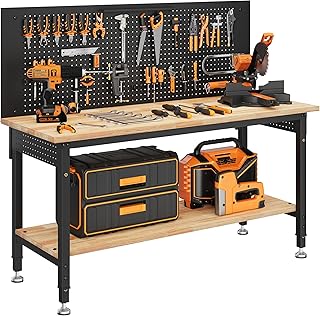
Five feet of top gives you room to mount a press at one end and still lay out a loading block, powder measure, and scale without shuffling gear. The pegboard is the real value add for reloaders, hanging dies, brushes, and case gauges where you can see them instead of digging.
CAMMOO 48″ Adjustable Workbench
A solid rubberwood top on a carbon steel frame with ETL-listed outlets and USB ports, plus a 28″–39″ height range that covers both seated case prep and standing press work. Good pick if you want one bench to do double duty across reloading and general shop projects.
Frequently Asked Questions
How thick does a reloading bench top need to be?
Around 1.5″ of solid wood handles most single-stage and turret presses without complaint. If your top is thinner, sandwich a steel or plywood plate under the mounting area and use bolts with washers rather than lag screws into end grain.
Should I bolt the bench to the wall or floor?
You do not have to, but it helps. Anchoring the back of the frame to studs eliminates almost all front-to-back rock, which is the movement you feel most when camming over on a sizing stroke. Heavy benches with a loaded lower shelf often stay put on their own.
What bench height works best for reloading?
Standing, aim for the press handle to travel roughly between your waist and chest, which usually lands the top at 36″–39″. Seated, drop to 28″–32″. Adjustable-leg benches let you test both before committing.
Can I use one bench for both reloading and general shop work?
Yes, and most home setups do. Keep the press and powder measure on one end, leave the other end clear for cleaning and assembly, and avoid doing dusty work like grinding or sanding at the same bench where primers and powder are open.
Final Thoughts
For most home reloaders, the OLBRUS 48″ Adjustable Workbench hits the best balance of hardwood top, real load capacity, and bench-side power, while the CAMMOO 60″ with pegboard is the pick if you want room to spread out and keep dies within arm’s reach. If space is genuinely tight and you only need a rock-solid home for the press itself, the Frankford Arsenal Platinum Series stand is the one built specifically for the job.