Key takeaways
- Birch: assess the specific panel’s dimensions, lamination and flatness. A birch label alone does not establish its load capacity or suitability for a vise.
- Acacia: compare grain appearance if the bench will also serve as a desk, but require the same construction and mounting information as for other woods.
- Rubberwood or hevea: verify whether the listing is a desktop or a workbench component and whether the intended drilling, clamps and loads are permitted.
What's inside
Choosing the best wood for a workbench top is less straightforward than it looks. A slab can appear thick and sturdy in a listing photo yet still be too soft, too narrow, or poorly suited to the pounding, clamping, glue, and occasional spills that define real workshop use. The right choice depends on more than species: thickness, construction, moisture content, edge quality, and the way you plan to support it all matter.
This guide compares the buying decisions behind wood workbench tops, using the product listings below as options to investigate. It is a specification-based guide, not a hands-on test of these panels.
As an Amazon Associate we earn from qualifying purchases.


🛒 Best Price Today on Amazon
Prime members get fast, free shipping on everything above, plus member-only deals. New members get a 30-day free trial — cancel anytime.
Best wood for a workbench top: choose the construction first
There is no single best species for every bench. For a hand-tool bench, compare a purpose-built hardwood top and rigid base; for light assembly, a supported countertop panel may meet the task. Check the actual panel construction, flatness, support spacing and workholding requirements before comparing wood names.
Lie-Nielsen’s European beech workbench uses a 4-inch solid top. This is one example of a purpose-built hand-tool bench, not a minimum thickness for all home projects or proof that a thin countertop will perform the same way.
Comparing birch, acacia and rubberwood listings
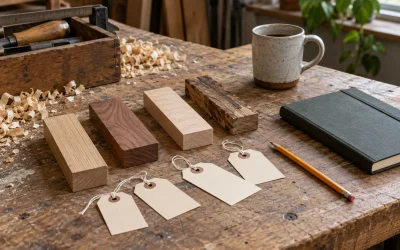
- Birch: assess the specific panel’s dimensions, lamination and flatness. A birch label alone does not establish its load capacity or suitability for a vise.
- Acacia: compare grain appearance if the bench will also serve as a desk, but require the same construction and mounting information as for other woods.
- Rubberwood or hevea: verify whether the listing is a desktop or a workbench component and whether the intended drilling, clamps and loads are permitted.
Five checks before buying a wood top
- Measure the base. Record width, depth, supporting rails and any planned overhang. Ask the supplier about allowable unsupported spans.
- Check the workholding hardware. A vise, holdfast and bench dog can each need a particular thickness and hole pattern. Confirm clearance underneath for their mounting hardware.
- Check the surface. Inspect for loose laminations, splits and distortion before drilling or finishing. Follow the seller’s acclimation instructions.
- Plan movement and fastening. Follow the top maker’s mounting method, including provision for wood movement. A species name cannot substitute for an installation plan.
- Match finish to use. Follow the panel and finish instructions, including drying or curing time and disposal of finishing materials. Use a replaceable protective surface for messy assembly tasks when appropriate.
How to read the product options above
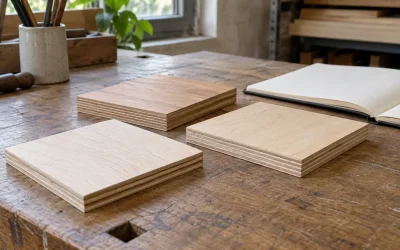
Several listings describe butcher-block countertops or desktops, while the BenchPro listing describes a table/workbench format. Confirm whether the purchase includes a top only or a complete base, then compare the selected variant’s current measurements. The presence of a product in this list does not verify it for heavy pounding, vise installation or a dog-hole grid.
Frequently asked questions
Is a 1.5-inch wood workbench top thick enough?
It depends on its construction, support span and the job. Check the top and hardware manufacturers’ requirements. Do not treat 1.5 inches as a universal minimum or a guarantee of adequate support.
Should I choose beech instead of birch?
Compare complete bench designs and local material options. The cited beech bench demonstrates one established construction; it does not rank every beech slab above every birch panel.
Can I drill bench-dog holes into a countertop?
Only after verifying the panel construction and the hardware’s thickness and spacing requirements. A listing photograph does not establish that an edge, joint or thin top can hold the intended force.
Final checklist
Choose a flat top with documented dimensions, an appropriate base and a mounting plan for your workholding hardware. Compare the total cost of the top, support and finish; a low panel price alone does not establish the best value.