Key takeaways
- Tooth count: 60 to 80 teeth is the practical sweet spot for furniture crosscuts and trim. Jump to 100 teeth when you’re cutting veneered plywood, melamine, or delicate moldings where any tearout is unacceptable. Below 48 teeth is framing territory.
- Grind geometry: ATB (alternate top bevel) teeth act like tiny knives that sever wood fibers cleanly, which is what you want for crosscuts. TCG or triple-chip grinds are for laminates, plastics, and non-ferrous metal, not hardwood finish work.
- Kerf and plate stiffness: Thin kerf (roughly 0.098 in) reduces load on smaller motors and wastes less stock, but it flexes more on wide cuts. A full-kerf plate with expansion slots and laser-cut vibration channels tracks straighter through 8-inch-wide hardwood.
- Carbide quality: The grade of carbide matters more than tooth count for how long the edge lasts. High-density micrograin carbide holds a keener edge through hardwood and survives more resharpenings before the teeth get too short.
- Arbor and hook angle: Confirm a 1-inch arbor for most 12-inch saws. For miter saws specifically, look for a low or slightly negative hook angle so the blade doesn’t self-feed and climb into the workpiece mid-cut.
What's inside
Nothing sours a build faster than a crosscut that looks chewed instead of sliced. You measured twice, clamped the stock, eased into the cut, and the miter still shows torn grain on the show face and a ragged edge on the underside. Nine times out of ten the saw isn’t the problem. It’s the blade that shipped in the box, a 24- or 32-tooth general framing blade that was designed to eat studs, not to leave glue-ready faces on walnut or a picture-frame miter that closes without a gap.
A 12-inch miter saw earns its keep on furniture work: wide aprons, 4/4 hardwood, cabinet stiles, thick trim. That capacity only pays off with a blade matched to the material and the finish you need. This guide covers the tooth counts and grinds that actually matter for furniture and trim, the specs to check before you click buy, and honest reviews of the blades I keep on the shelf next to the saw.
As an Amazon Associate we earn from qualifying purchases.
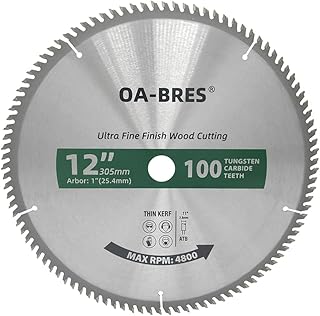


🛒 Best Price Today on Amazon
Prime members get fast, free shipping on everything above, plus member-only deals. New members get a 30-day free trial — cancel anytime.
How to Choose a 12in Miter Saw Blade (2026)
- Tooth count: 60 to 80 teeth is the practical sweet spot for furniture crosscuts and trim. Jump to 100 teeth when you’re cutting veneered plywood, melamine, or delicate moldings where any tearout is unacceptable. Below 48 teeth is framing territory.
- Grind geometry: ATB (alternate top bevel) teeth act like tiny knives that sever wood fibers cleanly, which is what you want for crosscuts. TCG or triple-chip grinds are for laminates, plastics, and non-ferrous metal, not hardwood finish work.
- Kerf and plate stiffness: Thin kerf (roughly 0.098 in) reduces load on smaller motors and wastes less stock, but it flexes more on wide cuts. A full-kerf plate with expansion slots and laser-cut vibration channels tracks straighter through 8-inch-wide hardwood.
- Carbide quality: The grade of carbide matters more than tooth count for how long the edge lasts. High-density micrograin carbide holds a keener edge through hardwood and survives more resharpenings before the teeth get too short.
- Arbor and hook angle: Confirm a 1-inch arbor for most 12-inch saws. For miter saws specifically, look for a low or slightly negative hook angle so the blade doesn’t self-feed and climb into the workpiece mid-cut.
The Best 12in Miter Saw Blade (2026)s Reviewed
DEWALT DWA112100 100-Tooth Fine Finish
This is the blade I reach for on prefinished trim and veneered panels, where the 100-tooth ATB grind leaves a face so clean it barely needs sanding. Feed it slowly and let the tooth count do the work; rushing a 100-tooth blade through thick hardwood generates heat and burn marks.
Diablo D1280X 80-Tooth Fine Finish
The best all-around choice for furniture makers, in my experience. The hi-density carbide holds an edge noticeably longer than budget blades, and the laser-cut stabilizer vents genuinely quiet the saw down, which translates to less vibration and tighter miters on wide stock.
Freud LU86R012 48-Tooth Thin Kerf
The one to mount when you’re cutting a lot of material and don’t want to swap blades between rough breakdown and finish work. Forty-eight teeth in a thin kerf plate means fast, low-drag cuts with a surface that’s clean enough for joinery, and it’s forgiving on saws with less powerful motors.
WEN BL1280 80-Tooth Fine Finish
Strong value if you’re outfitting a shop or want a spare so you’re not running a dull blade on a deadline. Cut quality on softwoods and poplar is genuinely good; the carbide won’t last as long as premium blades in hard maple, but for the price that’s a fair trade.
FOXBC 100-Tooth Polished Finish
A budget path to 100-tooth finish cuts, and it does leave impressively smooth faces on trim and plywood. Best treated as a dedicated finish blade you mount for specific tasks rather than an everyday workhorse.
Frequently Asked Questions
Does more teeth always mean a better cut?
No. More teeth remove less material per tooth, so the finish improves but heat builds up and feed rate drops. In thick hardwood, a 100-tooth blade pushed too fast will burn and leave a worse result than an 80-tooth blade used properly.
Can I use my miter saw blade in a table saw?
Often yes, if the arbor matches, but check the hook angle. Miter saw blades use low or negative hook angles, which in a table saw means slower feeding and more resistance. It works for crosscuts on a sled; it’s not ideal for ripping.
How do I know when a blade is dull?
Listen and look. The saw labors, the cut starts burning in the same spot repeatedly, tearout appears on stock that used to cut clean, and you find yourself pushing harder. Clean off pitch buildup first, since gummed teeth mimic dull ones.
Is a thin kerf blade worth it?
On a 12-inch miter saw, thin kerf mainly helps underpowered saws and saves a hair of material per cut. For furniture-grade accuracy through wide hardwood, a stiffer full-kerf plate is usually the better call.
Final Thoughts
If you buy one blade for furniture work, make it the Diablo D1280X — its 80-tooth balance of speed, finish, and carbide longevity covers the widest range of shop tasks. Keep the DEWALT DWA112100 on hand for prefinished trim and veneered panels where zero tearout is the requirement, and add the Freud LU86R012 if you want a thin-kerf general purpose blade that handles breakdown and joinery without a swap.