Key takeaways
- Tooth count for the cut, not for bragging rights: 32 to 40 teeth handles framing lumber and rough stock without bogging the motor. 60 to 80 teeth is the sweet spot for hardwood trim and cabinet parts. 100 to 120 teeth is for veneered plywood, melamine, and anything where a chipped edge means starting over. Too many teeth in thick material means heat, burning, and a blade that dulls fast.
- Kerf thickness and your saw’s power: Thin kerf blades (roughly .091″ or less) remove less material, which matters enormously on a 15-amp slider pushing through 12″ of hardwood. Full kerf blades are stiffer and track straighter but demand more from the motor. Match the blade to what your saw can actually deliver.
- Grind geometry: ATB (alternate top bevel) teeth act like knife edges and give the cleanest crosscuts in solid wood. Hi-ATB pushes that further for splinter-free veneer work. Triple chip grinds belong on laminate and non-ferrous metal, not on your everyday trim blade.
- Arbor fit and plate quality: Nearly every 10″ and 12″ miter saw uses a 5/8″ arbor, but verify before you buy. More importantly, look for laser-cut expansion slots and a hardened, tensioned plate. A blade that flexes under load will wander no matter how sharp the carbide is.
- Carbide grade and resharpening: Micrograin carbide holds an edge longer and takes more resharpenings. Budget blades with thin carbide tips are often cheaper to replace than to service, which is a legitimate strategy if you cut sparingly, but a false economy in a shop that runs hard.
The blade that shipped with your miter saw was chosen to be adequate, not good. Usually 24 to 40 teeth, thick kerf, and ground to a tolerance that leaves fuzzy edges on plywood and visible tearout on the show face of a mitered corner. That’s fine for chopping deck framing. It’s a problem the first time you cut a walnut picture frame or trim out a built-in bookcase and discover the joint won’t close cleanly no matter how carefully you dialed in the 45.
Swapping blades is the cheapest meaningful upgrade you can make to a chop saw, and it changes the tool’s character completely. This guide covers what actually matters when you’re standing in the aisle staring at tooth counts and grind abbreviations, then walks through the blades that earn their spot in a home shop, from ultra-fine finish blades for hardwood trim to multi-packs that let you match the blade to the job instead of forcing one blade to do everything.
Our top picks


As an Amazon Associate we earn from qualifying purchases at no extra cost to you. Ratings are shown as listed on Amazon.
🛒 Best Price Today on Amazon
Prime members get fast, free shipping on everything above, plus member-only deals. New members get a 30-day free trial — cancel anytime.
How to Choose a Blades For Miter Saw (2026)
- Tooth count for the cut, not for bragging rights: 32 to 40 teeth handles framing lumber and rough stock without bogging the motor. 60 to 80 teeth is the sweet spot for hardwood trim and cabinet parts. 100 to 120 teeth is for veneered plywood, melamine, and anything where a chipped edge means starting over. Too many teeth in thick material means heat, burning, and a blade that dulls fast.
- Kerf thickness and your saw’s power: Thin kerf blades (roughly .091″ or less) remove less material, which matters enormously on a 15-amp slider pushing through 12″ of hardwood. Full kerf blades are stiffer and track straighter but demand more from the motor. Match the blade to what your saw can actually deliver.
- Grind geometry: ATB (alternate top bevel) teeth act like knife edges and give the cleanest crosscuts in solid wood. Hi-ATB pushes that further for splinter-free veneer work. Triple chip grinds belong on laminate and non-ferrous metal, not on your everyday trim blade.
- Arbor fit and plate quality: Nearly every 10″ and 12″ miter saw uses a 5/8″ arbor, but verify before you buy. More importantly, look for laser-cut expansion slots and a hardened, tensioned plate. A blade that flexes under load will wander no matter how sharp the carbide is.
- Carbide grade and resharpening: Micrograin carbide holds an edge longer and takes more resharpenings. Budget blades with thin carbide tips are often cheaper to replace than to service, which is a legitimate strategy if you cut sparingly, but a false economy in a shop that runs hard.
The Best Blades For Miter Saw (2026)s Reviewed
DEWALT 12″ 100-Tooth Fine Finish (DWA112100)
This is the blade I reach for when a project has visible miters and no room for error. The tooth count and precision-ground carbide produce a surface that needs almost nothing beyond a light sanding, and it handles pre-finished trim and hardwood mouldings without lifting fibers on the exit side.
Freud LU91R012 Thin Kerf Sliding Compound Blade
Purpose-built for sliders, and it shows. The thin kerf and Tico carbide blend keep a 12″ saw from laboring through wide hardwood stock, while the ATB grind and negative-friendly geometry stop the blade from self-feeding and grabbing on a slide cut, which is the single most annoying failure mode on a compound saw.
WEN BL1080 10″ 80-Tooth Carbide-Tipped
The best value proposition on this list for anyone building furniture at a normal weekend pace. Eighty teeth on a 10″ plate is the practical crosscutting sweet spot for maple, oak, and poplar, and the carbide tips hold up far better than the price suggests.
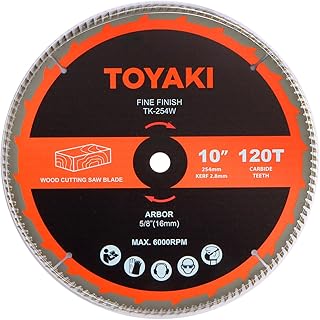
10″ 120-Tooth Fine-Finish Blade, 5/8″ Arbor
When you’re cutting veneered plywood, melamine shelving, or thin trim where any chipout is fatal, high tooth count is the answer. Feed slowly and let the blade work rather than forcing it, and the edges come off the saw genuinely finish-ready.
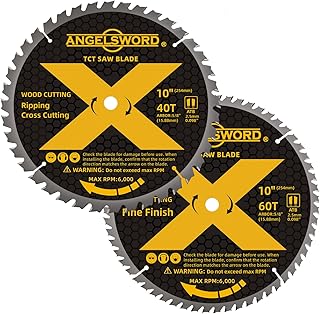
10″ 3-Pack: 32T, 60T, and 80T
The smartest way to outfit a first miter saw. You get a framing blade, a general finish blade, and an ultra-fine blade for the money one premium blade costs, which teaches you what tooth count actually does to a cut face better than any article can.
Frequently Asked Questions
Does a higher tooth count always mean a better cut?
Only in the right material. High tooth counts leave less gullet space for chip clearance, so in thick hardwood a 100-tooth blade generates heat, burns the cut, and stresses the motor. Reserve them for thin, brittle, or veneered stock.
Can I use a table saw blade in my miter saw?
Often yes if the diameter and arbor match, but blade hook angle matters. A high positive hook designed for ripping will aggressively grab and climb on a chop saw. Look for low or negative hook angles for miter saw duty.
How do I know when a blade is dull?
Watch for burning on cut faces, increased feed pressure, growing tearout, and a change in motor pitch under load. Check for pitch buildup first, since resin on the carbide mimics dullness and cleans off with a dedicated blade cleaner.
Is resharpening worth it?
For quality blades with substantial carbide, absolutely. Expect to pay a fraction of replacement cost for two or three services. Thin-tipped economy blades generally aren’t worth the trip.
Final Thoughts
For fine furniture and trim work on a 12″ saw, the DEWALT DWA112100 and the Freud LU91R012 are the two blades worth owning, the DEWALT for pristine crosscuts and the Freud for smooth, controlled slide cuts in wide stock. If you’re running a 10″ saw or building out your first blade collection, the WEN BL1080 delivers premium-adjacent results at a price that makes experimenting painless.