Key takeaways
- Noise level: Aim for 56 to 70 dBA. Anything above 80 dBA turns a suburban driveway job into a conversation with a neighbor, and induction-motor “ultra quiet” designs also spin slower, which means far less heat and a longer service life than a screaming direct-drive unit.
- CFM at 40 PSI, not peak PSI: Blow guns and air blades are volume-hungry, not pressure-hungry. A 1 HP unit delivering roughly 2 to 3 CFM keeps a nozzle going almost continuously; a small 0.6 HP unit is fine for short bursts and detail work but will cycle constantly if you chase water off a full-size SUV.
- Tank size versus lift weight: Six to eight gallons is the sweet spot for a van. Larger tanks buy you longer runs between motor cycles, but every gallon is weight you personally carry up a sloped driveway a dozen times a week. Wheels and a real handle matter more than the spec sheet suggests.
- Oil-free and orientation-tolerant: Oil-free pumps can be transported on their side, tossed in a van, and run immediately without checking a sight glass. That’s non-negotiable for mobile work. They’re louder as a category, which is exactly why the low-RPM designs stand out.
- Power draw and cord tolerance: Check startup amps against a 15-amp household circuit you’ll be sharing. If you’re running a 50-foot cord, use 12 gauge minimum, or voltage drop will cook the motor windings over a season. Battery inflators sidestep the issue entirely for light tasks.
What's inside
Mobile detailing lives or dies on the equipment you can actually lift into a van at 6 a.m. and run in a client’s driveway without drawing complaints. Air is the piece most detailers underestimate: you need it for blowing water out of mirror housings, badge gaps, and lug nut seats, for driving a DA polisher or air blade, for seat rail crevices that no towel will ever reach. Then you find out that the shop compressor you borrowed is 90 dBA, drinks 15 amps on startup, and trips the breaker on a residential circuit at the same moment the pressure washer kicks on.
This guide is written from the wrench-and-extension-cord side of the job. I’ve sorted the options by what they realistically do on a mobile rig: cabinet noise, recovery time between trigger pulls, tank volume versus weight, and whether the motor tolerates a long cord run on 120V. Below you’ll find ultra-quiet aluminum-tank units for detailers running polishers and blow guns all day, a budget pancake with an accessory kit, and two cordless inflators worth keeping in the door pocket for tire pressure and quick air work.
As an Amazon Associate we earn from qualifying purchases.


🛒 Best Price Today on Amazon
Prime members get fast, free shipping on everything above, plus member-only deals. New members get a 30-day free trial — cancel anytime.
How to Choose a/an Air Compressor For Mobile Detailing (2026)
- Noise level: Aim for 56 to 70 dBA. Anything above 80 dBA turns a suburban driveway job into a conversation with a neighbor, and induction-motor “ultra quiet” designs also spin slower, which means far less heat and a longer service life than a screaming direct-drive unit.
- CFM at 40 PSI, not peak PSI: Blow guns and air blades are volume-hungry, not pressure-hungry. A 1 HP unit delivering roughly 2 to 3 CFM keeps a nozzle going almost continuously; a small 0.6 HP unit is fine for short bursts and detail work but will cycle constantly if you chase water off a full-size SUV.
- Tank size versus lift weight: Six to eight gallons is the sweet spot for a van. Larger tanks buy you longer runs between motor cycles, but every gallon is weight you personally carry up a sloped driveway a dozen times a week. Wheels and a real handle matter more than the spec sheet suggests.
- Oil-free and orientation-tolerant: Oil-free pumps can be transported on their side, tossed in a van, and run immediately without checking a sight glass. That’s non-negotiable for mobile work. They’re louder as a category, which is exactly why the low-RPM designs stand out.
- Power draw and cord tolerance: Check startup amps against a 15-amp household circuit you’ll be sharing. If you’re running a 50-foot cord, use 12 gauge minimum, or voltage drop will cook the motor windings over a season. Battery inflators sidestep the issue entirely for light tasks.
The Best Air Compressor For Mobile Detailing (2026)s Reviewed
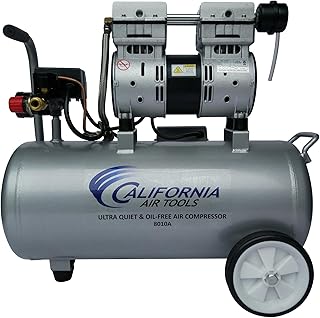
California Air Tools 8010A Ultra Quiet 8 Gallon
At 60 dBA with an 8-gallon aluminum tank on wheels, this is the closest thing to a purpose-built mobile detailing compressor. The low-RPM oil-free pump recovers fast enough to run a blow gun through door jambs and grilles without the motor short-cycling, and the aluminum tank won’t rust from condensate the way a steel one eventually does.
California Air Tools CAT-4610AC Twin Tank
Same quiet 1.0 HP pump as the 8010A but in a 4.6-gallon twin-tank layout that’s noticeably easier to wrestle in and out of a van. You trade some reserve air, so it cycles more often on long blow-outs, but for interior work and moderate polishing it’s the better ergonomic call.
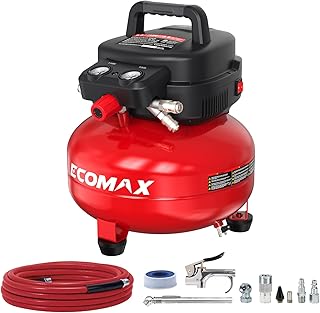
ECOMAX 6 Gallon Pancake with Accessory Kit
The value entry: 6 gallons, 150 PSI, and a 10-piece kit that gets you inflating and blowing on day one. It’s a conventional louder pancake design, so it’s best suited to detailers working commercial lots or garages rather than quiet residential streets.
California Air Tools CAT-1P1060S 1 Gallon
At 56 dBA and 1 gallon, this is the stealth option you carry with one hand for interior blow-outs, crevice work, and touch-up jobs. It’s not enough air for sustained polishing or drying a whole vehicle, but as a second compressor for detail passes it’s genuinely useful.
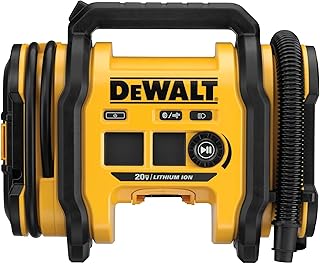
DEWALT 20V MAX Tire Inflator (DCC020IB)
Runs on the same 20V packs as the rest of a DEWALT kit, with automatic shutoff at the target pressure and an LED for evening jobs. Strictly an inflator, not a shop air source, but it earns its spot for tire pressure checks and topping off before delivery.
Frequently Asked Questions
How much CFM do I actually need for mobile detailing?
For blow guns and air blades, 2 to 3 CFM at 40 PSI keeps you working steadily. Air-driven polishers are far thirstier, often 5 CFM or more, which is why most mobile detailers use electric DA polishers and reserve compressed air for drying and crevice work.
Can I run a compressor off a client’s outdoor outlet?
Usually yes, on a dedicated 15-amp circuit. Always ask first, avoid stacking a pressure washer on the same circuit, and use a heavy-gauge cord. If you’re regularly tripping breakers, a small generator or inverter setup is the fix.
Do I need to drain the tank every day?
Yes. Condensate collects fast in humid conditions, and water in the tank means water out your blow gun onto freshly polished paint. Crack the drain valve at the end of each shift and let it hiss dry.
Is an aluminum tank worth the extra cost?
For mobile work, generally yes. Aluminum is lighter to lift repeatedly and won’t develop internal rust, which matters when the compressor spends its life bouncing between damp driveways rather than sitting in a climate-controlled shop.
Final Thoughts
If you’re outfitting a mobile rig properly, the California Air Tools 8010A is the pick: quiet enough for residential work, enough tank to blow out a full vehicle, and wheels so your back survives the season. Detailers tight on van space should look at the CAT-4610AC twin tank instead, and nearly everyone benefits from keeping the DEWALT DCC020IB inflator in the door pocket for tire pressure and quick top-offs between jobs.