Key takeaways
- Variable speed control: This matters more than raw wattage. Large-diameter bits and figured hardwoods need slower RPM to avoid burning and tearout, while narrow straight bits want full speed. A 6-speed dial is the single most useful feature on a beginner router, and skipping it will cost you scorched maple.
- Soft start and steady bearings: A router that jumps in your hand on startup is a router that leaves a gouge at the beginning of every pass. Soft-start electronics ramp the motor up gradually so you can keep the base flat and your line true.
- Base adjustment and visibility: Look for a depth adjustment that locks positively and repeats accurately, plus a clear sub-base you can actually see through. Fine-thread micro-adjust beats a friction clamp when you’re sneaking up on a final depth.
- What’s in the kit: Bits, an edge guide, and a roller guide turn a bare tool into a working setup. Carbide-tipped bits stay sharp far longer than high-speed steel, and an included edge guide means straight dados without building a jig first.
- Corded or cordless: Corded gives you unlimited runtime and consistent power for a lower price. Cordless wins if you’re trimming edges on installed pieces or working away from an outlet, and if you already own a battery platform the tool-only option is the better value.
The first router purchase is where a lot of beginner woodworkers stall out. Search for one and you’ll hit a wall of horsepower ratings, base types, collet sizes, and plunge mechanisms, most of it written for people who already know what a bearing-guided rabbeting bit does. Meanwhile the actual question is simpler: what tool will let you round over a tabletop edge, cut a clean dado for a shelf, and trim laminate flush without wrecking the workpiece or your nerves?
For most people building furniture at home, the answer is a compact palm router rather than a full-size 2+ HP machine. Palm routers are lighter, easier to control with one hand, cheap enough to learn on, and they handle the overwhelming majority of furniture-making cuts. This guide walks through the specs that actually matter for a first router, then reviews the compact corded and cordless kits worth your money in 2026, most of which ship with a bit set so you can start cutting the day it arrives.
Our top picks


As an Amazon Associate we earn from qualifying purchases at no extra cost to you. Ratings are shown as listed on Amazon.
🛒 Best Price Today on Amazon
Prime members get fast, free shipping on everything above, plus member-only deals. New members get a 30-day free trial — cancel anytime.
How to Choose a Wood Router For Beginners (2026)
- Variable speed control: This matters more than raw wattage. Large-diameter bits and figured hardwoods need slower RPM to avoid burning and tearout, while narrow straight bits want full speed. A 6-speed dial is the single most useful feature on a beginner router, and skipping it will cost you scorched maple.
- Soft start and steady bearings: A router that jumps in your hand on startup is a router that leaves a gouge at the beginning of every pass. Soft-start electronics ramp the motor up gradually so you can keep the base flat and your line true.
- Base adjustment and visibility: Look for a depth adjustment that locks positively and repeats accurately, plus a clear sub-base you can actually see through. Fine-thread micro-adjust beats a friction clamp when you’re sneaking up on a final depth.
- What’s in the kit: Bits, an edge guide, and a roller guide turn a bare tool into a working setup. Carbide-tipped bits stay sharp far longer than high-speed steel, and an included edge guide means straight dados without building a jig first.
- Corded or cordless: Corded gives you unlimited runtime and consistent power for a lower price. Cordless wins if you’re trimming edges on installed pieces or working away from an outlet, and if you already own a battery platform the tool-only option is the better value.
The Best Wood Router For Beginners (2026)s Reviewed
TEENO 6.5 Amp Compact Router Kit
This is the most complete first-router package here: six speeds, 1.25 HP, 15 carbide bits, plus both edge and roller guides in a hard case. The guides are what set it apart, since they let a beginner cut straight grooves and consistent edge profiles without fabricating a fence.
WORKPRO 6.5 Amp Corded Compact Router Kit
WORKPRO is a known quantity in the budget tool space, and this kit delivers smooth speed control from idle up to 30,000 RPM with a base that adjusts predictably. A sensible pick if you want dependable build quality over a giant pile of accessories.
TwoWin 800W Compact Router with 15-Piece Bit Set
A no-nonsense 800W palm trimmer bundled with 15 tungsten carbide bits, which is a lot of profiles for the money. It excels at laminate trimming and edge work, so it’s a strong fit if your projects lean toward tabletops, shelving, and cabinet doors.
Cordless Brushless Router for DeWalt 20V/60V Batteries
Sold as a bare tool, this brushless unit is an easy add for anyone already invested in DeWalt’s 20V system. Five speeds up to 28,000 RPM and no cord to snag makes it genuinely pleasant for flush trimming and roundovers on assembled furniture.
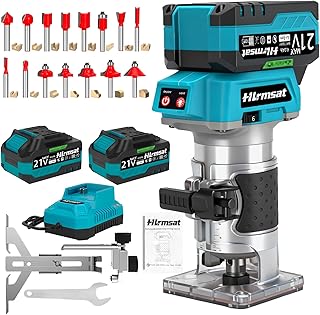
21V Brushless Cordless Palm Router with Two Batteries
The full cordless starter kit: brushless motor, six speeds, two 4.0Ah batteries, and 15 bits. Having a spare battery on the charger means you can keep cutting through a dovetail or grooving session without downtime.
Frequently Asked Questions
Is a palm router powerful enough for real furniture work?
For edge profiles, dados, grooves, rabbets, hinge mortises, and template trimming, yes. You’ll want a full-size router for raised panel doors or large-diameter bits, but that’s a second-tool problem, not a first-tool problem.
Should my first router be corded or cordless?
Corded, if you work at a bench near an outlet. You get consistent power, lower cost, and no battery to manage. Go cordless if you’re routing installed cabinetry or working outdoors.
Are the included bit sets any good?
The carbide-tipped bits in these kits are perfectly fine for learning, softwoods, and plywood. Once you know which two or three profiles you reach for constantly, buy premium replacements for those specific bits.
What should I actually cut first?
Practice on scrap. Do a roundover on a piece of pine, then a groove with the edge guide, and get a feel for feed direction and speed before you touch a real project. Always move the router against the bit’s rotation.
Final Thoughts
If you want one tool that covers the widest range of beginner furniture tasks, the TEENO kit is the pick thanks to its edge and roller guides. The WORKPRO router is the choice if you value refined build quality and smooth speed control, and the 21V brushless cordless kit with two batteries makes the most sense for anyone who’d rather never fight a power cord across a workshop floor.