Key takeaways
- Prefer a dual-voltage machine when the work location is uncertain.
- Look for a published generator-wattage recommendation and acceptable voltage tolerance.
- Use a generator with stable output; poor power can cause nuisance shutdowns or erratic arcs.
- Keep extension cords short and heavy enough for the input current. A long, undersized cord can cause voltage drop.
- Do not operate a fuel-powered generator indoors, in a garage, or near open doors and windows because of carbon-monoxide risk.
The best stick welders for most home repair jobs are compact 160–200 amp inverter machines with DC output, adjustable amperage, and enough duty cycle for the electrode sizes you actually use; choose a 225-amp transformer welder instead when low purchase cost, simple controls, and long outdoor service matter more than weight.
Our top picks

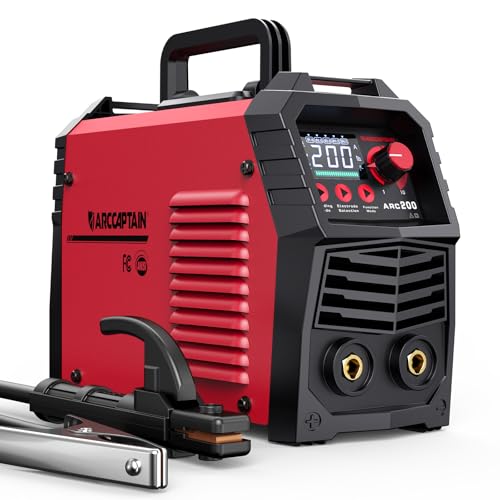


As an Amazon Associate we earn from qualifying purchases at no extra cost to you. Ratings are shown as listed on Amazon.
Quick picks by welding situation
| Situation | Best choice | Useful specifications | Why it fits |
|---|---|---|---|
| Occasional household repairs | Compact DC inverter | 120/240V input, 140–180A output, 20%–35% duty cycle at maximum amperage | Light enough to store indoors and capable of welding 1/8-inch mild-steel electrodes |
| Gates, trailers, brackets, and farm repairs | Dual-voltage 180–210A inverter | 20–25A circuit on 240V, 40%–60% duty cycle, 1/8- and 5/32-inch electrode support | More productive on thicker steel and easier to run from a suitable generator |
| Remote outdoor work | Rugged 200–250A inverter or transformer | 240V input, 200A or more, generator-compatible design, 50%–60% duty cycle | Handles repeated repairs without frequent thermal shutdowns |
| Very limited storage or apartment workshop | 120V stick inverter | 90–140A output, approximately 8–15 lb, 3/32-inch electrode capacity | Portable and convenient, but limited to thinner material and shorter welds |
What separates the best stick welders?
Amperage range and practical material thickness
A machine’s maximum amperage is only part of the decision. The low end matters when welding thin angle iron, small brackets, lawn-equipment parts, or sheet-like sections where excessive heat can burn through the work.
For general home fabrication, look for an adjustable range that starts around 20–30 amps and reaches at least 160 amps. That gives useful control with 1/16-inch and 3/32-inch electrodes while leaving enough power for common 1/8-inch rods. A 200–250 amp model is preferable for structural repairs, heavy gates, equipment frames, and repeated work with 5/32-inch electrodes.
| Electrode | Typical current range | Practical use | Approximate single-pass steel range |
|---|---|---|---|
| 6013, 1/16 inch | 25–50A | Thin mild steel and small repairs | About 1/16–1/8 inch |
| 6013 or 7014, 3/32 inch | 50–90A | Light fabrication, brackets, and general repairs | About 1/8–3/16 inch |
| 6010 or 6011, 1/8 inch | 75–130A | Dirty steel, outdoor repairs, and deeper penetration | About 3/16–1/4 inch |
| 7018, 1/8 inch | 90–140A | Strong, low-hydrogen structural welds | About 3/16–1/4 inch |
| 7018, 5/32 inch | 130–190A | Thicker plate and heavier outdoor fabrication | About 1/4 inch and thicker with proper preparation |
These figures are starting points, not guarantees. Joint design, fit-up, steel condition, electrode brand, and welding position all change the result. A welder that reaches 200 amps but can run only briefly at that output may be less useful than a 180-amp machine with a stronger duty cycle.
Duty cycle: the specification that controls productivity
Duty cycle states how long a welder can operate during a 10-minute period before it needs to cool. A 30% duty cycle at 180 amps means roughly three minutes of welding followed by seven minutes of cooling at that rated output. Actual arc time is usually shorter because repositioning, chipping slag, and changing rods also take time.
For occasional brackets and short repairs, 20%–35% at maximum output is usually adequate. Choose 40%–60% if you are welding a long gate, making multiple passes, or working on equipment where repeated stops would be frustrating. Compare duty-cycle figures at the amperage you expect to use, not only at the machine’s headline maximum.
Inverter versus transformer stick welders
| Construction | Typical weight | Advantages | Trade-offs |
|---|---|---|---|
| Compact inverter | 8–25 lb | Portable, efficient, precise amperage adjustment, often dual-voltage | Electronic components can be more sensitive to moisture, dust, and poor generator power |
| Heavy-duty inverter | 20–45 lb | High output in a manageable package, better controls and duty cycle | Costs more and still requires protection from impact and contamination |
| Transformer | 75–120 lb or more | Simple, durable, easy to service, often inexpensive per amp | Usually AC-only or less portable, draws substantial input power |
Models such as the Lincoln Electric AC-225 and comparable 225-amp transformer welders remain sensible for a permanent 240V workshop. For a movable machine, products such as the ESAB Rogue ES 180i Pro, Hobart Stickmate 160i, and similar dual-voltage inverter welders are more practical. Specifications vary by version and market, so verify the exact input voltage, included leads, and electrode ratings before ordering.
Electrode compatibility matters more than a long feature list
For general mild steel, 6013 is forgiving and produces a relatively smooth bead. 6011 is useful for outdoor work and less-than-perfectly-clean steel because it penetrates well and tolerates AC on compatible machines. 7018 produces strong welds but requires better surface preparation and correct storage; ordinary low-hydrogen electrodes can absorb moisture and become unreliable.
If you expect to weld rusty farm equipment or old steel, confirm that the machine supports 6010 or at least 6011. Some small inverters are designed mainly around 6013 and 7018 and may not provide the arc characteristics needed for 6010. An adjustable arc-force control can help prevent the electrode from sticking, while hot-start makes ignition easier, especially with 7018.
Generator-friendly features to look for
For outdoor repairs, check the welder’s stated generator requirement rather than assuming that any portable generator will work. A 160–200 amp inverter commonly needs a generator in roughly the 5,000–8,000 running-watt class, depending on input voltage, welding amperage, and the manufacturer’s guidance. A 225-amp transformer can require substantially more, often around 8,000–10,000 running watts or beyond.
- Prefer a dual-voltage machine when the work location is uncertain.
- Look for a published generator-wattage recommendation and acceptable voltage tolerance.
- Use a generator with stable output; poor power can cause nuisance shutdowns or erratic arcs.
- Keep extension cords short and heavy enough for the input current. A long, undersized cord can cause voltage drop.
- Do not operate a fuel-powered generator indoors, in a garage, or near open doors and windows because of carbon-monoxide risk.
Portability and setup realities
A 10–15 lb inverter can be carried with one hand, but the welding leads, electrode holder, work clamp, helmet, gloves, and extension cord can add another 15–25 lb. Check lead length as well: short factory leads may force you to move the machine repeatedly around a vehicle or gate.
For a small home workshop, allow about 3 ft of clear working space around the machine so ventilation openings are not blocked and cables can be laid without creating a trip hazard. A 240V transformer welder may weigh more than 80 lb and is best placed permanently near its outlet. If it must cross stairs or a doorway, measure the complete cart-and-machine width; a 30-inch doorway is workable for many carts, but a bulky 225-amp unit may need its handles or wheels removed.
Outdoor welding also requires a dry, shaded location, a stable work surface, and protection from wind. Stick welding tolerates breezes better than gas-shielded processes, but wind, rain, and damp electrodes still reduce weld quality and increase electrical risk.
How to choose without overbuying
- List the thickest material you will regularly weld. For occasional 1/8-inch steel, a 160–180 amp inverter is usually enough. For repeated 1/4-inch work, move toward 200–250 amps.
- Choose the available power first. A 120V-only outlet limits output; a 120/240V machine gives more flexibility without requiring maximum power every time.
- Match the duty cycle to the job rhythm. Short repairs tolerate a lower rating, while long beads and production-like fabrication justify 40% or more.
- Confirm electrode support. Make sure the manual specifically lists the rods you intend to use, especially 6010, 6011, or 5/32-inch 7018.
- Budget for protective equipment. A proper auto-darkening helmet, fire-resistant clothing, leather gloves, ventilation, and a suitable fire extinguisher are part of the welding setup, not optional accessories.
Final recommendation
For most homeowners, the best balance is a dual-voltage DC inverter rated around 180–200 amps, with hot-start, adjustable arc force, a duty cycle of at least 25%–35% at useful amperage, and support for 6011, 6013, and 7018 electrodes. Choose a compact 120V model only for light, intermittent repairs; choose a 225-amp transformer or heavy-duty inverter when your work is mainly outdoors, your power supply is reliable, and long or thick-steel repairs outweigh portability.
Frequently asked questions
Can a 120V stick welder repair a trailer?
It can handle small brackets and light repairs if the steel is clean and properly prepared, but a 240V-capable 180–200 amp machine is a safer choice for repeated trailer-frame work or thicker joints.
Is a higher amp rating always better?
No. Excessive minimum amperage can make thin steel difficult, and a high maximum rating is not useful if the duty cycle is poor or your circuit cannot supply the input power.
Can stick welding be used on rusty steel?
6011 electrodes are more tolerant of surface contamination than many alternatives, but remove loose rust, paint, oil, and scale whenever possible. Cleaning improves penetration and reduces inclusions.