Key takeaways
- Count hardware by assembly step, separate required quantities from spares, and convert the shortfall into pack sizes with a simple worksheet.
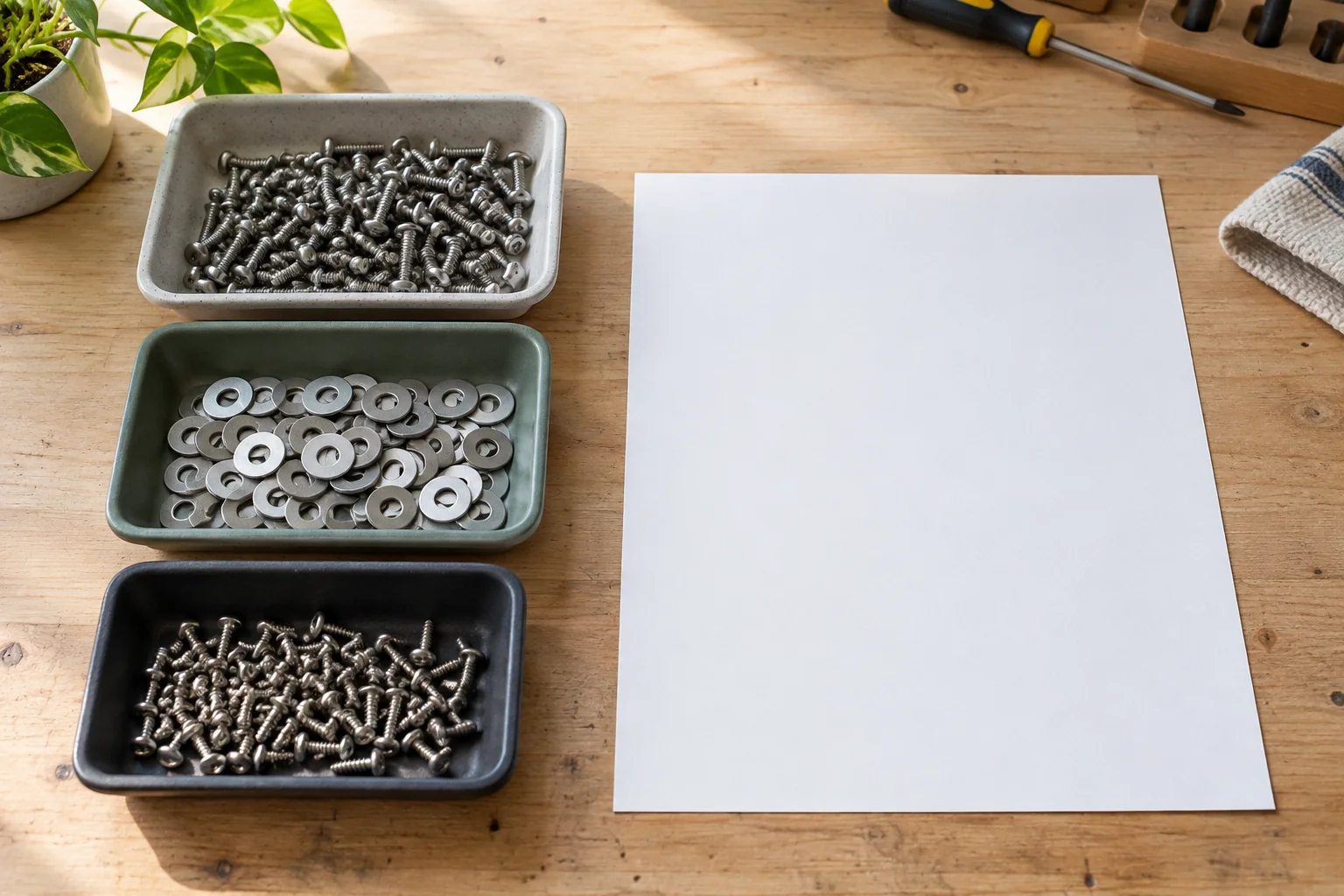
Estimate hardware quantities by counting the specified parts for each assembly, multiplying by the number of assemblies and then adding a separate, explained spare allowance. Keep the required count visible. A percentage added to an unclear starting number simply produces a larger unclear number.
This is a purchasing and inventory method, not a fastener-selection guide. Use the hardware specified by the project’s designer or the product manufacturer. Extra screws do not compensate for using the wrong type, omitting a connector or changing a load-bearing detail.
Start with the correct parts list
Identify the product or drawing revision and find its hardware schedule. Distinguish the manufacturer’s part code from a retailer’s package number. Record the full description needed to avoid confusing similar pieces: length, diameter or thread designation where specified, head style, finish and any matching nut or washer.
IKEA’s US missing-parts guidance explains that some small fittings have a six- or eight-digit code in the assembly instructions, while others do not. It also advises checking all packages because a product may be split across boxes. That is a useful reminder to identify and inventory parts before declaring a shortage.
Do not assume a bag of look-alike fasteners is interchangeable with the specified fitting. Put unidentified pieces aside and resolve their identity through the relevant supplier. A count of ten unknown screws is not the same as ten confirmed screws of the required code.
Count repeated assemblies without double-counting
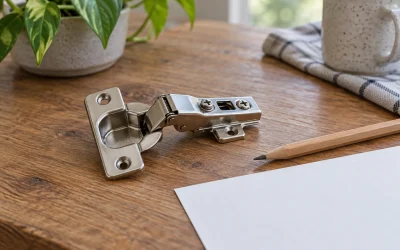
Make one row for each exact part. List how many are used in one complete unit, then multiply by the number of units. Where the instructions show left and right assemblies separately, check whether the printed quantity already includes both sides. Do the same for a hinge sold with a mounting plate or a connector sold as a kit.
Read any quantity heading carefully. “Four per pair” and “four per piece” give different totals when several pairs are required. If the schedule is ambiguous, leave the order open until the maker clarifies it. Do not rely on the number of holes visible in a product photograph.
Use a count-to-order worksheet
| Field | What to enter | Why it matters |
|---|---|---|
| Exact part | Code and specified description | Keeps similar fittings separate |
| Required quantity | Per-unit count multiplied by units | Shows the assembly requirement |
| Planned spares | A number and a reason | Exposes the chosen allowance |
| Usable stock | Confirmed matching pieces already available | Avoids buying the same supply twice |
| Shortfall | Required plus spares minus usable stock | Gives the purchasing target |
| Pack conversion | Pack count and actual pieces received | Separates packaging excess from planned spares |
For kits, create a separate note listing what comes inside. Do not order the same included washers again because they also appear in an assembly drawing. Conversely, a photograph showing installation hardware does not confirm that the purchased package includes it.
Choose a spare allowance deliberately
A small allowance may cover a misplaced piece or keep an exact match for a future repair, but there is no universal percentage suitable for every project. Availability, package size and the cost of a second trip can affect the choice. Write the reason beside the number so it can be reconsidered rather than silently carried into every future estimate.
Keep damaged, corroded or unidentified stock out of the usable count. Whether a previously installed fitting may be reused depends on its instructions and condition; the worksheet does not make that decision. If a connector is supplied as a matched set, preserve that relationship instead of mixing leftovers.
A worked pack-size example
In an illustrative project, six identical assemblies each require four screws of one specified type. The required quantity is 24. The owner chooses three spares and has five confirmed matching unused screws, so the purchasing shortfall is 24 + 3 – 5 = 22.
If the supplier sells only packs of ten, three packs provide 30 new screws. With the five already held, the total becomes 35; after using 24, there are 11 left. Of those 11, three were planned spares and eight result from package rounding. These fictional numbers are not a recommended spare percentage.
If a five-piece pack is also available, compare actual package combinations and total price. Do not buy fewer than the required quantity just to eliminate leftovers. Keep any remaining pieces with their original identification rather than returning them to an anonymous mixed container.
Reconcile the delivery before assembly
Check the delivered codes and quantities against the worksheet before opening several similar bags at once. Photograph a shortage or mismatch and retain the packaging information needed by the supplier. Store small parts where children and pets cannot reach them and where pieces cannot roll into a walking route.
After the project, record actual use and remaining stock. If the count differs from the instructions, investigate before assuming the extras are harmless or adding them to the assembly. The final record should explain what was required, what was bought and why any pieces remain.