An oven that stays cold often has a simpler explanation than a failed heating component: a delayed-start setting, locked controls, or interrupted power. But a broken electric bake element or a failed gas igniter can produce the same frustrating result. If you are asking why is my oven not heating, the first clue is whether the display responds, the cooktop still works, and the oven makes any heat at all. Stop immediately if you smell gas, see arcing, or notice a burning electrical connection.
Quick Answer: Check the oven’s operating mode, door, and circuit breaker before blaming internal parts. If an ordinary Bake cycle still produces no heat, record the symptoms and arrange qualified service instead of opening a live electrical panel or touching gas fittings.
As an Amazon Associate we earn from qualifying purchases.
By DIY Ideas 4 Home Editorial Team
Why Your Oven Is Not Heating: 6 Common Causes
The difference between an oven that never starts and one that warms slowly matters. Whirlpool’s oven troubleshooting guidance separates basic power and control checks from faults in an electric heating element, gas igniter, or temperature sensor. Use the pattern below to narrow the problem without disassembling the appliance.
| Symptom or Sign | Likely Cause | First Check | DIY or Pro |
|---|---|---|---|
| Display works, but Bake does nothing | Control lock, demo mode, or delay | Check the display and owner manual | DIY settings check |
| Clock lights up but heating is absent or weak | Breaker or supply issue | Inspect breaker position without opening panel | DIY check; electrician for repeat trip |
| Door does not fully shut or latch releases poorly | Door switch, latch, or gasket issue | Check closure once the oven is cool | DIY observation; pro for repair |
| Electric Bake fails while Broil may work | Bake element or its control circuit | Look for visible damage when cool | Pro for electrical diagnosis |
| Gas cooktop works but oven stays cold | Ignition or oven gas-control fault | Observe normal operation from outside | Gas appliance technician |
| Oven warms but does not reach its setting | Sensor, heating, or control problem | Compare temperature over a full preheat | DIY observation; pro if persistent |
1. The Oven Is in the Wrong Operating Mode
A responsive display does not prove that heating has been requested. A cook timer may be running without Bake being active, a delayed-start program may be waiting, or demo mode may disable heat while allowing the controls to illuminate. On some models, a control lock also blocks cooking commands. This is particularly worth checking after cleaning the keypad or restoring power following an outage.
KitchenAid’s electric-oven product help says certain control locks are released by holding the designated control for about 3 seconds, but the exact button sequence varies by model. GE’s guidance on an oven that has power but will not operate adds that some units require the clock to be set. Read the display message and your owner’s manual rather than copying a button combination from another brand.
2. Power Reaches the Display but Not the Heater
An electric oven can have an illuminated clock even when the power available for cooking is wrong. GE Appliances’ electric-range power-supply guidance states that its ranges use 240 or 208 volts and that partial voltage can leave the clock running while heating functions perform poorly. A recently installed range with nonworking heat deserves an installation check, not repeated attempts to force it to start.
Look for a tripped linked breaker or a household outage affecting the cooking circuit. GE advises checking both breakers when the appliance uses a two-pole breaker. A breaker that trips again, a scorched outlet, or evidence of loose wiring calls for a qualified electrician. Do not pull out a hardwired wall oven, remove covers, or probe a terminal block to investigate the voltage yourself.
3. The Door, Latch, or Seal Prevents Heating
Some ovens intentionally stop a heating function if the door is open. KitchenAid’s electric-oven troubleshooting page says the elements on certain models will not start with the door ajar, and that opening the door during broiling can switch the broil element off. A rack that prevents complete closure or a self-clean latch left in the wrong position can therefore mimic a broken heater.
When the appliance is cool, check for a bent rack, debris near the hinges, and a gasket that has come loose. Close the door normally without forcing the latch. A torn gasket often explains heat loss or slow cooking rather than a truly cold cavity. If the hinge is misaligned or the interlock does not engage, leave mechanical repair to a service professional.
4. An Electric Bake or Broil Element Has Failed
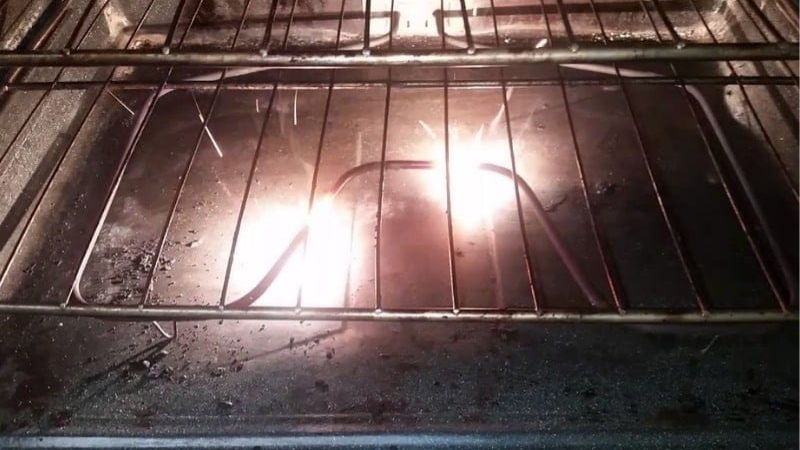
Electric ovens may use separate heat sources for baking and broiling, and some designs conceal the lower bake element beneath the oven floor. GE’s explanation of bake and broil operation notes that elements can work separately or together depending on the selected mode. An oven that broils but will not bake can point toward the bake circuit, although the control board, wiring, or a relay can create similar symptoms.
After the oven is fully cool and its breaker is off, visible cracks or blistering on an exposed element are useful information to report. Do not assume an element is good merely because it does not glow red: some elements are hidden and operating cycles differ. Whirlpool’s heating-troubleshooting guide recommends professional help for heating-element replacement. Never touch an element during a trial cycle.
5. A Gas Igniter or Gas-Control Part Is Faulty
If the surface burners on a gas range work but the oven does not, the oven’s ignition system may be the issue. Whirlpool’s gas-oven guidance names a dirty or faulty igniter as one possibility; GE also identifies the glow-bar igniter and related controls as components a technician may need to evaluate. Surface-burner operation is not proof that the oven ignition path is healthy.
Do not attempt to light a modern gas oven by hand unless the exact manufacturer’s instructions explicitly permit an older pilot-light procedure. Do not dismantle burners, bypass a flame-safety device, or adjust the regulator. The American Gas Association’s natural-gas safety guidance is clear: if you smell rotten-egg gas odor, evacuate immediately, avoid switches and phones inside, and call 911 or the gas utility from outside.
6. A Sensor or Control Fault Stops Normal Heating
A temperature sensor tells the controller how the oven is warming. If its position is wrong or the sensor or electronic control malfunctions, the oven might heat unevenly, stall below the selected setting, or show an error message. Maytag’s guidance on an oven not getting up to temperature identifies the sensor and ignition system as possible causes. A displayed fault code is valuable evidence, but its meaning is brand-specific.
Separate this symptom from ordinary preheating variation. Whirlpool’s long-preheat guidance reports roughly 12 to 15 minutes to reach 350°F on some visible-element ovens, while its range support documentation describes around 20 minutes, with variation, for certain hidden-element models. Those are manufacturer examples, not a universal pass-fail limit. If the oven gets warm but bakes consistently at the wrong temperature, consult a separate calibration procedure only after verifying that it can complete a normal heat cycle.
How to Check an Oven That Will Not Heat Step by Step
Start with observations that cannot expose you to household voltage or unburned gas. GE and Whirlpool both direct owners to confirm settings, power, and door operation before looking at internal components. These checks help you decide whether a safe correction is possible or whether the repair requires a service call.
Step 1: Identify the Oven and Check for Danger
Find the model number on the manufacturer’s label, usually around the frame or another location given in the manual, and establish whether the oven uses gas or electricity. Write down whether the clock, oven light, and cooktop still operate. Note any fault code exactly as shown; a photo of the display can help the repair technician. Do not restart the oven if it has produced sparks, smoke, or an electrical burning smell.
Gas odor is an emergency rather than a troubleshooting clue. The American Gas Association instructs occupants to leave the building immediately and avoid actions that could create a spark. Call the gas utility or emergency services from a safe distance, and do not reenter until they say it is safe. Never perform electrical reset steps while you suspect an active gas leak.
Step 2: Cancel Programs and Try a Normal Bake
With no safety warning present, cancel the current cooking program and check whether a delay, control lock, demo mode, or special operating mode remains active. Set the clock if your manual requires it. GE’s oven-support instructions specifically flag the clock and child lock; KitchenAid’s product help highlights delayed start and demo mode as reasons heating can seem disabled.
Close the door fully, select the ordinary Bake function, enter 350°F if it is within your model’s supported range, and press Start in the sequence given by the manual. Watch for a preheat indicator, an error message, or a canceled command. Stop testing if the appliance behaves abnormally. The purpose is to verify that a normal heat request is accepted, not to run repeated empty cycles hoping that a faulty component recovers.
Step 3: Check the Breaker and Installation Clues
Look at the designated household breaker without removing the panel cover. If it has tripped and there is no evidence of a dangerous electrical fault, follow the manufacturer’s and panel’s instructions for a normal reset; do not repeatedly reset a breaker that immediately trips. GE’s guidance for resetting certain electronic oven controls describes switching off the circuit for about 1 minute before restoring power. That timing is a GE example and should not override model-specific directions.
If the oven was just installed or moved, tell the installer that the clock works but the heating function does not. GE’s 240/208-volt requirement for its electric ranges helps explain why a partially powered appliance can be misleading. A licensed electrician should assess wiring, outlet damage, or a supply mismatch. Gas ranges also need electricity for many ignition systems; Maytag’s gas-range guidance specifies a grounded 120-volt supply for certain models, so a working gas cooktop alone cannot rule out an electrical issue.
Step 4: Inspect the Door and Visible Surfaces Cold
Turn the oven off and let it cool completely. Inspect the door seal for displaced sections, confirm that no tray or rack blocks the door, and make sure a manual self-clean latch has returned to its normal position. GE’s electric-range oven support identifies both control positions and the self-clean latch as relevant when burners work but the oven stays cold.
If your oven has an exposed heating element, look from outside the cavity for obvious fractures, severe blistering, or a detached section only after disconnecting power at the breaker. There is no need to remove oven panels. Do not press on the element or remove its retaining screws; internal terminals may be hazardous, and a professional should confirm the correct replacement part and the underlying cause.
Step 5: Check Whether the Oven Actually Warms
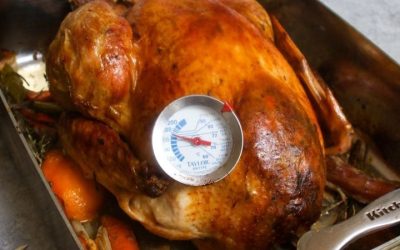
If the unit starts normally and there are no danger signs, monitor a single controlled preheat. An oven thermometer placed on a stable central rack can help distinguish a cold cavity from one that is merely heating slowly. Taylor’s product page for its model 5932 describes an analog oven thermometer with a 100°F to 600°F measuring range and a 3-inch dial. Use it only as directed; it becomes hot in operation.
Wait for the appliance’s prescribed preheat indication, rather than interpreting one momentary reading as a sensor failure. If the oven remains near room temperature despite accepting a Bake command, end the test and schedule service. If it gradually reaches cooking temperature but food still cooks unevenly, record the actual reading and move to an oven-calibration guide after ruling out a damaged gasket or failed heating circuit. The temperature display and a standalone thermometer measure different things and should not be assumed identical at every moment.
Products That Help
The Taylor Precision Products 5932 Large Dial Oven Thermometer is useful only when an oven produces at least some heat. Taylor’s product page specifies a 100°F to 600°F scale and a hanging or standing design, so it can help document a slow-preheat complaint for a technician. Do not buy a thermometer to diagnose a completely dead oven or a suspected gas leak.
If a service technician confirms a failed bake element, a genuine model-matched part is more relevant than a generic repair kit. GE Appliances lists its WB30X46987 Range Bake Element and states that it supersedes part WB44K10005. Confirm compatibility against the appliance’s complete model number through GE’s parts lookup before ordering, and have the technician install it. An element alone does not fix a faulty relay or wiring harness.
When to Call a Pro
Call a qualified appliance technician when a normal Bake command is accepted but there is no heat, when the oven repeatedly trips a breaker, or when the display reports a persistent fault. Ask a licensed electrician to inspect a damaged outlet, newly installed 240-volt supply, or suspected wiring failure. Whirlpool’s guidance specifically recommends professional assistance with electrical trouble and heating-element replacement.
For a gas oven, a technician should examine an igniter, gas valve, regulator, or safety-control fault. If you smell gas, do not wait for a repair appointment; evacuate and notify the gas utility or 911 from outside, as the American Gas Association advises. Before scheduling routine service, record the exact model number, the setting selected, whether the cooktop works, and whether the cavity heats at all. Those observations are more useful than guessing which part has failed.
Frequently Asked Questions
Ovens can show several misleading combinations of symptoms, especially when controls and heat sources are on different circuits. These answers cover questions that remain after checking the main causes and basic operating sequence.
Why Does the Oven Light Work but There Is No Heat?
The light and the heater do not necessarily depend on the same complete power path. GE’s electric-range power-supply guidance explains that a range may display a working clock with only partial electrical supply, so an illuminated light or display does not prove the cooking circuit is healthy. Also check control lock and delayed start before requesting electrical service.
Can a Gas Stove Work While the Oven Is Broken?
Yes. The cooktop and oven may have separate ignition and control components. Whirlpool’s gas-oven troubleshooting guidance specifically addresses the case in which the stovetop works but the oven does not, including possible igniter trouble. Avoid using a working burner as a reason to dismantle the oven gas system yourself.
Should I Run Self-Clean to Restore the Heat?
No. Self-clean is a high-temperature cleaning function, not a diagnostic reset for a failed heater or igniter. If the oven is already malfunctioning, do not initiate a self-clean cycle to try to force heating. Check the owner’s manual and arrange service if a normal Bake command remains ineffective.
Can I Keep Cooking If My Oven Is Heating Only Partly?
Do not rely on an oven that cannot maintain the required cooking temperature for temperature-sensitive food. Its displayed setpoint does not establish that the cavity or food has reached a safe temperature. Use a separate, suitable food thermometer to check internal food temperature according to the food’s safety guidance, and have the oven repaired if its heating remains inconsistent.
Final Thoughts
If several external checks fail, the most useful next step is not another reset but a concise symptom record: whether Bake or Broil produces any heat, whether the appliance was recently installed, and what the display reports. That record helps separate a configuration or supply problem from a costly internal repair. When considering why is my oven not heating after these checks, stop using a persistently cold or unstable oven and request model-specific service; buy a replacement part only after the failed component and exact fit have been confirmed.