A clouded oven window is often a layer of grease on the cooking-side glass, while an unreachable streak may be trapped between the door’s panes. Learning how to clean oven glass starts with identifying which surface is dirty and using the mildest method that will remove it. A light film may wipe away in minutes; baked-on splatter can need a longer soak. The work is manageable for most homeowners when the door is intact, fully cool, and accessible without disassembly.
Quick Answer: Let the oven cool, wipe the outside with mild soapy water, then loosen residue on the inside using a damp cloth or a manufacturer-approved baking-soda paste. Remove all cleaner with a lightly damp cloth and dry the window. Do not flood the door vents, scrub the gasket, or pry apart the glass panels; stains inside the door need a separate model-specific approach.
As an Amazon Associate we earn from qualifying purchases.
By DIY Ideas 4 Home Editorial Team
Before You Start: Tools, Materials and Safety
Oven doors combine a visible glass window, trim, vents, and a flexible heat seal. Cleaning those parts as though they were one uninterrupted sheet of glass can push dirty water into areas you cannot dry. GE Appliances’ Cleaning Interior Window and Cleaning Exterior Window and Door guides recommend different approaches for the two exposed faces, so check your own model’s care instructions before reaching for a stronger product.
| Tool or Material | Size or Spec | Why You Need It | Substitute |
|---|---|---|---|
| Clean soft cloths | Separate damp and dry lint-free cloths | Lift grease, rinse cleaner, and finish without streaks | Clean microfiber towels |
| Mild dish soap and warm water | A small bowl of dilute soapy water | First pass for exterior and accessible interior grime | Plain warm water for a light film |
| Baking soda | Whirlpool’s example uses 1/2 cup | Optional paste for stubborn cooking-side deposits | Another cleaner specifically permitted by your manual |
| Soft spreader | Silicone spatula or gentle brush | Applies paste only to the approved glass area | Soft cloth |
| Nonmetallic edge | Plastic scraper approved for the finish | Carefully lifts softened residue from appropriate glass | Repeated damp-cloth soaking |
| Towels and protective gloves | Enough to catch drips below the door | Protects the floor and hands during cleaning | Absorbent washable rags |
Find Out Which Glass Surface Is Dirty
With the oven off and cold, view the glass from different angles under good kitchen lighting. A fingerprint on the room-facing side should move when touched with a clean cloth. Greasy spatters on the oven-facing side are reachable after the door is opened. A white haze or stripe that stays put after both faces have been cleaned is more likely inside the laminated door assembly, where normal wiping cannot reach it.
GE Appliances’ Streaks in Oven Window explains that cooking moisture and grease vapor can pass through designed door openings and later condense on the internal faces of the glass. This is different from a scratched surface or permanently clouded coating. Do not keep rubbing the outer face after it is clean just because a mark remains visible underneath.
Protect the Seal, Vent, and Door Finish
The door gasket is a seal, not a scrub pad. GE Appliances’ Cleaning the Oven Door Interior warns that getting water or cleanser onto it can cause deterioration. Its Exterior Window and Door instructions also say to keep water and soap out of the vent at the top of the door. Use a cloth that is damp rather than dripping; apply any liquid to the cloth or spreader instead of pouring it over the upper edge.
Follow the exact manual when the window has a special coating, decorative film, or unfamiliar trim. GE cautions against oven cleaner, steel wool, abrasive powders, strong liquid cleaners, and plastic scouring pads on exterior door surfaces. A pad acceptable on the inner window is not automatically safe for painted trim, exterior coatings, or the control panel.
Know When to Stop Before Cleaning
Never apply liquid to hot glass, and never work while a self-cleaning cycle has locked the door. A cracked or loose pane, damaged hinge, missing glass fastener, or door that does not close squarely needs a qualified appliance technician before further use. If a gas oven has a gas odor, leave the premises and contact emergency services or the gas utility from outside rather than attempting maintenance.
For routine external wiping, first turn the oven off and wait until every touched surface is fully cool. GE Appliances’ Cleaning the Exterior additionally advises disconnecting the appliance from its power supply before maintenance and cleaning where the model permits. Do not reach into the wiring compartment, remove the hinge assembly, or pull apart glass retainers as part of a normal surface-cleaning job.
How to Clean Oven Glass Step by Step
Begin with accessible surfaces and give mild methods time to work. Whirlpool’s How to Clean Glass Oven Door Windows Quickly and Easily includes a baking-soda-and-water paste for heavy deposits, but manufacturer recommendations are not identical. Use the gentlest method accepted by your appliance manual, and treat residue between panes as a different task rather than an excuse to dismantle an unfamiliar door.
Step 1: Cool the Oven and Cover the Floor
Switch the oven off and allow it to cool completely after baking or self-cleaning. Open the door only after its glass, trim, and handle can be touched safely. Spread absorbent towels on the floor below the door to catch dirty water or crumbs. Move pans and racks out of the immediate work area if they obstruct access, taking care not to scrape the window while moving them.
Test the surface with the back of a hand near, not against, the glass until there is no residual heat. Set aside one cloth for the grease-removal pass and another for rinsing; reusing a dirty towel for the final pass just moves oil back over the window. Keep children and pets clear while the door is open and the supplies are on the floor.
Step 2: Remove Loose Debris and Identify Spots
Gently wipe crumbs and dry specks from the glass with a soft, slightly damp cloth. Check whether the main problem is fingerprints on the exterior, cooked-on splatter on the interior, or a streak suspended beneath the surface. This distinction determines the next steps: neither baking-soda paste nor glass polish can reach a greasy film trapped in the middle of a sealed door.
Inspect the door gasket and the top vent without poking objects into either one. Loose fibers from an old scouring pad, grit lodged in a rag, and a metal scraping edge can damage finishes even when the cleaning solution is mild. Replace the cloth immediately if it contains rough debris that might drag across the glass.
Step 3: Wipe the Exterior With Mild Soap
Mix a little dish soap into warm water, moisten a clean microfiber cloth, and wipe the room-facing glass without dripping into the upper vent. Use overlapping strokes from top to bottom, paying attention to the bottom edge where handprints and kitchen grease collect. Wipe again with a cloth moistened in plain water, then buff with a dry towel to reveal any spots needing further attention.
For a stubborn fingerprint film, GE Appliances’ Exterior Window and Door guidance permits a non-ammonia glass cleaner on approved outer glass, but warns that ammonia may discolor black finishes. The same document gives an optional vinegar dilution of one-quarter cup in two quarts of water. This is a maker-described alternative, not a reason to spray liquid into seams or use vinegar on every decorative coating.
Step 4: Soften Grease on the Cooking-Side Glass
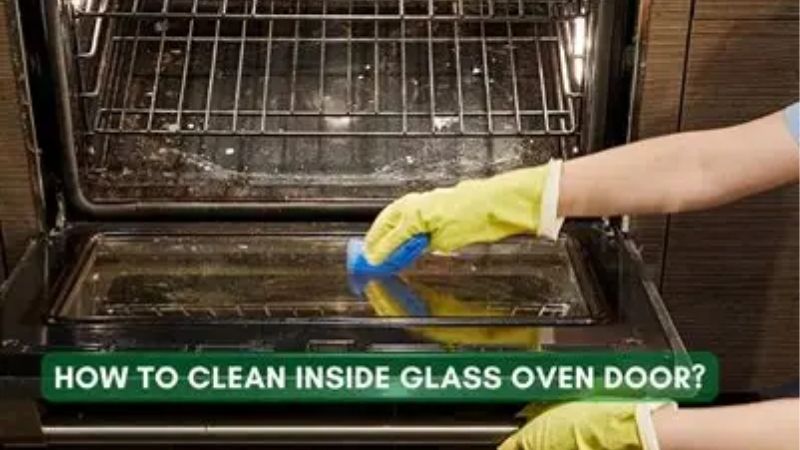
Open the cooled door to expose the inner window. First press a damp, soapy cloth against splatter to soften the oils and remove anything that comes away with very light pressure. GE Appliances’ Cleaning Interior Window specifically accepts soapy water on a damp, non-dripping cloth. For heavy deposits on suitable interior glass, Whirlpool’s oven-window guide describes mixing baking soda and water into a spreadable paste.
Whirlpool includes one-half cup of baking soda in its materials list. That quantity is an example rather than the amount every oven needs: make only enough paste to cover the stained glass, and keep it away from the gasket, frame openings, vents, and heating components. Apply gently with a soft spreader without packing the mixture into the edges of the window.
Step 5: Let the Paste Work, Then Lift Residue
Allow the paste to rest while the softened grime loosens. Whirlpool’s glass-window instructions suggest 20 minutes or longer for heavier baked-on deposits, depending on how stubborn they are. If the patch is small, return after that interval and try wiping a corner with a moistened cloth before treating the entire door. A stain that moves readily needs less friction than one you attack immediately with a scouring tool.
When your model’s care guide permits it, use a plastic scraper held almost flat to lift a remaining soft patch without digging into the glass. Whirlpool names a plastic scraper as an option; GE recommends non-abrasive products and a suitable sponge scrubber for heavy stains on interior glass. Avoid a razor blade, metal brush, or powdered cleaner on a finish whose scratch resistance has not been confirmed. Stop if the apparent residue is actually a coating defect.
Step 6: Rinse Thoroughly and Dry the Window
Remove the bulk of the loosened baking-soda mixture with a damp microfiber cloth, folding to a clean surface as you go. Rinse that cloth frequently, then make another pass with plain water until no powder, slippery film, or streaky deposit remains. The final rinse matters because baking-soda particles left on the inner glass can show as a pale haze the next time the oven heats.
Dry the inside window with a separate lint-free cloth, paying careful attention to the safe, accessible edges while leaving the gasket untouched. Revisit the outside with a dry polishing cloth so you can distinguish remaining internal streaks from cleaning residue. If you still see grease on the glass itself, repeat a modest soak rather than escalating immediately to caustic oven spray.
Step 7: Evaluate Marks Between Glass Panes
If both exposed faces are clean yet the stain persists, inspect your model’s owner manual for a documented between-pane procedure. GE Appliances’ Cleaning Between the Oven Door Glass describes a procedure for certain doors using accessible lower openings after safely removing the door. Its instructions caution against cleaning between the panes on camera-equipped or side-swing models and recommend service if the method does not apply to the appliance.
Samsung’s US guide, How to Clean Your Samsung Oven, also documents access through particular door gaps on supported models after removal using the model manual. Whirlpool’s How to Clean an Oven Inside and Out cautions that removing or dismantling a door is generally not recommended and may affect a warranty. These are different manufacturer practices, not interchangeable instructions. Do not insert improvised metal tools or pour a cleaning solution into the door slots.
If your specific manual expressly permits an accessible method and you can follow it safely with the recommended assistance, use only the prescribed tools and procedure. Otherwise, request appliance service for between-pane cleaning. Never pry out a glass retaining strip, loosen hinge springs, or try to separate bonded layers simply to remove a cosmetic streak. A clean oven window is not worth an unsafe door assembly.
Products That Help
The Scotch-Brite Zero Scratch Scrub Sponge is a reasonable optional aid for heavy deposits only where the oven maker allows a non-abrasive scrubber on interior glass. The 3M Zero Scratch product page lists glassware among its intended surfaces, but that claim does not approve it for coated oven trim or exterior panels. Start with a clean, damp soft cloth and use the sponge only if the model’s instructions support that stronger contact.
The E-Cloth Glass and Polishing Cloth is suited to the final drying pass on ordinary accessible glass. E-Cloth’s US product page lists a 16 by 20 inch cloth and a one-year or 100-wash care promise; its purpose is to absorb moisture and remove visible streaks after dirt has been lifted. If you already own lint-free microfiber cloths, you probably do not need to buy a specialty cloth just for this job.
Common Mistakes to Avoid
Spraying cleaner straight toward a door’s top edge often sends liquid toward the vents rather than the dirty pane. Using steel wool or an abrasive cleaning powder can mark the exterior finish, while cleaning a gasket can shorten its usefulness. GE makes these distinctions in its separate interior and exterior instructions. Keep the cloth lightly damp, isolate the stain, and protect any neighboring painted or metallic surfaces.
Do not assume the oven’s self-clean setting is an alternative to careful hand-cleaning of the exterior glass. GE describes self-cleaning as a method for the interior window on compatible models, but its guidance still directs owners to hand-clean remaining deposits and care for the gasket. Check the manual before starting an especially hot cycle, and allow the oven to cool fully before wiping away any remaining film.
Frequently Asked Questions
Most problems after cleaning arise from cleaner left on the window, confusing inside-the-door haze with exterior stains, or choosing a product designed for a different oven surface. The right fix depends more on where the mark is than on how forcefully you scrub.
Can I Use Baking Soda on Oven Door Glass?
Yes, on an exposed glass surface for which the manufacturer permits a baking-soda paste. Whirlpool’s oven-window cleaning guide and GE Appliances’ interior-door cleaning guidance describe baking soda and water as a non-abrasive approach to baked-on grease. Use it sparingly, remove every trace with a damp cloth, and keep the mixture off the gasket, decorative finishes, and vent openings. Consult the manual if the window has a coating.
Is Vinegar Safe on the Exterior Oven Window?
It can be suitable for some models when diluted as the maker directs. GE’s Exterior Window and Door guidance permits one-quarter cup of vinegar in two quarts of water for the glass on covered appliances; it also permits a non-ammonia glass cleaner. The finish, not the familiar household ingredient, determines what you can safely use. Apply to a cloth and avoid areas where runoff could enter the door.
Why Does My Oven Glass Still Look Cloudy?
A gray film can be soap or baking-soda residue on the accessible face, a greasy layer behind the glass, or surface damage that cleaning cannot reverse. First buff the room-facing and oven-facing panes separately after a plain-water rinse. If the cloud follows neither accessible face, GE Appliances’ Streaks in Oven Window describes how cooking vapor can leave deposits between panes. If the glass is etched or its coating is compromised, ask the maker about repair rather than stronger abrasives.
Should I Take the Oven Door Apart to Clean It?
Not unless the exact manual supplies an approved procedure and you can perform it safely. Certain GE and Samsung doors have documented serviceable access, while Whirlpool warns that removal or disassembly can affect a warranty. Cameras, unusual hinges, and side-swing doors create additional risks. When access requires removing glass retainers or guessing at spring-loaded hinges, a qualified technician is the safer choice.
Final Thoughts
Once you know how to clean oven glass without damaging the door, take a photo of the finished window before cooking again. It gives you a useful reference if a new internal streak appears after roasting, helping you explain the problem to a technician or the manufacturer. Clean ordinary splatters after the oven cools, keep a gentle lint-free cloth close at hand, and check your model’s approved cleaners before buying a specialty spray or attempting any work between panes.