Key takeaways
- Pressure in the right window: Somewhere between 1400 and 2200 PSI at the nozzle covers everything a car needs. Higher-rated machines are fine as long as you can dial them back or swap to a wider tip, because sustained high pressure on a single spot will chew through clear coat and vinyl wrap edges.
- Flow rate over headline PSI: GPM is what carries dirt away and what makes thick foam possible. Aim for 1.5 GPM or better. A unit boasting huge pressure with weak flow will disappoint you the first time you fill a foam cannon.
- Foam cannon compatibility: Check the connection type before you buy. Quick-connect fittings make swapping between a cannon and a rinse tip a two-second job, whereas threaded bayonet systems lock you into one brand’s accessories.
- Hose and cord reach: A 25-foot hose lets you circle a sedan without moving the unit; anything shorter means constant repositioning. Longer power cords matter just as much since most outlets are on one garage wall.
- Motor type and duty cycle: Brushless induction motors run quieter, last longer, and tolerate the stop-start trigger work that detailing involves. Universal motors are cheaper but get hot during a two-hour session.
Anyone who has spent a Saturday morning with a bucket and a garden hose knows the frustration: you rinse, you scrub, and half an hour later there’s still a film of brake dust baked into the wheel barrels and grit hiding in the panel gaps. Worse, dragging a wet sponge across dry dirt is how swirl marks get born. The fix isn’t more elbow grease, it’s water moving fast enough to lift contaminants off the clear coat before your mitt ever touches it. That’s the whole argument for a pressure washer in a detailing routine, and it’s why so many home garages have one parked next to the shop vac.
The catch is that most pressure washers on the shelf are built for stripping paint off a deck, not preserving it on a fender. Too much pressure and you’ll blast trim clips loose or force water past window seals. Too little flow and your foam cannon just dribbles. This guide sorts through the electric units that actually make sense for automotive work, looking at real PSI and GPM figures, how well each one runs a foam cannon, hose length you can work with around a full-size vehicle, and whether the thing survives being wheeled in and out of a garage every weekend.
Our top picks


As an Amazon Associate we earn from qualifying purchases at no extra cost to you. Ratings are shown as listed on Amazon.
🛒 Best Price Today on Amazon
Prime members get fast, free shipping on everything above, plus member-only deals. New members get a 30-day free trial — cancel anytime.
How to Choose a Pressure Washer For Automotive Detailing (2026)
- Pressure in the right window: Somewhere between 1400 and 2200 PSI at the nozzle covers everything a car needs. Higher-rated machines are fine as long as you can dial them back or swap to a wider tip, because sustained high pressure on a single spot will chew through clear coat and vinyl wrap edges.
- Flow rate over headline PSI: GPM is what carries dirt away and what makes thick foam possible. Aim for 1.5 GPM or better. A unit boasting huge pressure with weak flow will disappoint you the first time you fill a foam cannon.
- Foam cannon compatibility: Check the connection type before you buy. Quick-connect fittings make swapping between a cannon and a rinse tip a two-second job, whereas threaded bayonet systems lock you into one brand’s accessories.
- Hose and cord reach: A 25-foot hose lets you circle a sedan without moving the unit; anything shorter means constant repositioning. Longer power cords matter just as much since most outlets are on one garage wall.
- Motor type and duty cycle: Brushless induction motors run quieter, last longer, and tolerate the stop-start trigger work that detailing involves. Universal motors are cheaper but get hot during a two-hour session.
The Best Pressure Washer For Automotive Detailing (2026)s Reviewed
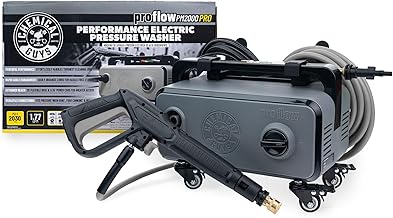
Chemical Guys PM2000 PRO
This is the one built by people who actually detail cars, and it shows in the tuning: 2030 PSI paired with 1.77 GPM sits right in the sweet spot for safe paint work while still generating dense foam. The 25-foot hose gives you room to work all the way around a vehicle without dragging the base unit through your rinse water.
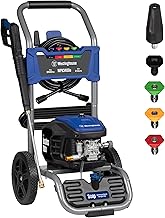
Westinghouse WPX3400e
The brushless motor is the headline here, and it earns the attention by running noticeably quieter than brushed competitors while handling long sessions without heat soak. At 3400 max PSI you’ll want to stick with the wider nozzles on paint, but that reserve makes it genuinely useful for driveways and fence work between details.
Westinghouse ePX3500
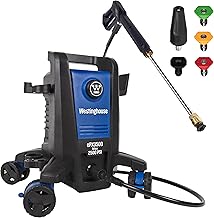
A more sensibly calibrated sibling for car-focused users, with 2500 PSI and an onboard soap tank that saves you from juggling bottles mid-wash. The anti-tipping design is a small thing until you’ve knocked a top-heavy washer over on a sloped driveway.
Green Compact Pressure Washer with Foam Cannon
Four quick-connect tips and an included foam cannon make this a complete starter kit rather than a machine you have to accessorize. Its compact footprint suits apartment garages and shared parking where storage space is genuinely tight.
5000 PSI Power Washer with Hose Reel
The 33-foot hose on an integrated reel is the standout feature, letting you detail a truck or van from one parked position. Treat the pressure rating as a maximum rather than a target and keep a 40-degree tip on the wand for anything painted.
Frequently Asked Questions
Will a pressure washer damage my car’s paint?
Not if you use appropriate technique. Stay above 1200 PSI for cleaning power but keep the nozzle at least 12 inches from the surface, use a 25 or 40-degree tip, and never hold the stream stationary on one spot or aim directly at trim edges and emblems.
Do I need a separate foam cannon?
Yes, for best results. Onboard soap tanks apply detergent through the low-pressure setting, which produces a thin solution rather than the clinging foam that gives contaminants time to release before contact washing.
Is electric powerful enough, or should I get gas?
Electric is the better choice for detailing. Gas units typically start above 3000 PSI with flow rates that are excessive for automotive surfaces, plus they’re loud, heavy, and unsuitable for enclosed garage use.
How long do these machines actually last?
With brushless models, five to eight years of weekend use is realistic. Draining the pump after every session and storing the unit above freezing does more for longevity than anything else you can do.
Final Thoughts
For most home detailers, the Chemical Guys PM2000 PRO is the easiest recommendation because its pressure and flow are matched to automotive work from the factory rather than borrowed from a general-purpose machine. If you want a washer that pulls double duty on the driveway and siding, the Westinghouse WPX3400e brings a brushless motor and genuine reserve power, while the ePX3500 splits the difference with car-friendly output and a stable, tip-resistant frame.