Key takeaways
- Blade diameter: A 10-inch blade handles trim, 1x stock, and most furniture parts cleanly. Step up to 12 inches when you’re regularly crosscutting 2x8s, thick tabletop aprons, or wide baseboard laid flat.
- Single vs. double bevel: Single bevel tilts one direction, so crown and compound cuts mean flipping the workpiece and re-marking. Double bevel tilts both ways — slower to learn, dramatically faster once you’re cutting matched pairs.
- Sliding vs. chop: Sliding rails buy you crosscut width for shelving and wide panels. A fixed chop saw costs less, weighs less, and needs several fewer inches of wall clearance behind the bench.
- Cut line visibility: Laser guides drift out of calibration. A shadow-casting LED system projects the blade’s own silhouette onto the wood, which stays accurate because it’s geometry, not alignment.
- Support and portability: Long stock needs support at both ends or your cut ends up tapered. Decide whether you want a rolling stand for job sites or a compact beam for a fixed shop corner.
Standing in the tool aisle with a tape measure in your pocket and a half-built bookcase in the garage is a specific kind of frustration. Every DEWALT miter saw looks capable, the model numbers differ by a single digit, and nobody in the store can tell you whether the sliding head is worth the extra footprint on your bench. Meanwhile the miters on your last project came out a hair open, and you know that’s the saw’s fault as much as yours.
This guide sorts DEWALT’s most popular miter saws by what they actually do on a shop floor — crosscut capacity, bevel range, and how honest the cut line is when you drop the head. I’ve built face frames, door casing, and a fair number of dining tables on these machines, so the notes below lean on real workflow rather than spec sheets. Two stands are included as well, because a good saw bolted to a wobbly table is a mediocre saw.
Our top picks



As an Amazon Associate we earn from qualifying purchases at no extra cost to you. Ratings are shown as listed on Amazon.
🛒 Best Price Today on Amazon
Prime members get fast, free shipping on everything above, plus member-only deals. New members get a 30-day free trial — cancel anytime.
How to Choose a Dewalt Miter Saw (2026)
- Blade diameter: A 10-inch blade handles trim, 1x stock, and most furniture parts cleanly. Step up to 12 inches when you’re regularly crosscutting 2x8s, thick tabletop aprons, or wide baseboard laid flat.
- Single vs. double bevel: Single bevel tilts one direction, so crown and compound cuts mean flipping the workpiece and re-marking. Double bevel tilts both ways — slower to learn, dramatically faster once you’re cutting matched pairs.
- Sliding vs. chop: Sliding rails buy you crosscut width for shelving and wide panels. A fixed chop saw costs less, weighs less, and needs several fewer inches of wall clearance behind the bench.
- Cut line visibility: Laser guides drift out of calibration. A shadow-casting LED system projects the blade’s own silhouette onto the wood, which stays accurate because it’s geometry, not alignment.
- Support and portability: Long stock needs support at both ends or your cut ends up tapered. Decide whether you want a rolling stand for job sites or a compact beam for a fixed shop corner.
The Best Dewalt Miter Saw (2026)s Reviewed
DEWALT DWS780 12-Inch Double Bevel Sliding Compound
This is the saw most furniture builders eventually settle on: 12-inch double bevel, sliding rails for wide panels, and the XPS shadow light that makes hairline layout marks genuinely followable. It arrives with a clamp, wrench, and dust bag, and the bevel detents hold their setting through a full day of repetitive cuts.
DEWALT DWS716 12-Inch Double Bevel Compound
All the bevel flexibility of the DWS780 without the sliding carriage, which means it tucks against a wall and costs meaningfully less. If your work is mostly casing, frames, and stock under about 8 inches wide, this is the smart-money pick.
DEWALT DWS715 12-Inch Single Bevel Compound
A 15-amp workhorse with the full 12-inch capacity and a stainless miter detent plate that keeps the common angles crisp over years of use. Single bevel means flipping stock for compound cuts — a fair trade if you’re not cutting crown weekly.
DEWALT DWS713 10-Inch Single Bevel Compound
The lightest and most affordable of the group, and the one I’d hand a first-time builder. Ten inches of blade is plenty for 1x lumber, plywood rails, and standard trim, and the reduced weight makes it realistic to carry out to the driveway and back.
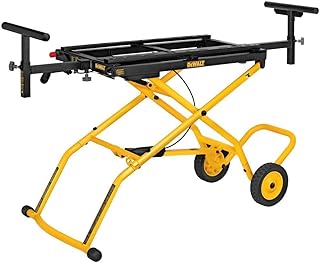
DEWALT DWX726 Rolling Miter Saw Stand
Eight feet of material support, adjustable height, and wheels that let you roll the whole rig out of the way when the car needs the garage back. The universal mounting rails accept any of the saws above, and the steel frame doesn’t flex when you lean into a long board.
Frequently Asked Questions
Is a 12-inch saw always better than a 10-inch?
No. Twelve-inch blades cost more, deflect slightly more, and add weight. Choose 12 inches for capacity you’ll actually use, otherwise a 10-inch cuts just as cleanly with a good blade.
Do I need the sliding version for furniture work?
Only if you crosscut panels wider than roughly 8 inches. Many builders handle wide stock on a table saw or track saw and keep a fixed chop saw for angles.
Should I replace the stock blade?
Eventually, yes. The included blade is fine for framing lumber; a 60- to 80-tooth fine-finish blade transforms results in hardwood and veneered plywood.
Is a stand really necessary?
For anything longer than about three feet, yes. Unsupported stock lifts during the cut and produces angled ends that no amount of sanding will fix.
Final Thoughts
If you want one saw to carry your projects for the next decade, the DWS780 earns its price through the shadow light and sliding capacity. Builders working mostly with trim and frame stock should take the DWS716 and put the savings toward a finish blade, while anyone starting from scratch will get plenty of mileage from the compact DWS713 — ideally paired with the DWX726 rolling stand.