Key takeaways
- Tooth count matches the job: 24 to 40 teeth clear chips fast for ripping solid stock; 60 to 80 teeth leave glass-smooth crosscuts in plywood, melamine, and hardwood. A 40-tooth general purpose blade splits the difference if you only own one.
- Carbide grade and tip size: Micrograin carbide holds an edge through far more board feet than generic tips, and thicker teeth survive several resharpenings. Look for brazed tips with no visible gaps at the shoulder.
- Kerf and saw power: Thin-kerf blades around 0.09″ reduce load on 1.5 HP portable saws and waste less material. Full-kerf plates track straighter for tall rips but want a stronger motor behind them.
- Arbor fit and plate flatness: Nearly every 10-inch blade uses a 5/8″ arbor, but plate quality varies. Laser-cut expansion slots and a tensioned body keep the blade from wobbling as it heats up during long rips.
- Coatings and anti-stick treatment: A non-stick body coating cuts pitch buildup dramatically, especially in pine and MDF. Less resin on the plate means less drag, less burning, and a blade that cleans up with a quick soak.
What's inside
Anyone who has ever pushed a sheet of birch ply through a saw and watched the underside tear out in ragged fibers knows the blade is doing most of the talking. The saw supplies the muscle, but tooth count, hook angle, and carbide quality decide whether you spend the afternoon building or the afternoon sanding. That gap is where most shop frustration lives — a perfectly capable contractor saw wearing a blade meant for framing lumber, then blamed for burn marks on a cherry tabletop.
This guide breaks down the 10-inch blades worth keeping in the drawer, from fine-finish crosscut blades for face frames and drawer fronts to combination sets that let you rip and crosscut without a swap every ten minutes. Each pick is judged on how it behaves in a home shop: plate stability, cut cleanliness in hardwood and plywood, and whether the price makes sense for a weekend furniture builder rather than a production cabinet shop.
As an Amazon Associate we earn from qualifying purchases.


🛒 Best Price Today on Amazon
Prime members get fast, free shipping on everything above, plus member-only deals. New members get a 30-day free trial — cancel anytime.
How to Choose a 10 Inch Table Saw Blades (2026)
- Tooth count matches the job: 24 to 40 teeth clear chips fast for ripping solid stock; 60 to 80 teeth leave glass-smooth crosscuts in plywood, melamine, and hardwood. A 40-tooth general purpose blade splits the difference if you only own one.
- Carbide grade and tip size: Micrograin carbide holds an edge through far more board feet than generic tips, and thicker teeth survive several resharpenings. Look for brazed tips with no visible gaps at the shoulder.
- Kerf and saw power: Thin-kerf blades around 0.09″ reduce load on 1.5 HP portable saws and waste less material. Full-kerf plates track straighter for tall rips but want a stronger motor behind them.
- Arbor fit and plate flatness: Nearly every 10-inch blade uses a 5/8″ arbor, but plate quality varies. Laser-cut expansion slots and a tensioned body keep the blade from wobbling as it heats up during long rips.
- Coatings and anti-stick treatment: A non-stick body coating cuts pitch buildup dramatically, especially in pine and MDF. Less resin on the plate means less drag, less burning, and a blade that cleans up with a quick soak.
The Best 10 Inch Table Saw Blades (2026)s Reviewed
DEWALT DWA11040 40-Tooth Fine Finish
This is the blade to reach for when you want one setup to handle rips in 4/4 maple and clean crosscuts on drawer parts. The ultra-sharp carbide arrives genuinely sharp rather than merely ground, and the thin kerf keeps a jobsite saw from bogging down mid-cut on hardwood.
FOXBC 80-Tooth Ultra Finish
Eighty teeth in a 10-inch plate means very small gullets, so feed slowly and let the blade work — do that and it leaves veneer plywood edges that need almost no sanding before glue-up. It is a specialist blade for finish cuts, not a ripper, and it earns its place in the drawer on that basis alone.
WEN BL1080 80-Tooth Ultra-Fine Finish
An outstanding value for anyone who wants a dedicated crosscut blade without spending premium money, and it fits miter saws too. Expect crisp shoulders on tenons and clean melamine edges, though sustained ripping will heat the plate faster than a lower-tooth-count blade.
WEN BL1060 60-Tooth Fine Finish
Sixty teeth is arguably the sweet spot for furniture work: enough to leave a smooth crosscut, few enough to clear dust during moderate rips. This is the blade a beginner should install after the stock one and probably will not feel the need to upgrade for a long while.
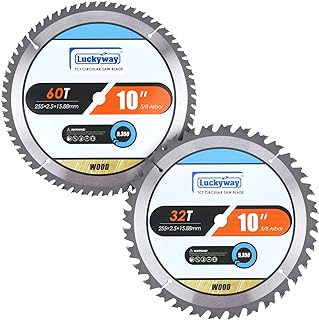
Luckyway 60T & 32T Two-Pack
A smart starter bundle that covers both ends of the workflow, pairing an aggressive 32-tooth blade for breaking down rough lumber with a 60-tooth for final dimensioning. Buying the pair costs roughly what a single mid-tier blade does, which makes it easy to justify swapping blades instead of forcing one to do everything.
Frequently Asked Questions
How many teeth do I need for plywood?
Sixty to eighty teeth minimizes tearout in veneered plywood. Add a zero-clearance insert and score the cut shallow first for near-perfect edges.
Will a thin-kerf blade flex during tall rips?
It can if the plate is unsupported. Use a splitter or riving knife, feed steadily, and consider a stiffener washer for cuts over two inches thick.
Why is my blade burning the wood?
Usually pitch buildup, a misaligned fence, or too slow a feed rate. Clean the blade with a resin remover and check that the fence runs parallel to the miter slot.
Can I sharpen carbide blades?
Yes, most quality carbide blades handle three to five professional sharpenings. Budget blades with thin tips are often cheaper to replace outright.
Final Thoughts
For a single do-everything blade, the DEWALT DWA11040 is the one I would install and forget about — it rips honestly and crosscuts cleanly. If glass-smooth finish cuts matter more than versatility, the WEN BL1080 delivers premium results for a fraction of premium money, while the Luckyway two-pack is the smartest way for a new shop to cover both rough and finish work in one purchase.