Key takeaways
- SCFM at 90 PSI: This single number decides whether a tool runs continuously or stutters. Brad and pin nailers sip roughly 0.3–0.5 SCFM. An HVLP conversion gun wants 4 SCFM or more, sustained. Match the compressor to your thirstiest tool, then add 30% headroom.
- Tank size versus duty cycle: A big tank buys you time between cycles; a high duty cycle lets the pump keep up once that reserve is gone. For spraying, both matter. For fastening only, a 1.6–2.4 gallon tank is genuinely enough.
- Noise in decibels: The gap between a 70 dB and a 90 dB unit is the difference between a conversation and a shout. If your shop shares a wall with living space or you work evenings, treat sub-70 dB as a requirement, not a luxury.
- Oil-free versus oil-lubricated: Oil-free pumps mean no oil changes and no risk of contaminating a finish coat, which is why they dominate the woodworking market. Oil-lubed pumps run cooler and last longer under heavy production use, but they need maintenance and careful filtration before a spray gun.
- Electrical reality: Check the amp draw against your circuit before you buy. Most 2 HP 120V units pull 13–15 amps at startup and want a dedicated 15A or 20A line. Use 12-gauge cord if you must extend, and keep the run under 50 feet.
Anyone who has ever stopped mid-glue-up to wait for a compressor to catch its breath knows the real problem with buying one: the numbers on the box rarely describe the work you actually do. Peak horsepower is a marketing figure. Advertised CFM is often measured at 40 PSI, not the 90 PSI your nailer and spray gun care about. And in a home shop wired for 15 amps, a machine that theoretically delivers more air may simply trip the breaker instead. Furniture work makes this worse, because the same compressor has to handle short bursts from a pin nailer and long, steady demand from a finish gun.
This guide sorts 110V and 120V compressors by the jobs a furniture maker actually asks of them: driving fasteners, spraying lacquer or waterborne finish, clearing chips out of mortises, and doing it all without deafening the rest of the house. Below you’ll find the models worth shortlisting, the specs that separate a workhorse from a frustration, and answers to the questions that come up once the tool is on the shop floor.
Our top picks



As an Amazon Associate we earn from qualifying purchases at no extra cost to you. Ratings are shown as listed on Amazon.
🛒 Best Price Today on Amazon
Prime members get fast, free shipping on everything above, plus member-only deals. New members get a 30-day free trial — cancel anytime.
How to Choose a 110 Volt Air Compressor (2026)
- SCFM at 90 PSI: This single number decides whether a tool runs continuously or stutters. Brad and pin nailers sip roughly 0.3–0.5 SCFM. An HVLP conversion gun wants 4 SCFM or more, sustained. Match the compressor to your thirstiest tool, then add 30% headroom.
- Tank size versus duty cycle: A big tank buys you time between cycles; a high duty cycle lets the pump keep up once that reserve is gone. For spraying, both matter. For fastening only, a 1.6–2.4 gallon tank is genuinely enough.
- Noise in decibels: The gap between a 70 dB and a 90 dB unit is the difference between a conversation and a shout. If your shop shares a wall with living space or you work evenings, treat sub-70 dB as a requirement, not a luxury.
- Oil-free versus oil-lubricated: Oil-free pumps mean no oil changes and no risk of contaminating a finish coat, which is why they dominate the woodworking market. Oil-lubed pumps run cooler and last longer under heavy production use, but they need maintenance and careful filtration before a spray gun.
- Electrical reality: Check the amp draw against your circuit before you buy. Most 2 HP 120V units pull 13–15 amps at startup and want a dedicated 15A or 20A line. Use 12-gauge cord if you must extend, and keep the run under 50 feet.
The Best 110 Volt Air Compressors (2026), Reviewed
California Air Tools 20020AD (20 Gallon)
The most complete package here for a maker who sprays finish regularly: 20 gallons of reserve, a genuinely quiet 70 dB pump, and an automatic drain valve that removes the one maintenance step everybody forgets. It is heavy for its class, but the wheels and vertical footprint make it livable in a one-car garage shop.
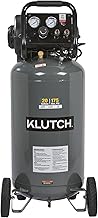
Klutch 20-Gallon, 2 HP, 175 PSI
Rated at 4.2 SCFM at 90 PSI with a 75% duty cycle and 175 PSI max, this is the shop-air choice — the one to pick if you also run a ratchet, blow gun, or occasional die grinder alongside furniture tools. The higher tank pressure stretches usable air between cycles noticeably.
MZB 2.4 Gallon Ultra Quiet, 1.0 HP
At 65 dB it is quiet enough to run beside you on a bench without ear protection, and 5.65 CFM from a 2.4 gallon tank is plenty for nailers, tire top-ups, and small touch-up spraying. The steel twin-tank design keeps it compact and easy to carry between rooms.
9.5 Gallon Ultra Quiet, 2 HP
This one hits the sweet spot for spraying without committing to a 20 gallon footprint: 8.75 CFM and 70 dB from a wheeled tank you can still tuck under a bench. A strong pick if you finish cabinet doors in batches.
Ultra Quiet 2.4 Gallon, 1.5 HP (60 dB)
The quietest unit on this list, and 6.71 CFM at 115 PSI is impressive output for the size. Best suited to apartment shops, shared garages, and anyone who values working in relative silence over maximum tank reserve.
Frequently Asked Questions
Can a 110V compressor run a spray gun for furniture finishing?
Yes, provided you match the gun to the compressor. Most HVLP conversion guns need 4–10 SCFM sustained, so a 9.5 to 20 gallon tank with a high duty cycle is the safe territory. Small detail and touch-up guns run fine on a 2.4 gallon unit.
What size tank do I need for a brad nailer?
A 1.6 to 2.4 gallon tank handles trim and case work comfortably. Fasteners consume very little air, and the pump easily keeps pace with normal firing rates.
Does oil-free mean maintenance-free?
Not entirely. You still need to drain condensate from the tank after each session to prevent internal rust, and the intake filter needs occasional cleaning. Oil-free just removes the oil change from the routine.
Will one of these trip my household breaker?
A 2 HP unit on a shared 15A circuit can, especially if a dust collector or shop vac is on the same line. Give the compressor its own circuit where possible, and avoid thin or long extension cords, which cause voltage drop and motor strain.
Final Thoughts
For most furniture makers, the California Air Tools 20020AD is the safest all-round investment — quiet, high-capacity, and ready for spray work. If you want spraying capability in a smaller footprint, the 9.5 Gallon Ultra Quiet 2 HP is the better fit, and for a bench-side companion that mainly feeds nailers, the MZB 2.4 Gallon at 65 dB is hard to beat.